Press
We are happy when people write, show, broadcast, and otherwise spread the word about us. Contact us at egle@mokslosala.lt.
International robotics competition on “Science Island” – the first of its kind in the history of Lithuania
2025-05-19
On May 9, technology enthusiasts in Kaunas will face an exceptional challenge – “Žalgiris Robot Battle 2026”. The competition can be called historic, as it will be the first time in the country that a competition exclusively for women – Fire Sisters – will be organized. The aim is to reduce gender inequality in the fields of technology and encourage growing girls to become more interested in STEAM disciplines. This year’s event is expected to attract several hundred participants from Lithuania, Latvia, Poland and Estonia. The international competition is an official partner of the global robotics competition “Robochallenge”, so the winners of the event to be held on “Science Island” will receive tickets to the final in Romania.
Exclusive competition
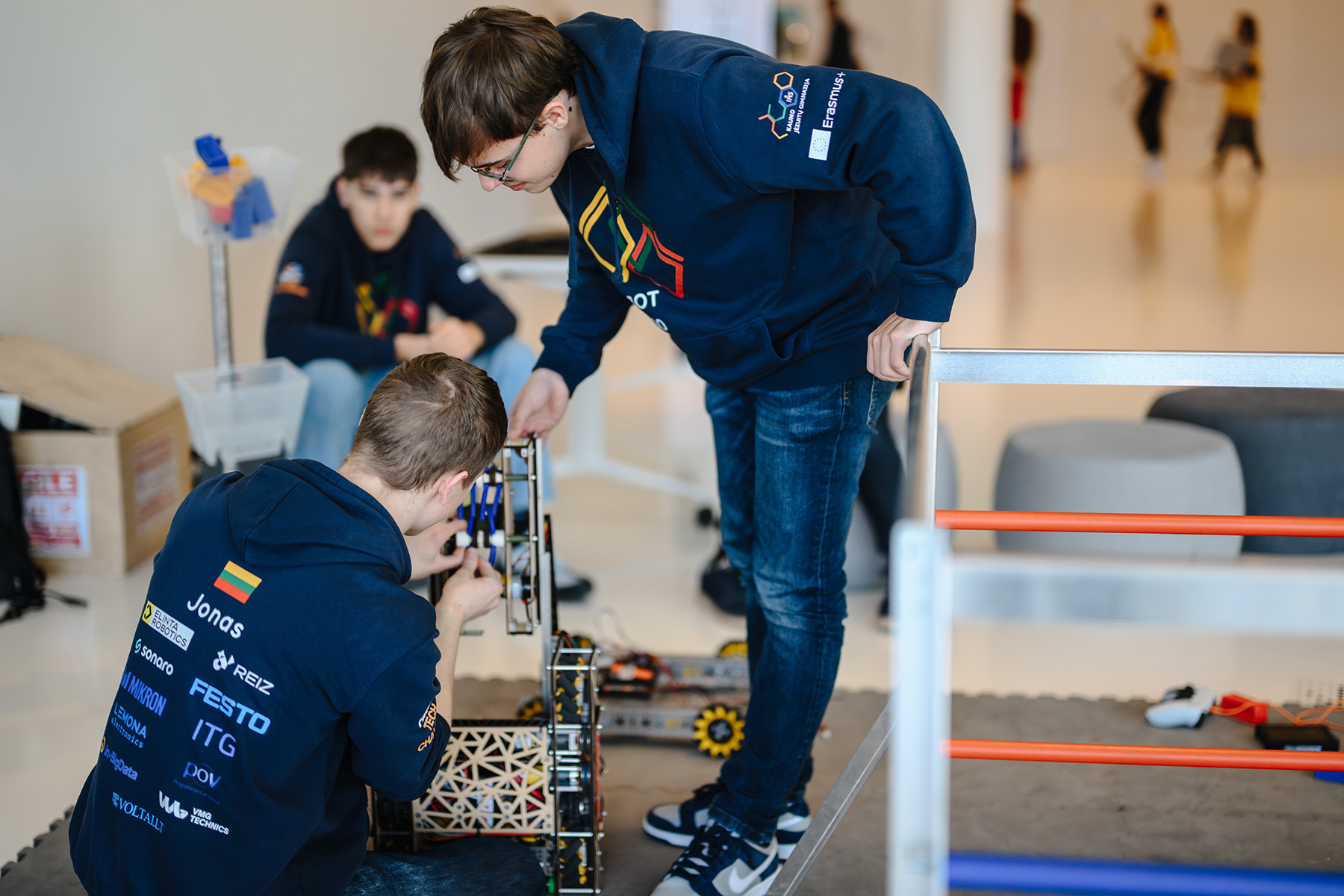
On May 9, participants will compete in 12 different categories, where their chosen strategy, critical thinking, programming skills, creativity, and reaction will be tested. In addition to traditional events such as Antweight 200g, Antweight 454g, Line Tracing, Line Tracing Turbo, Mini Sumo, Lego Sumo, Micro Sumo, FORVIA HELLA Folkrace, and Freestyle, robotics enthusiasts are invited to try their hand at a category for women only – Fire Sisters.
“Unfortunately, in Lithuania, technology is still shrouded in myths, and one of the most prominent is that it is an unfeminine field. If a growing girl does not have examples of women programming or designing in her environment, she may not be able to overcome this barrier. This is how our country loses talents and innovators. There is no gender or age limit in the “Žalgiris Robot Battle 2026”. I am proud that for the first time in the country, a competition exclusively for women is being organized – Fire Sisters. We are waiting for everyone,” says Saulė Magomedovienė, a methodologist at the Robotics-IT laboratory of the Kaunas methodological STEAM center of “Science Island”.
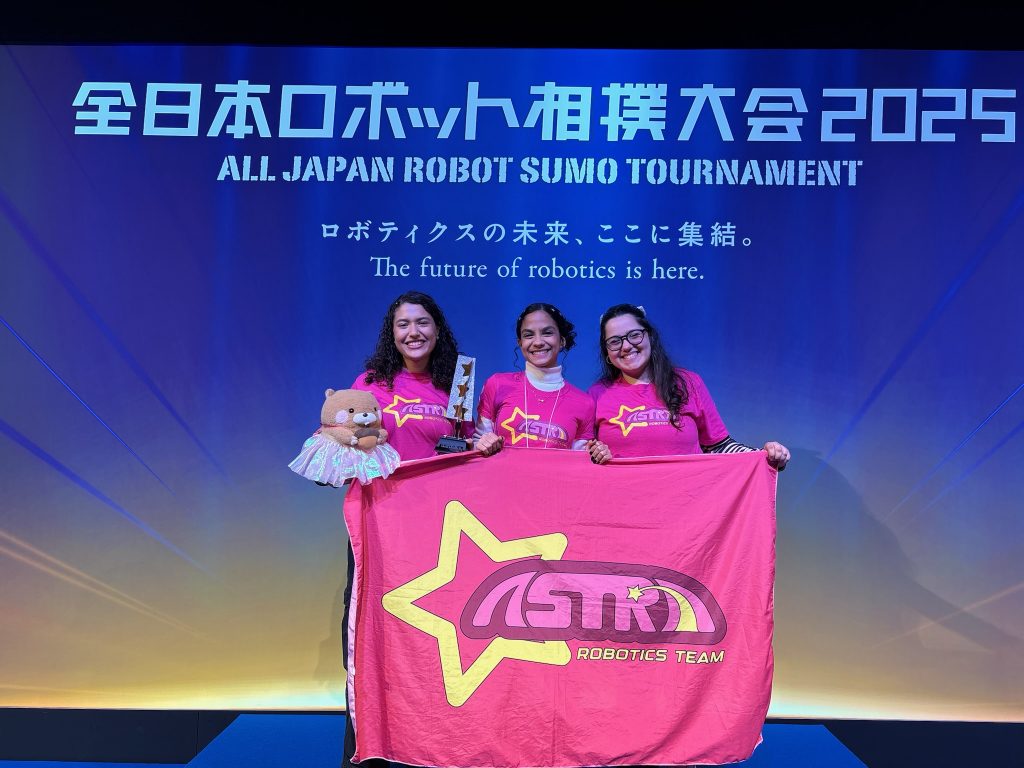
The stereotype that technologies are only for men still prevails not only in Lithuania, but also throughout the world. Anne Victória Costa, a mechanical engineer and one of the founders of the first women’s robotics team in Brazil, “Astra Robotics”, does not hide that the issue of gender inequality prompted her to mobilize and empower women.
“Together with my colleagues and Giovanna, we decided to create the first Brazilian sumo robotics team made up of all women. With pink uniforms and lots of glitter, we want to show that robotics is more fun when you don’t have to give up anything to fit in. Our goal is to democratize knowledge and empower a growing generation of female engineers. I am thrilled that the “Žalgiris Robot Battle 2026” has created an exclusive Fire Sister category, and I hope to see a record number of participants in it,” says A. V. Costa.
In 2024, she became the first woman, the first representative from South America, and the youngest champion at the “All Japan Robot Sumo” in Tokyo.
Registration of participants – until May 1
The “Žalgiris Robot Battle 2026” welcomes not only robotics professionals, but also beginners: children, adults, technology enthusiasts, or those who want to learn more about this field. At the event, participants will see robot fighters, extremely fast line followers, sumo wrestlers with strength and strategy, and will have a quality and fun time watching the competition or testing the activities of partners.
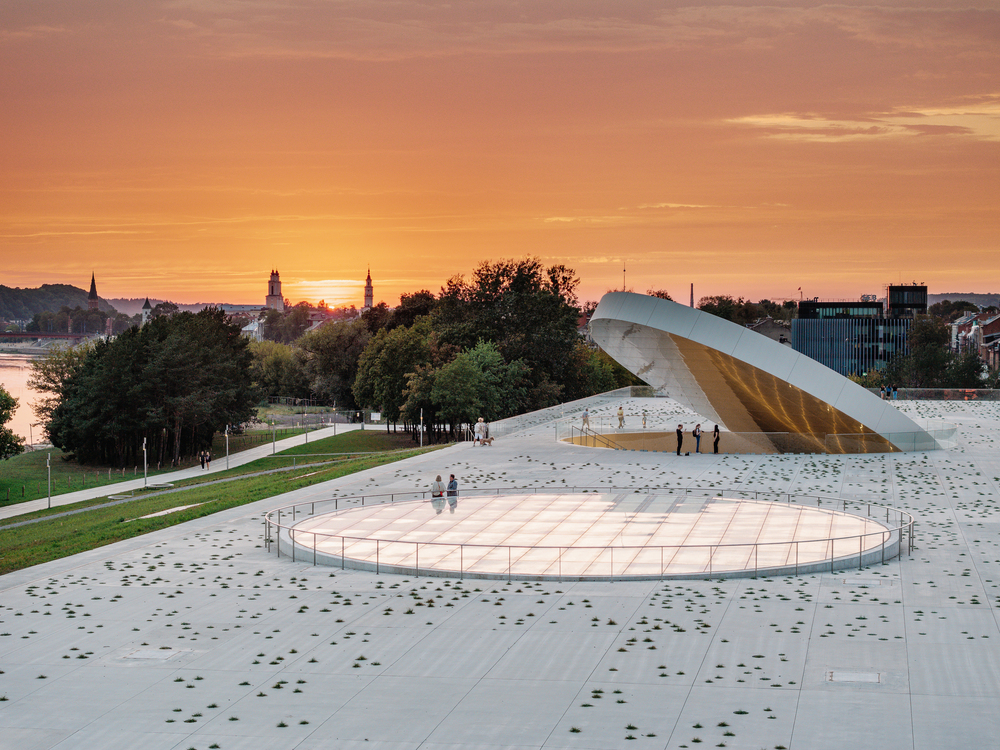
“I invite you not to sleep and register for the “Žalgiris Robot Battle 2026”. An exceptional competition awaits, which will take place not only inside the “Science Island” building. Robots in combat events will also compete in the outdoor amphitheater, under the famous discus weighing 250 tons and resting on a single beam. This way, spectators will watch the fights as if they were in the days of ancient Greek gladiators.
In robotics competitions, everyone can test themselves in non-standard situations and get to know various disciplines up close. The world is becoming increasingly surrounded by technology, so just being able to control it is a big advantage, and the opportunity to create brings you closer to the path of an innovator,” says Tomas Sobutas, methodologist at the Robotics-IT laboratory of the Kaunas methodological STEAM center of “Science Island”.
This event is an official partner of the global robotics competition “Robochallenge”, so the winners of the competitions at “Science Island” will receive a ticket to the final in Romania.
“When I started building robots, there were only a few competitions, and support and information were limited; we had to figure everything out ourselves. Today, children have access to all the necessary resources, and competitions such as “Žalgiris Robot Battle 2026” provide a fantastic opportunity to apply knowledge in a friendly but competitive environment. Such events promote teamwork and learning, but most importantly, participants can make friends from all over the world and have a great time. I wish everyone to experience this on May 9 in Kaunas,” says Robochallenge competition organizer Adrian Gaspar.
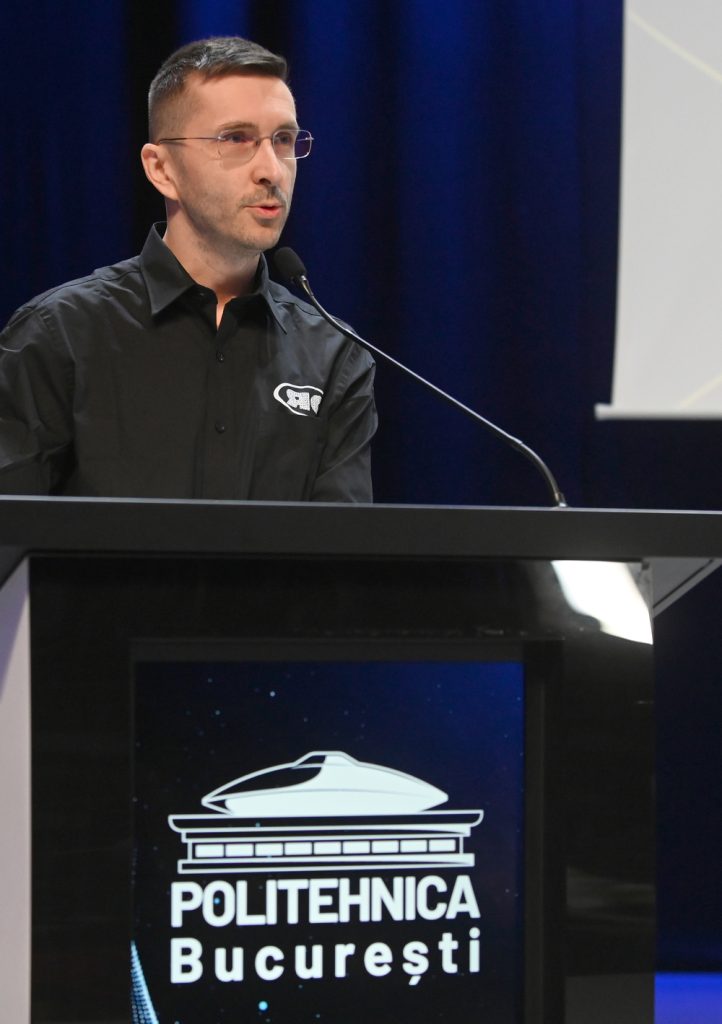
Adrian Gaspar began participating in robotics competitions in 2007 at the Polytechnic University of Bucharest. The event soon grew into one of the largest robotics competitions in the world – “Robochallenge” and its organization has become an important part of his life.
Participation in the “Žalgirio Robot Battle 2026” and observation of the event are free of charge. Participants are invited to register by May 1: mokslosala.lt/zalgirio-robotu-musis-2026/.
Opportunity to contribute to the engineering of the future now
On May 9, the “Science Island” is expected to welcome several hundred participants and more than twice as many spectators, robotics enthusiasts from all over Lithuania and surrounding countries.
“Understanding and being able to manage technologies opens up opportunities to create the future. Such competitions allow you to understand your level in this field and meet like-minded people. This is a place where you learn and can share your knowledge with others. I wish all participants imagination and freedom in creation,” says Ričardas Gečas, informatics and robotics teacher at Šiauliai Simonas Daukantas Engineering Gymnasium.
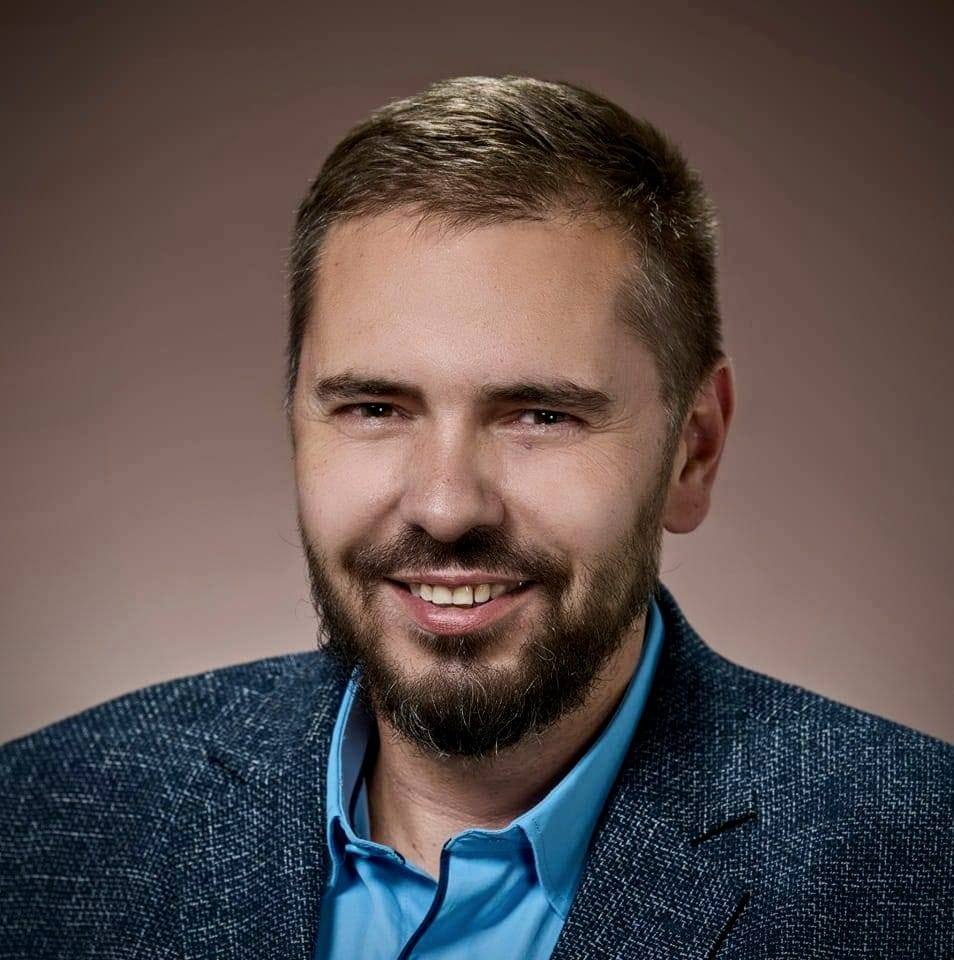
As intensive preparations for the International Robotics Competition are underway, the “Science Island” team invites you to become partners or sponsors of the “Žalgiris Robot Battle 2026”.
“We aim to create an exceptional robotics experience and maintain the level of global competitions, we invite various organizations, business representatives or technology enthusiasts to contribute to the creation of future engineering now. We are waiting for a variety of proposals – from creating joint activities for spectators to establishing prizes or competition facilities. Together we can achieve significantly more”, says Aistė Lukaševičiūtė, Head of the Science and Innovation Dissemination Center “Science Island”.
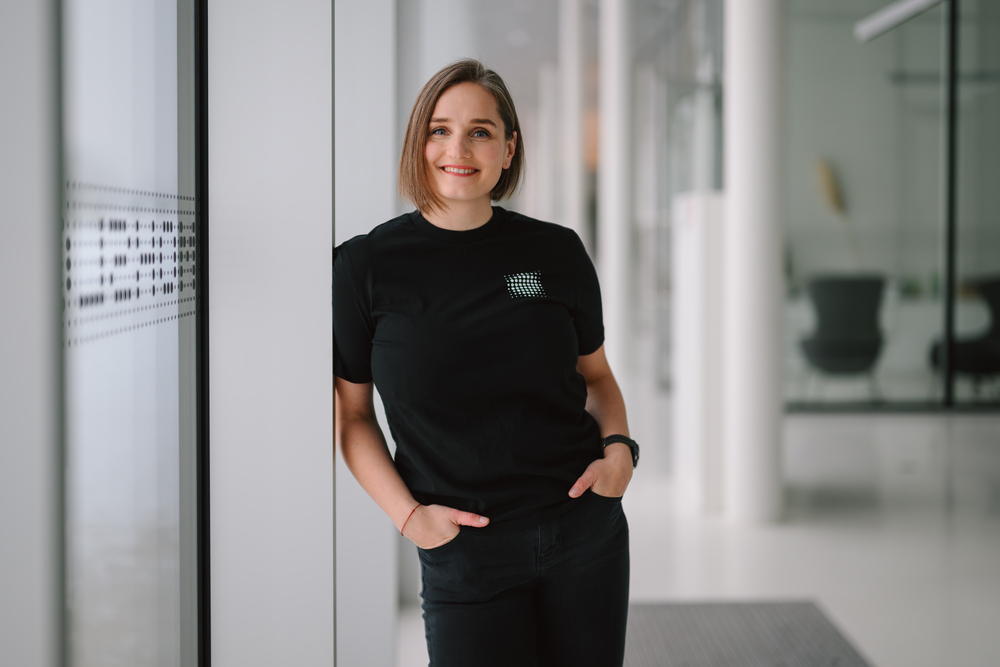
More information about the “Žalgiris Robot Battle 2026” and registration: mokslosala.lt/zalgirio-robotu-musis-2026/.
The most modern STEAM laboratories in Kaunas have opened at the “Science Island”
2025-05-19
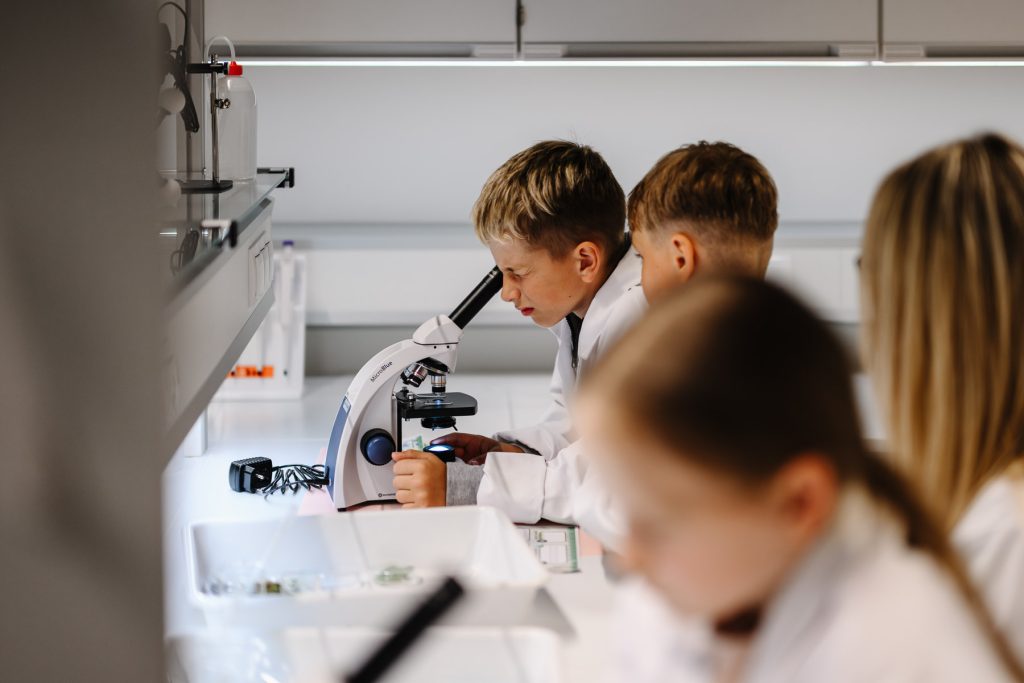
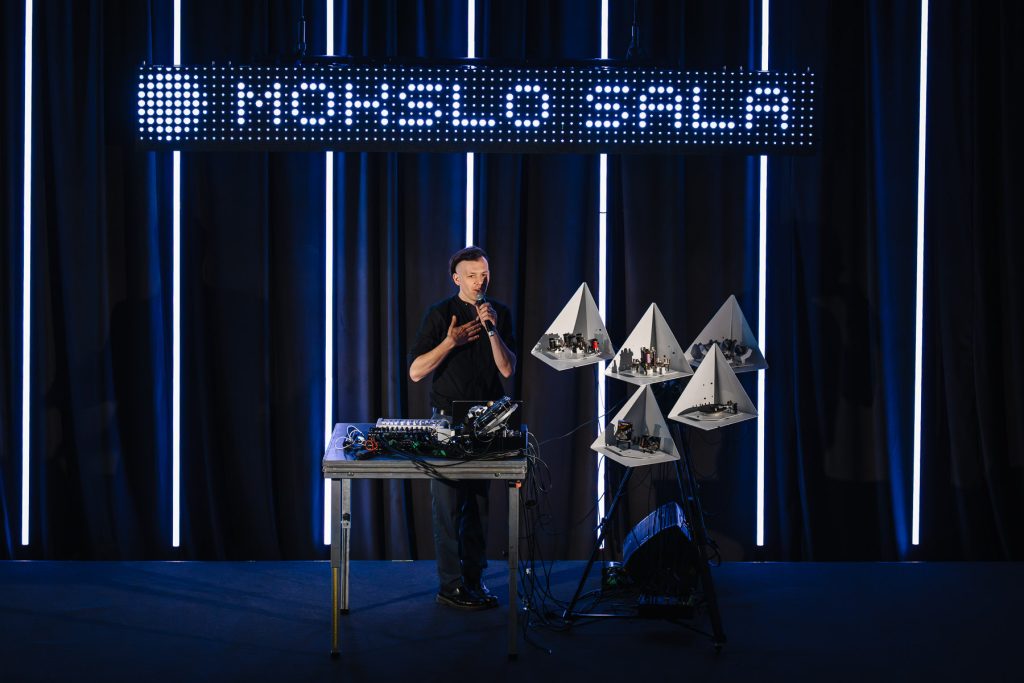
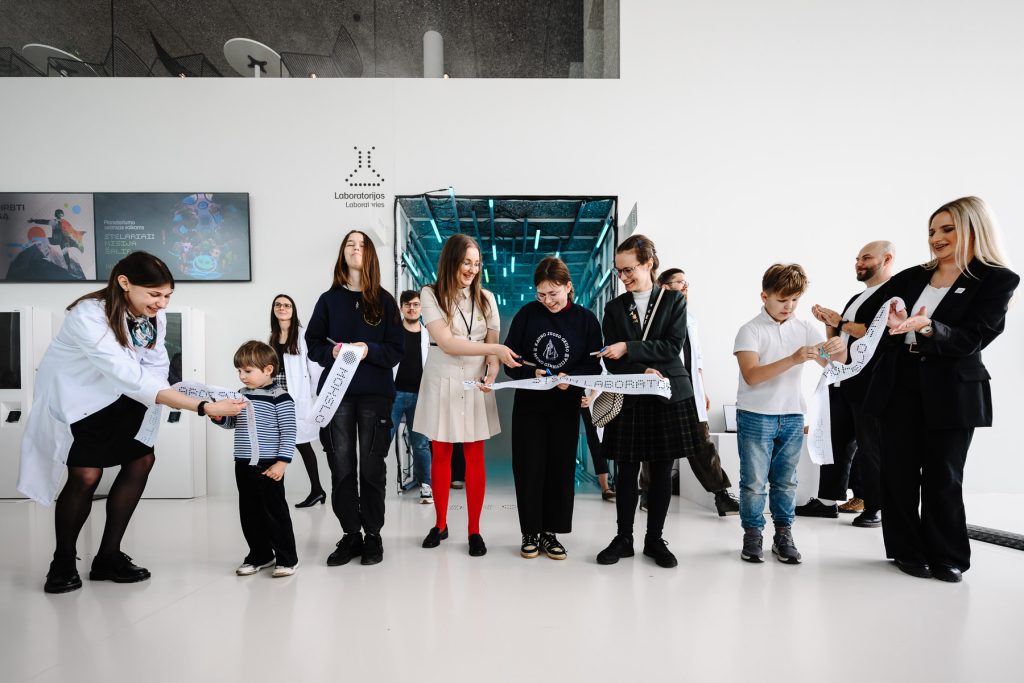
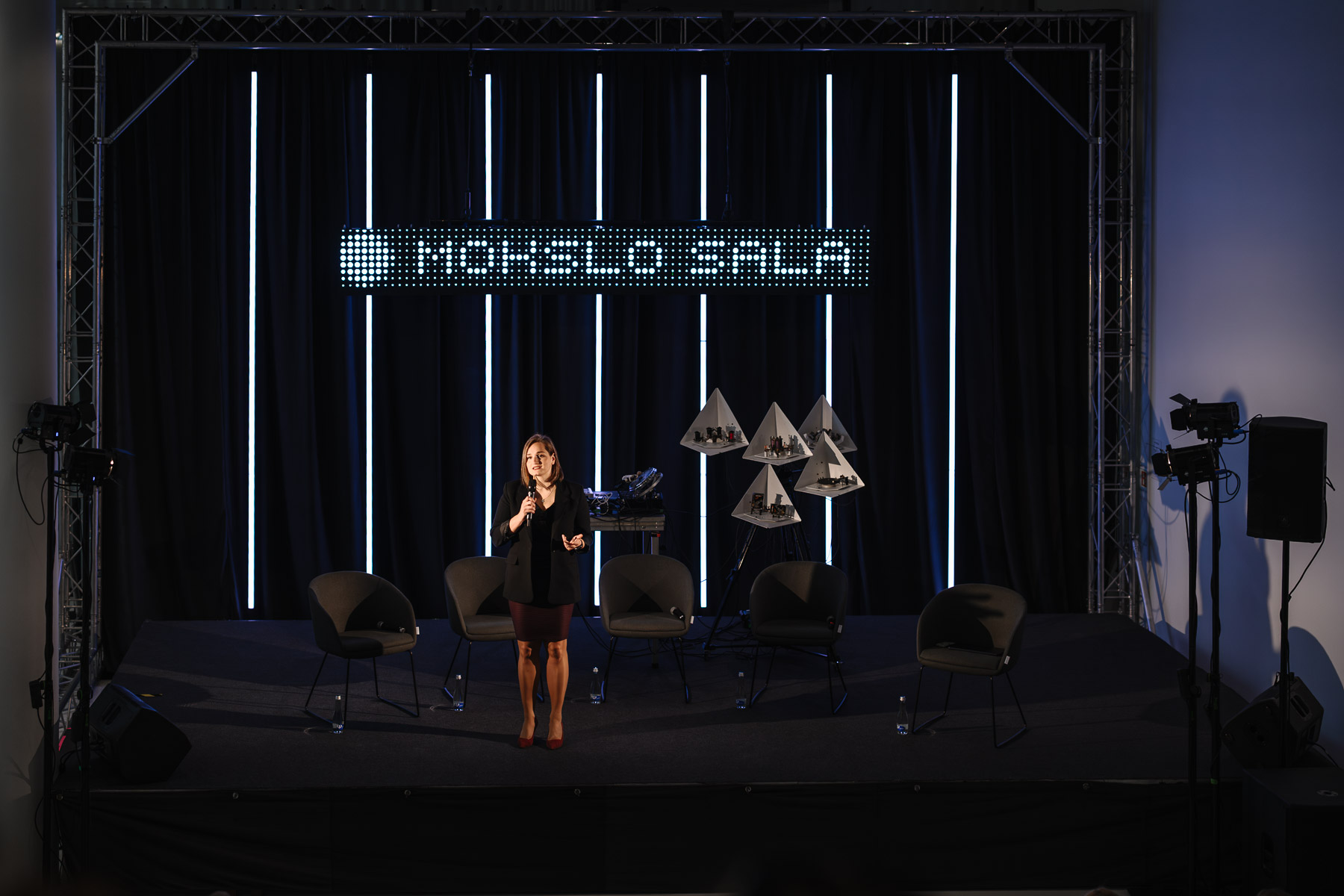
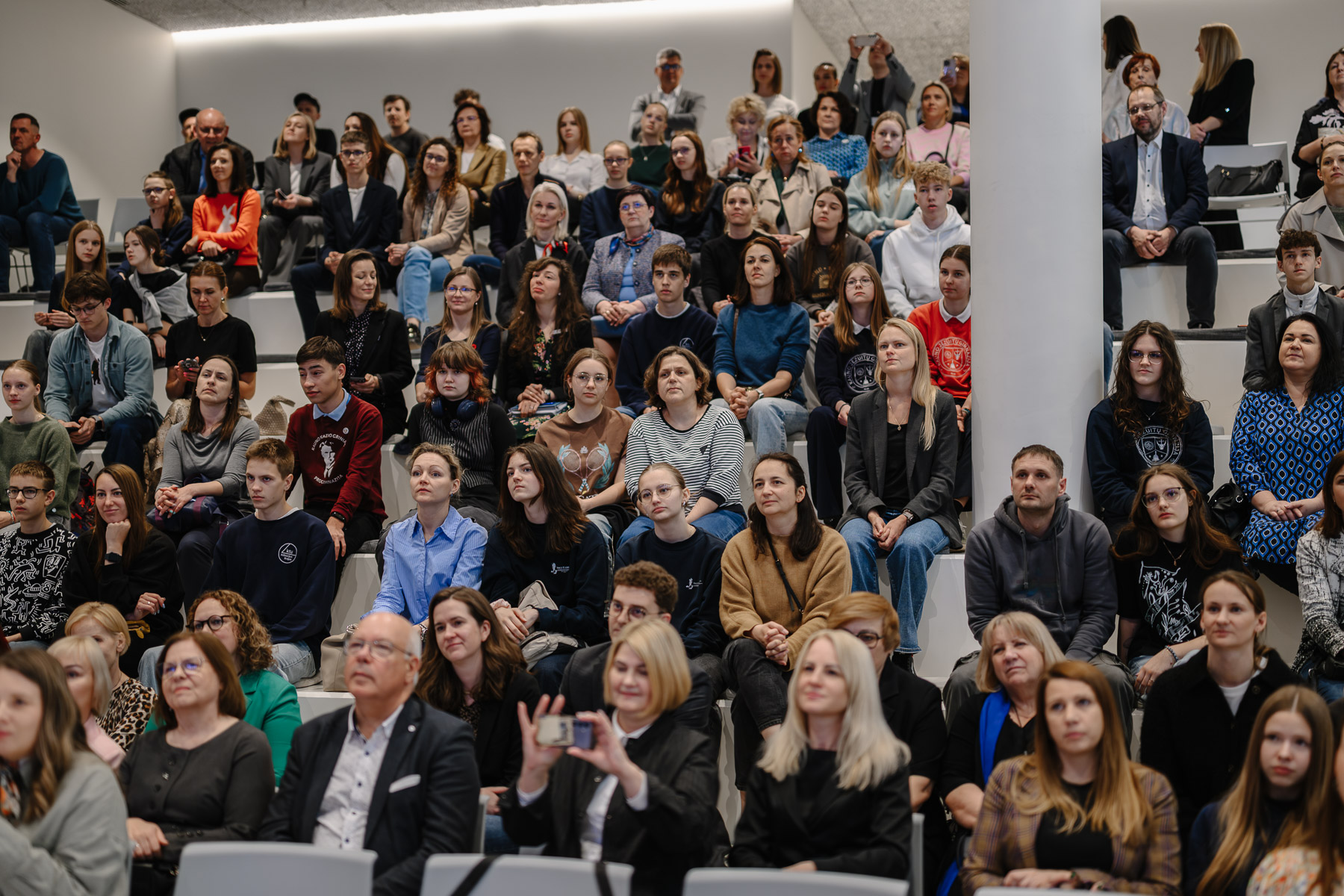
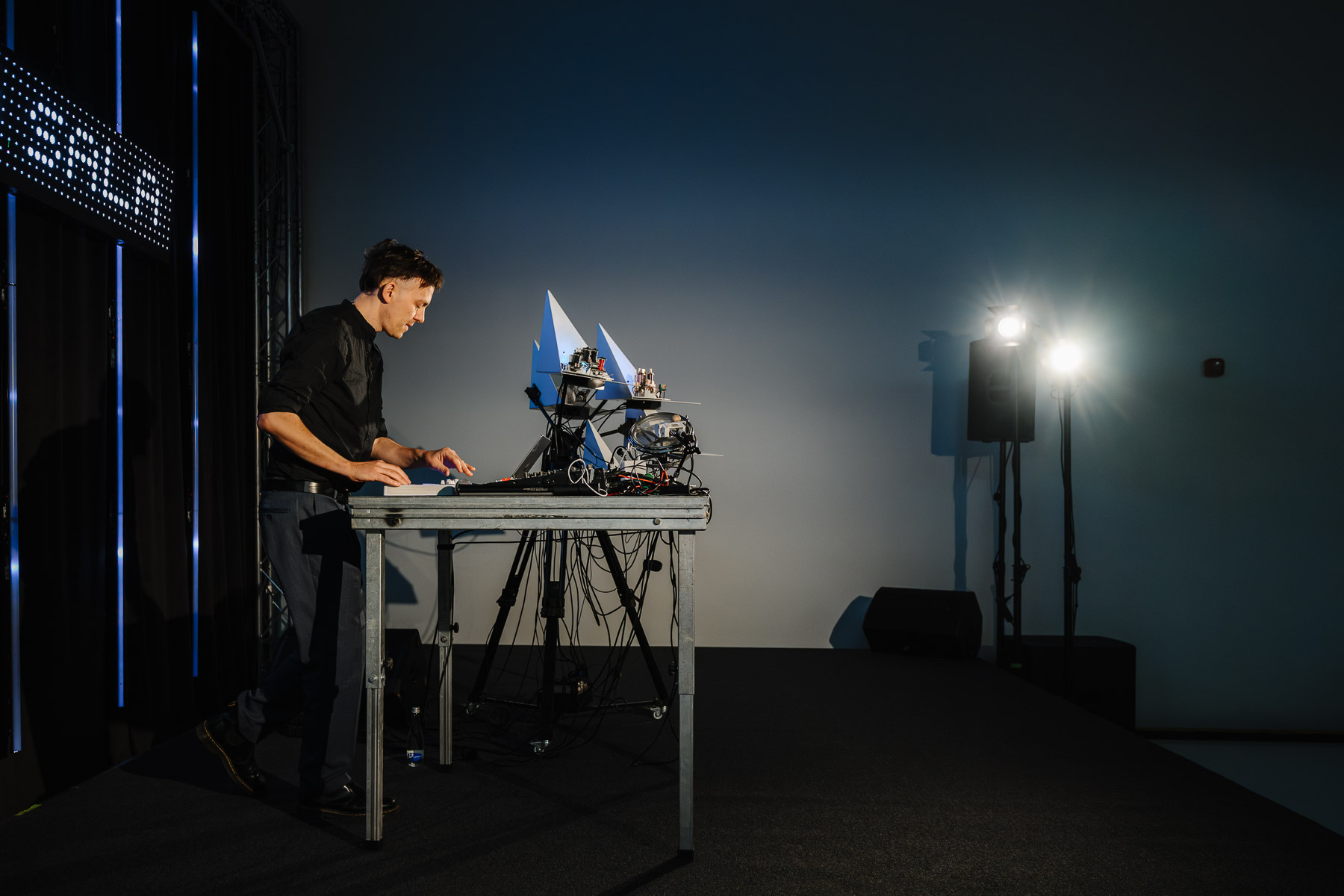
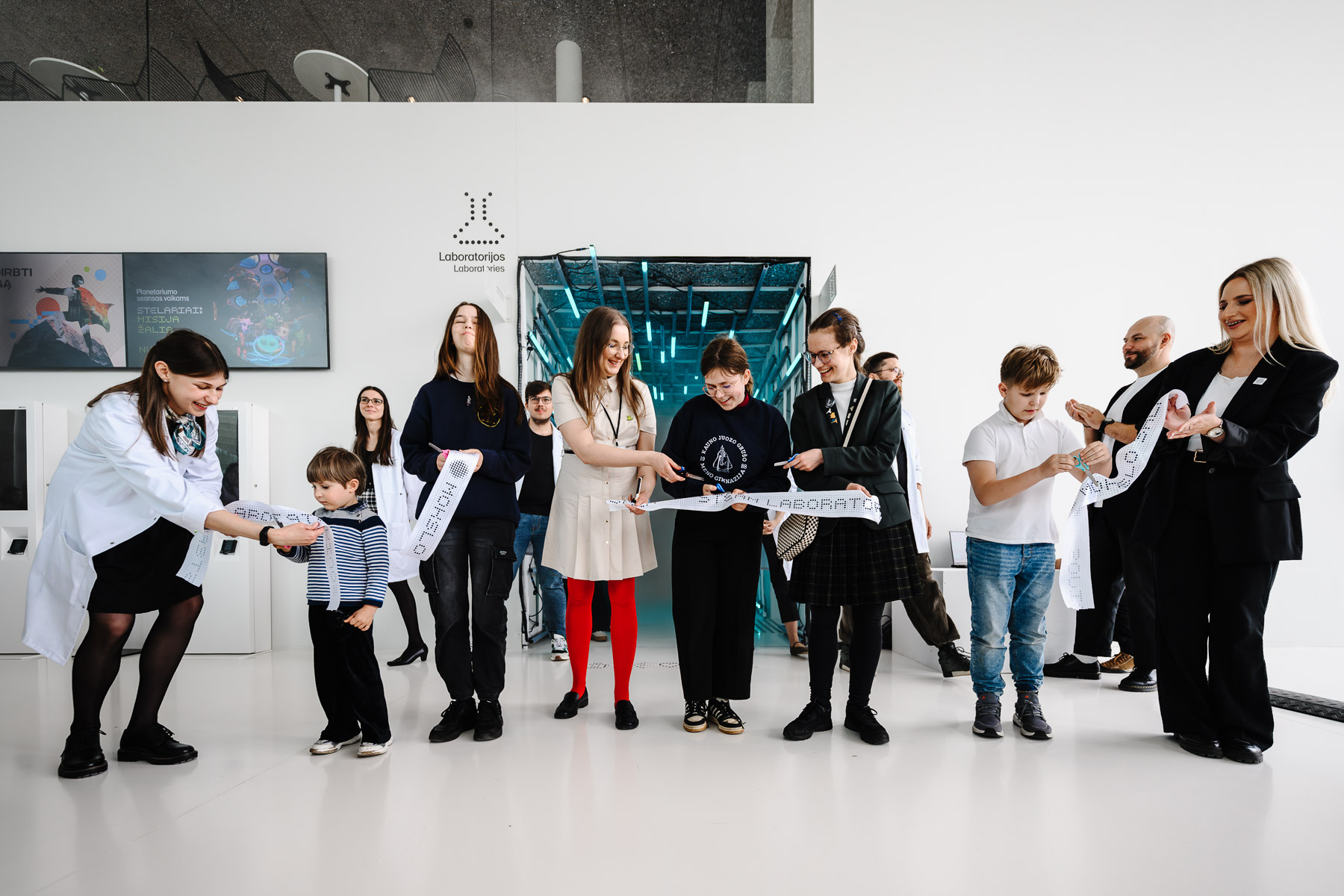
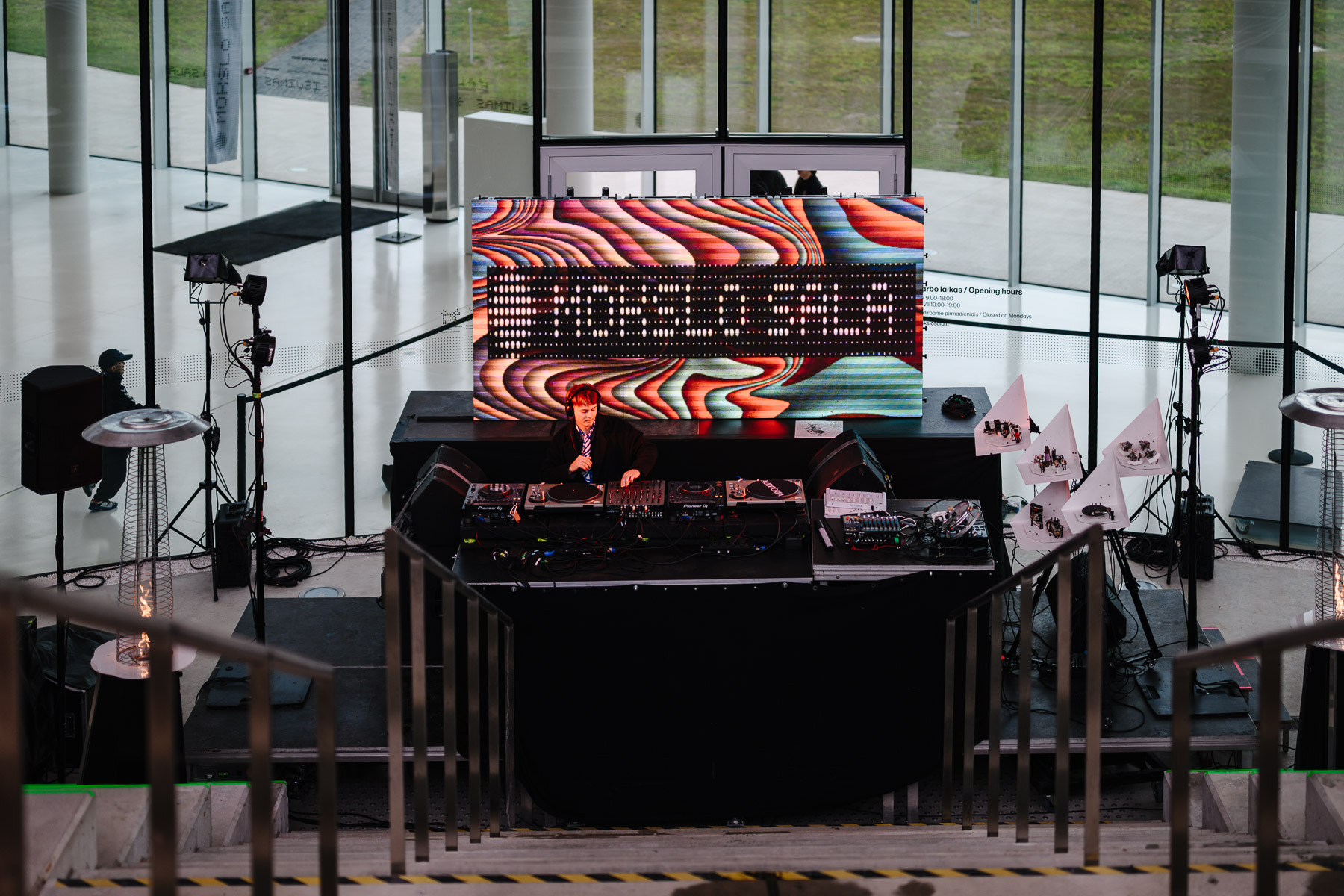
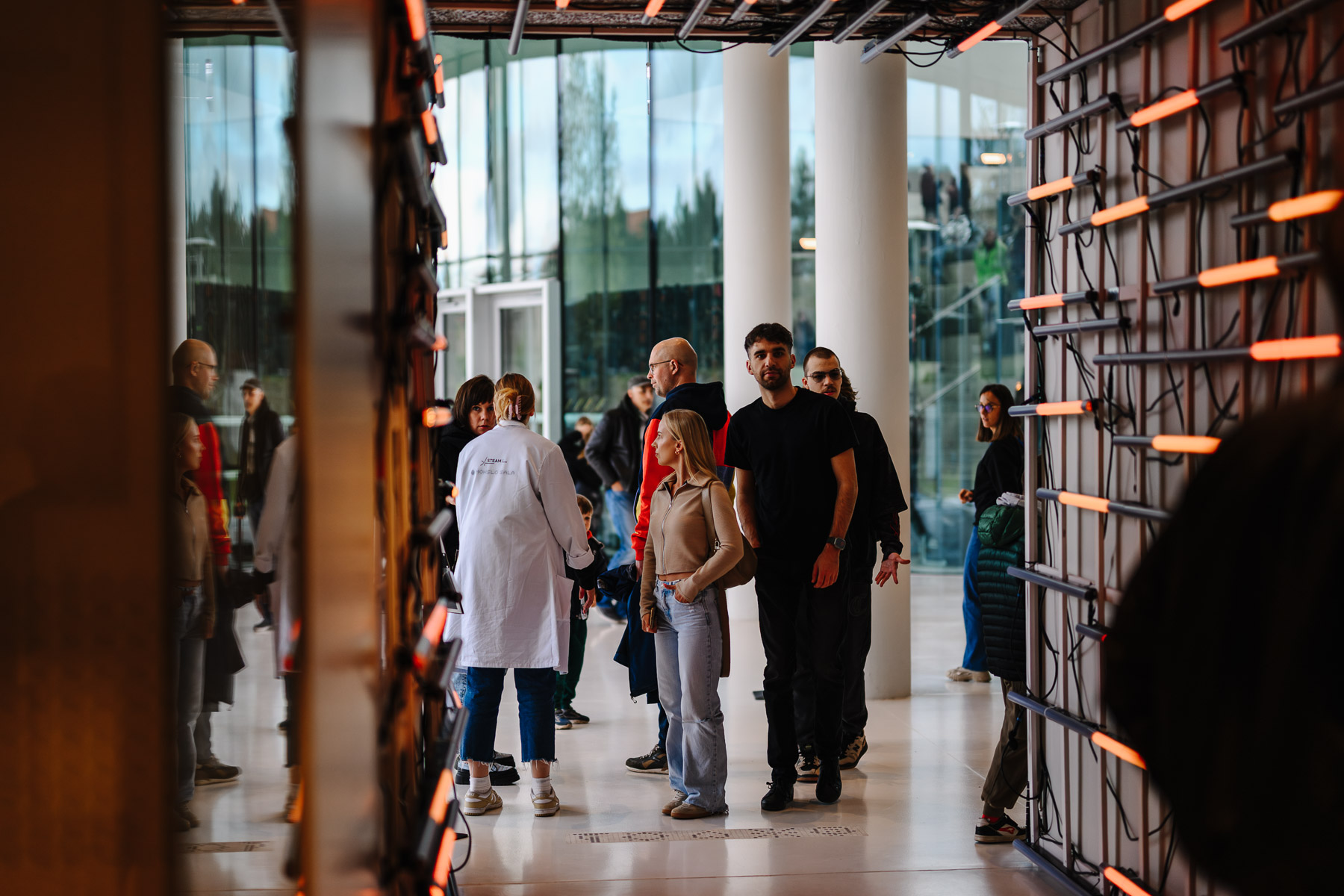
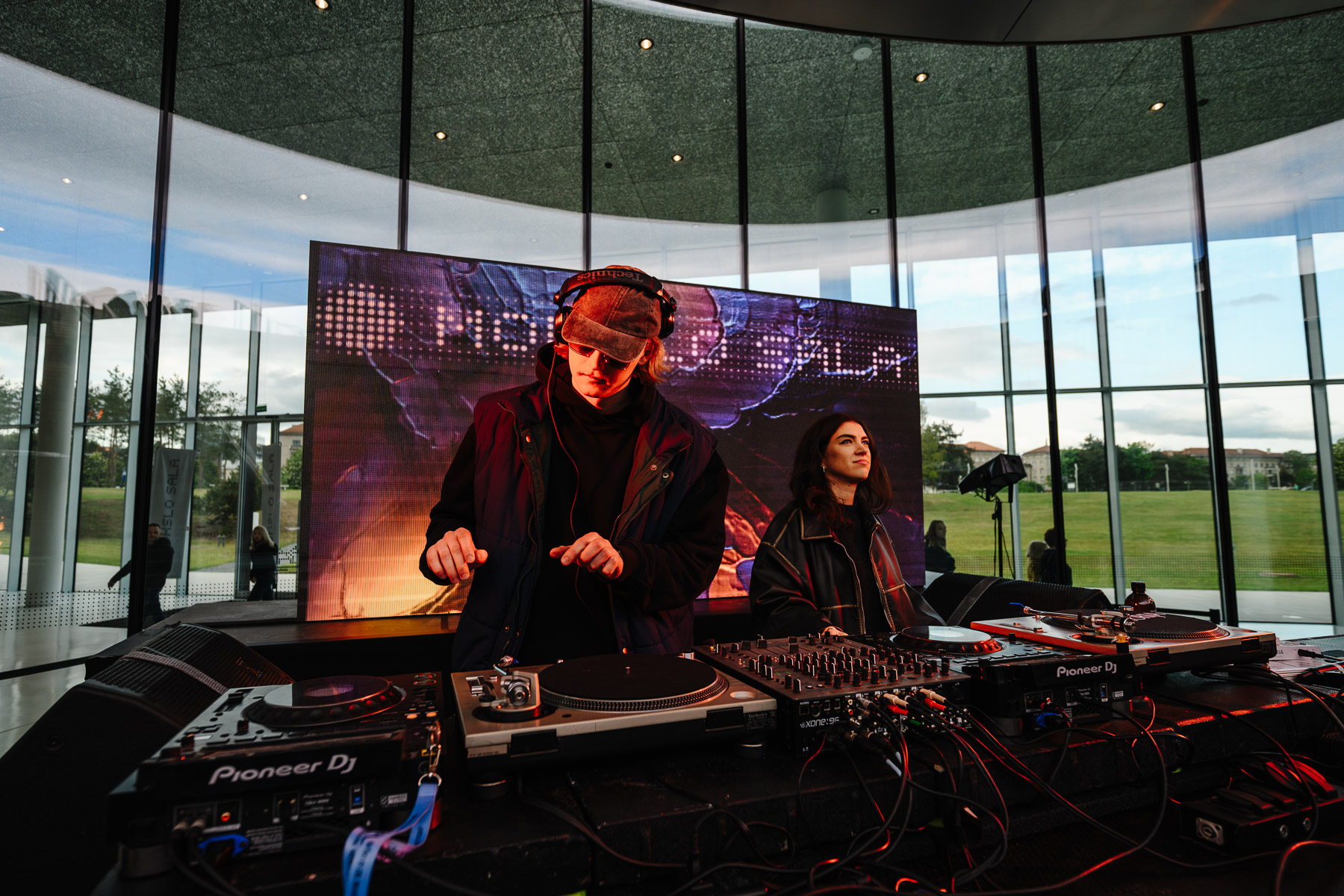
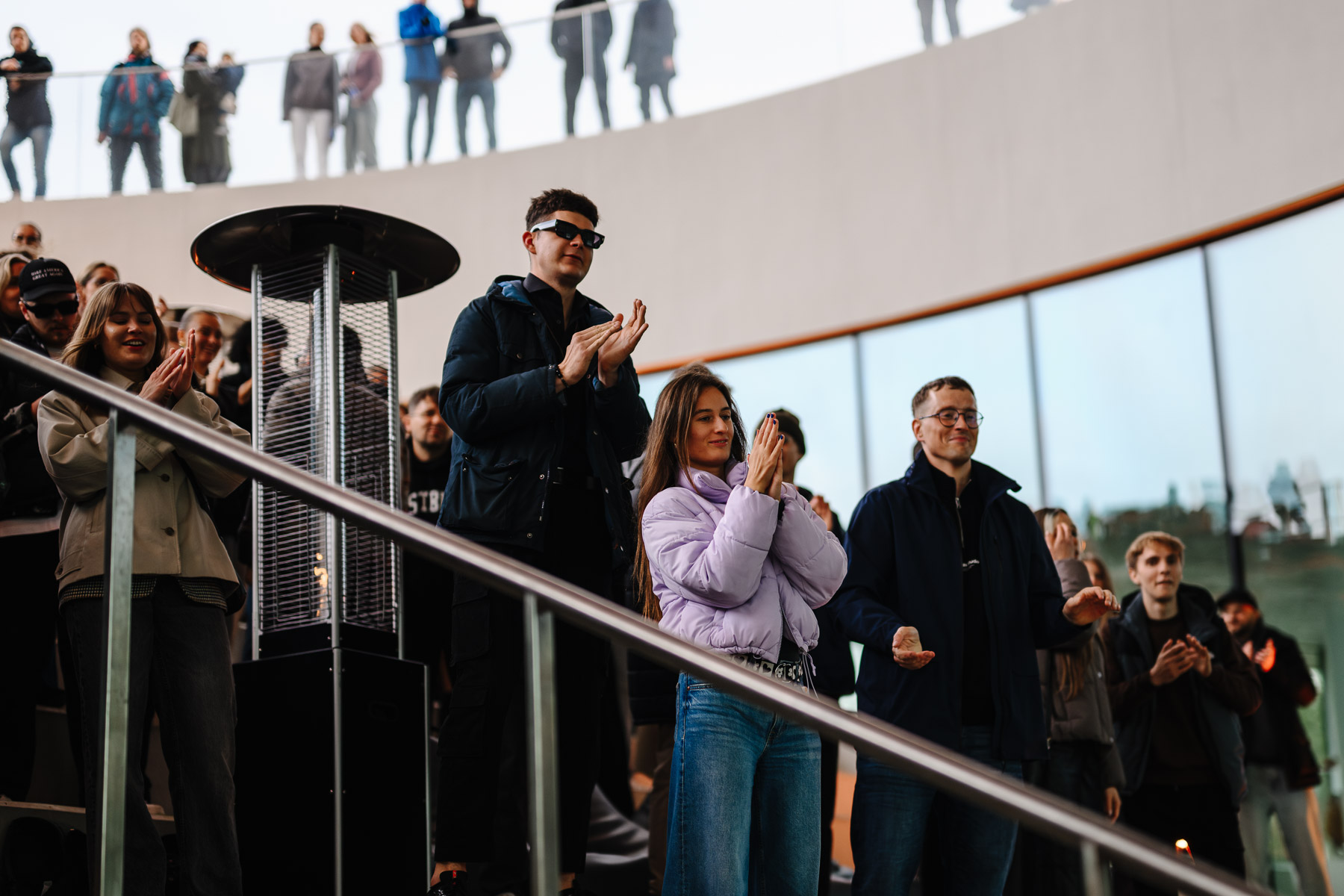
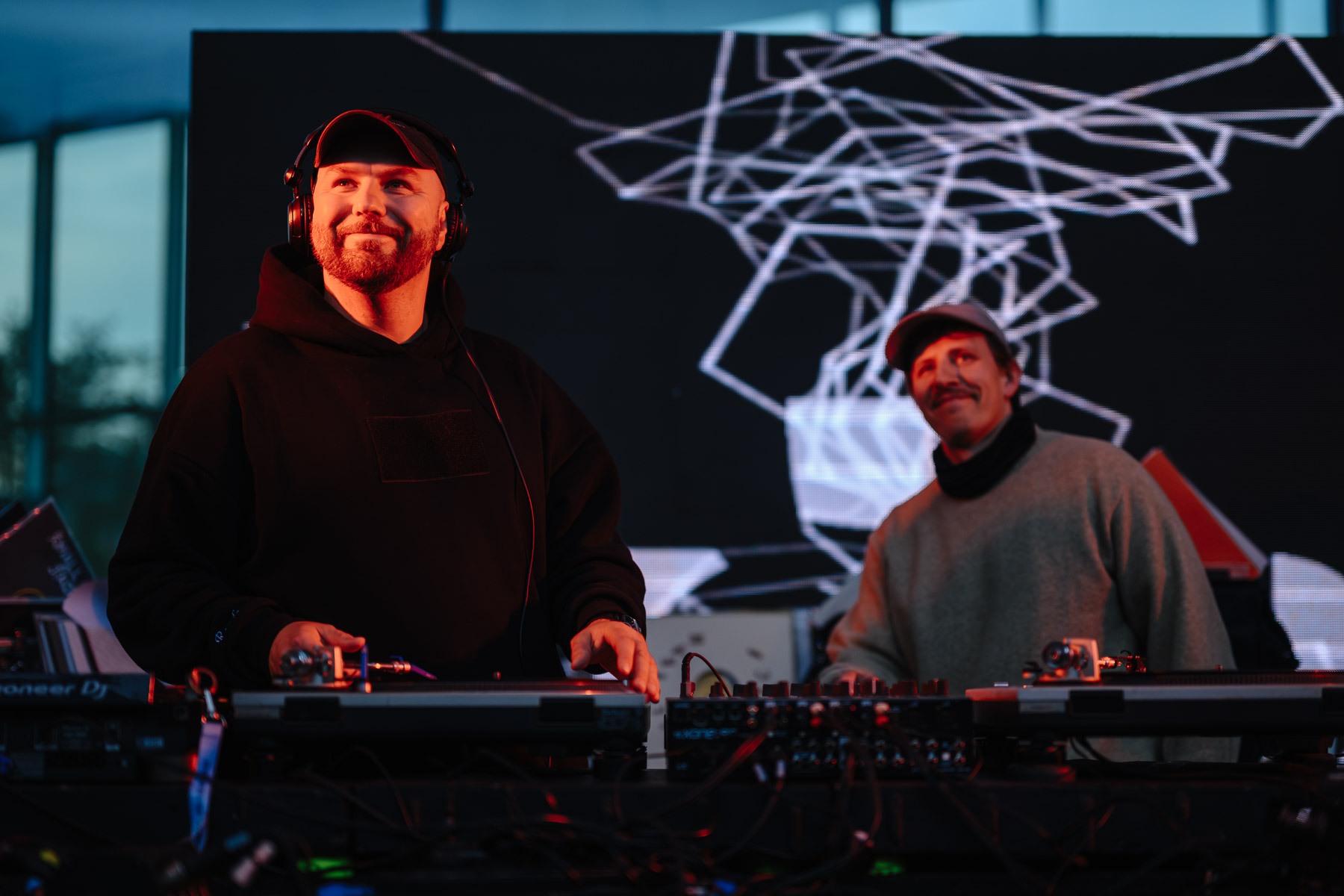
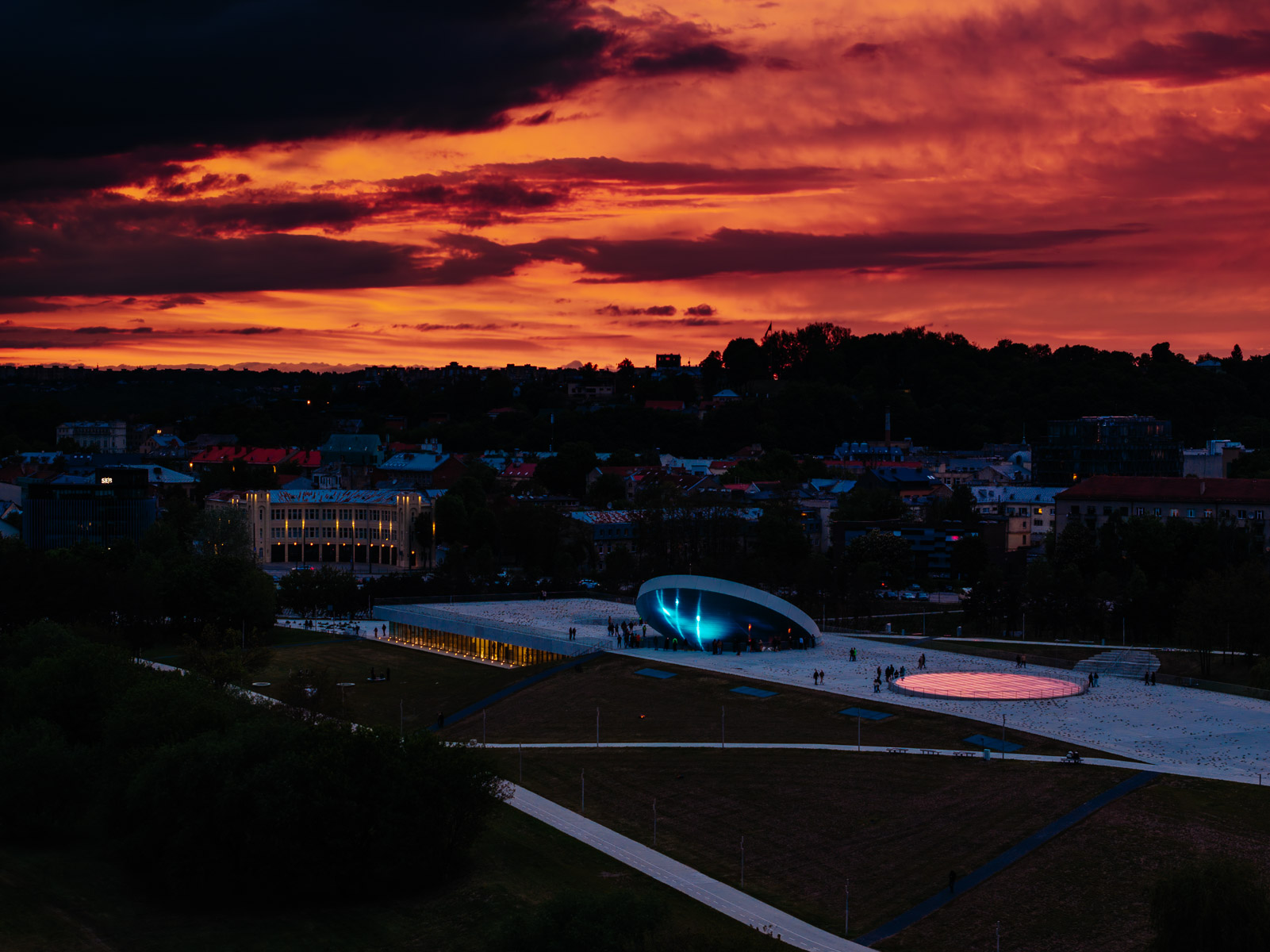
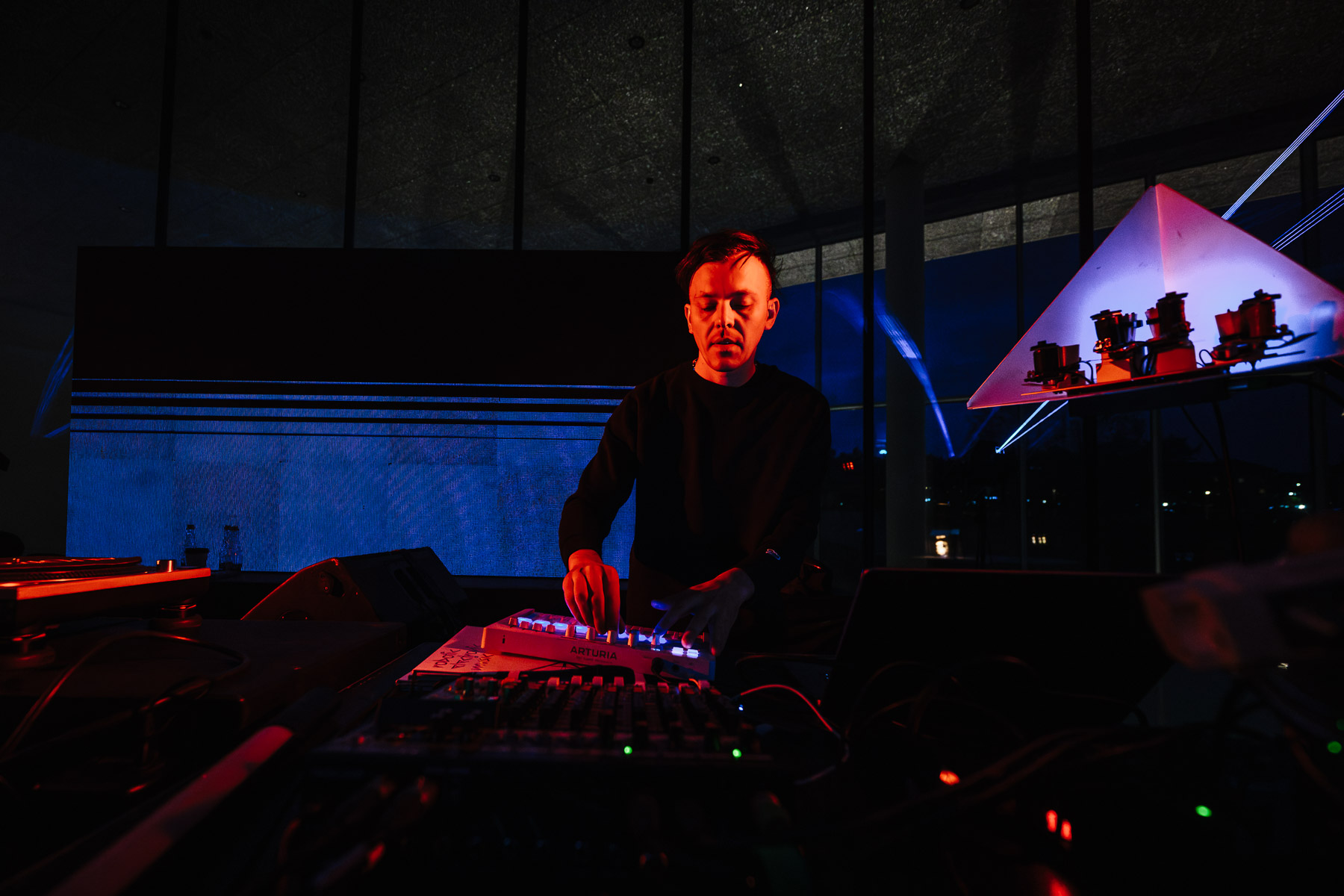
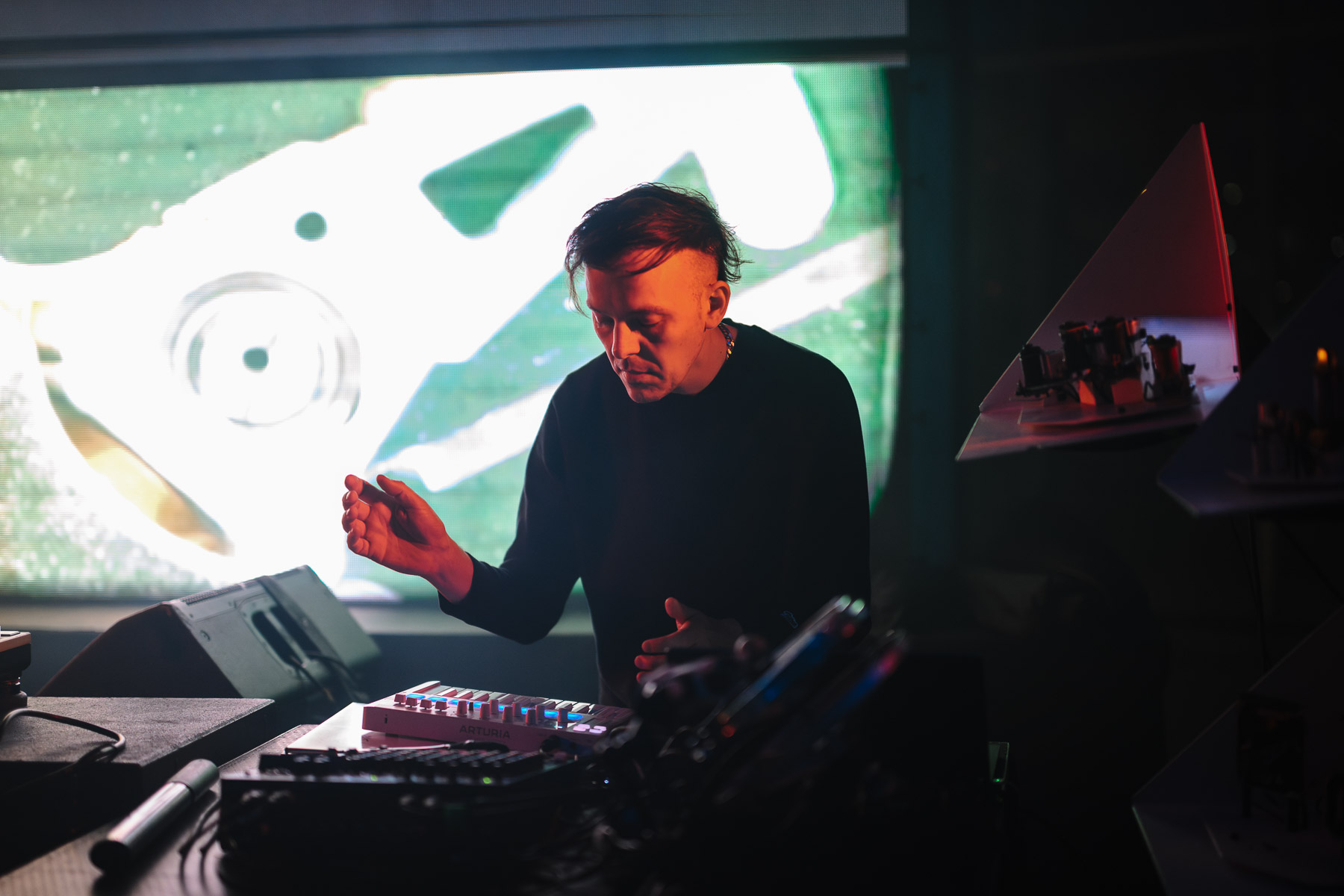
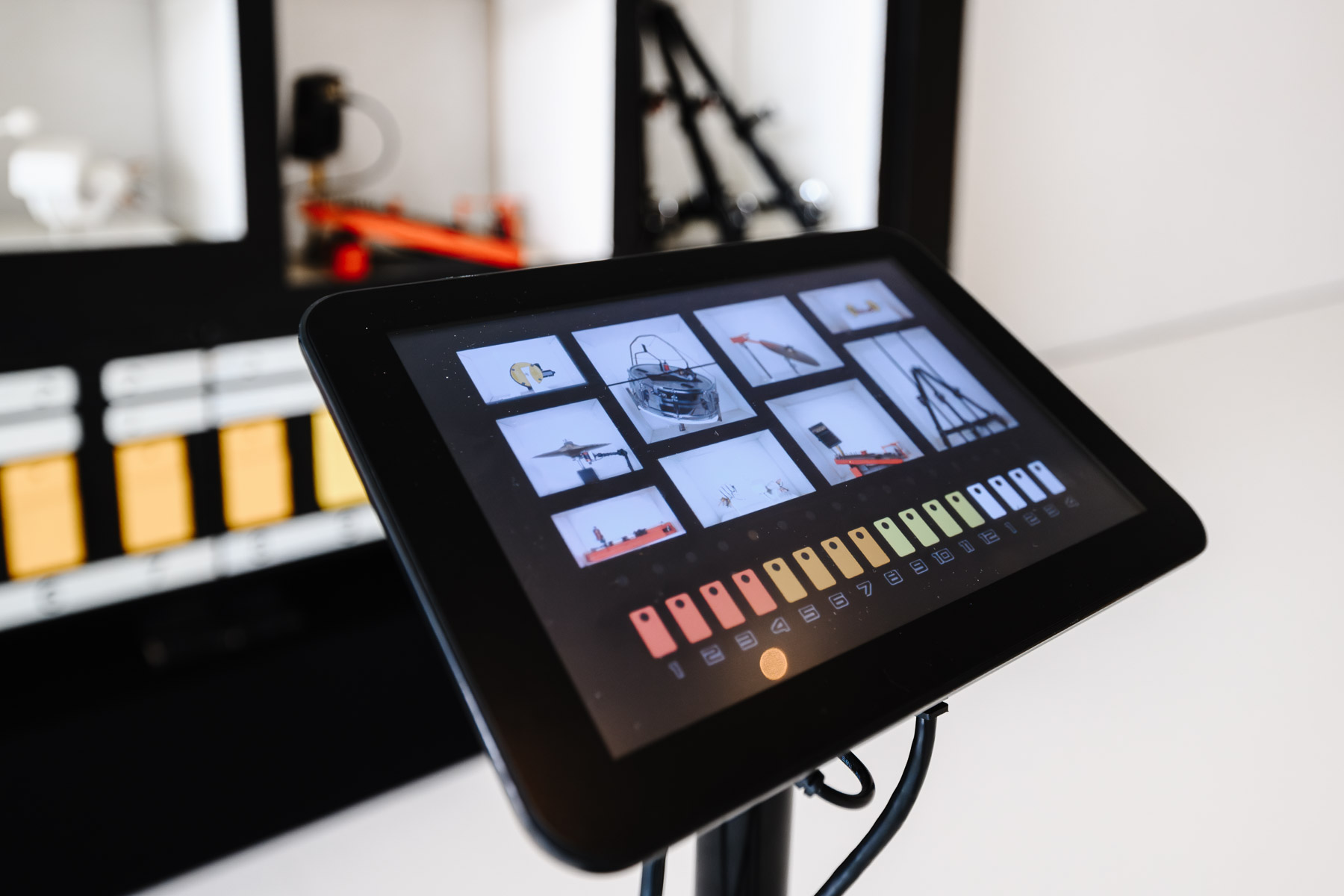
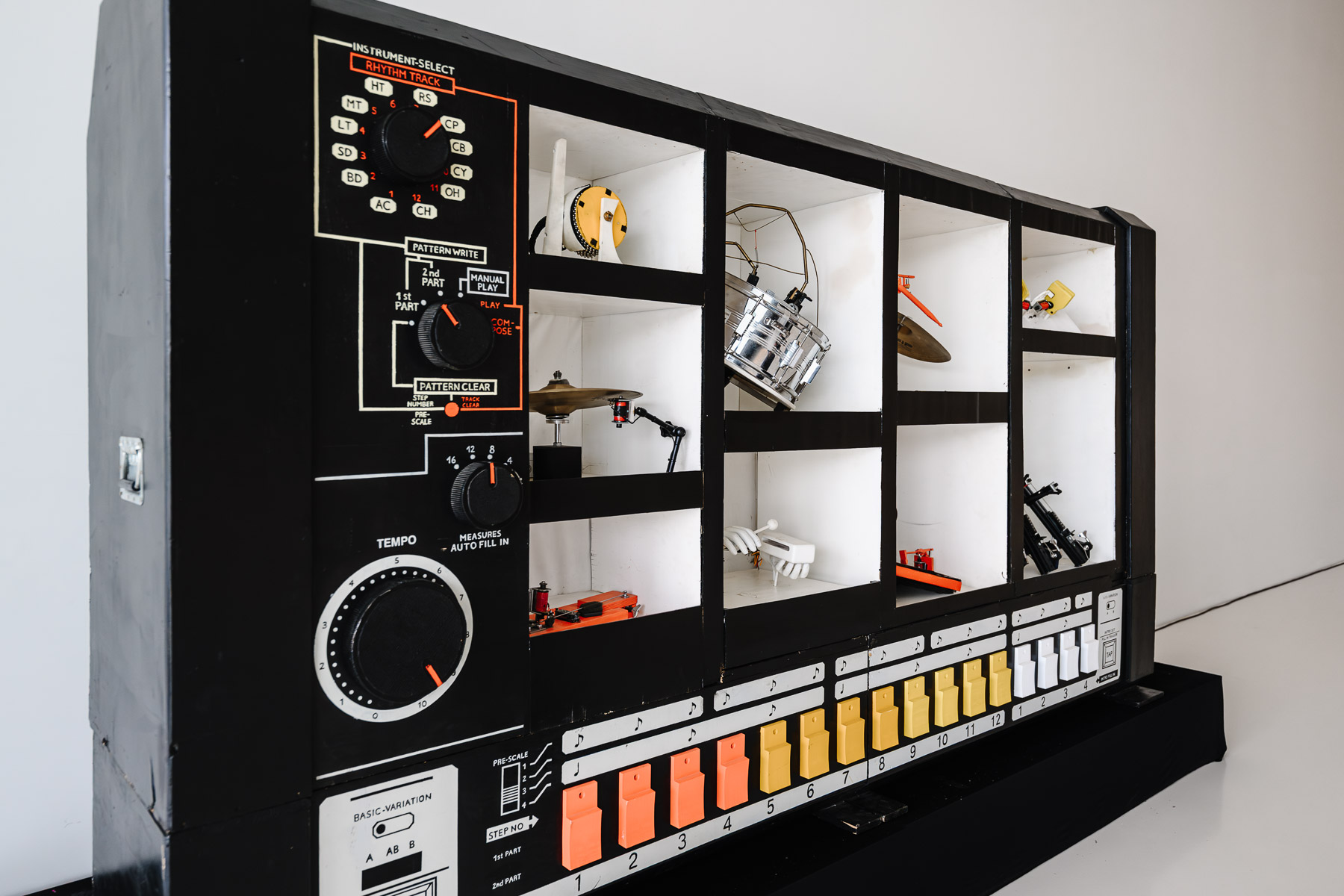
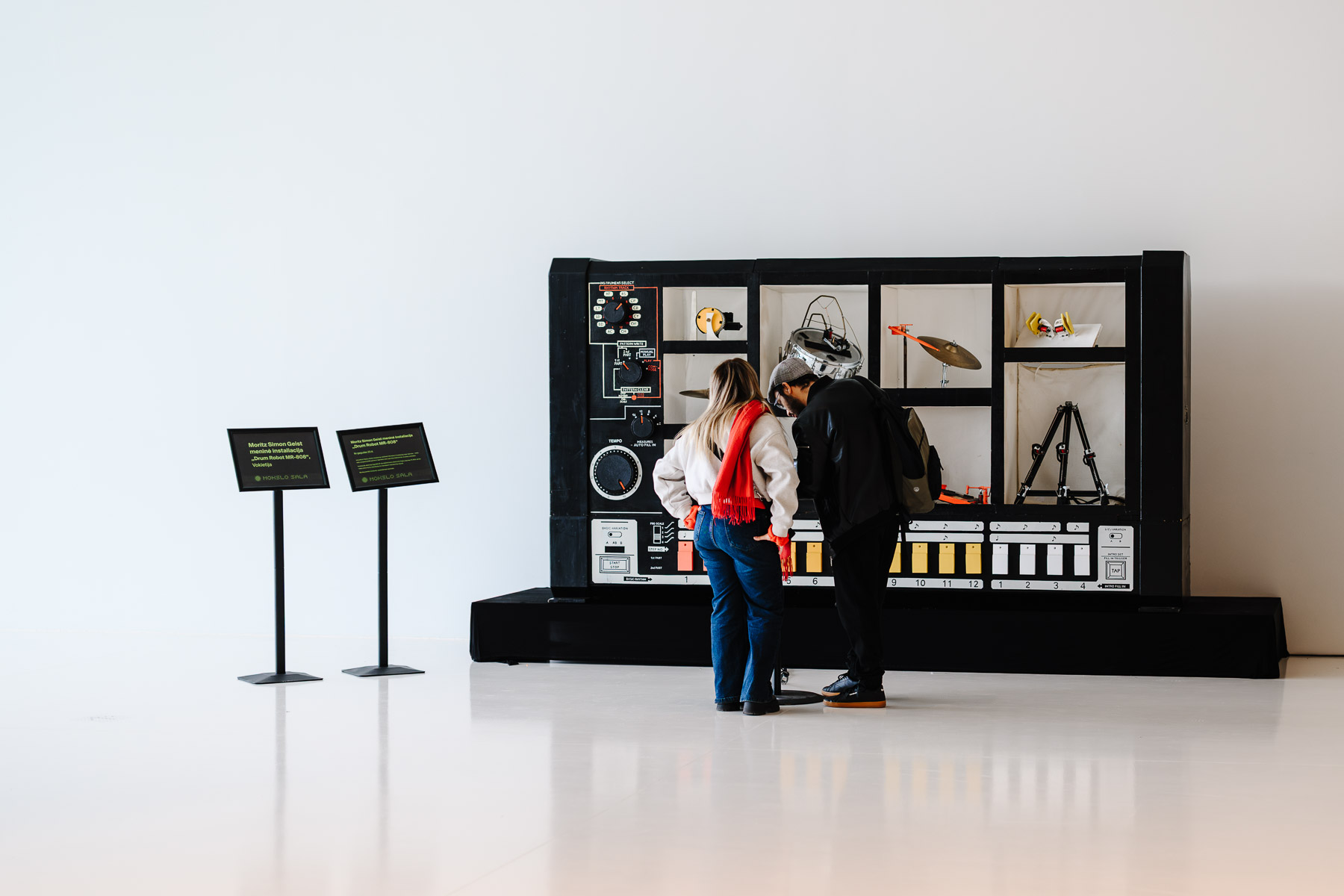
On May 16-17, the most talented children of the Kaunas, prominent academics, business representatives and visitors who care about science and music gathered on Nemunas Island. On Friday afternoon, the official opening ceremony of the Kaunas Methodical STEAM Center took place, and on Saturday, almost 300 curious people tried of the new laboratories for free. The celebration continued until late in the evening – the large amphitheatre of the Science Island hosted an electronic music program by the Lizdas Sound Institute. The culmination of the evening became a performance by German artist Moritz Simon Geist.
A special gift for Children’s Day
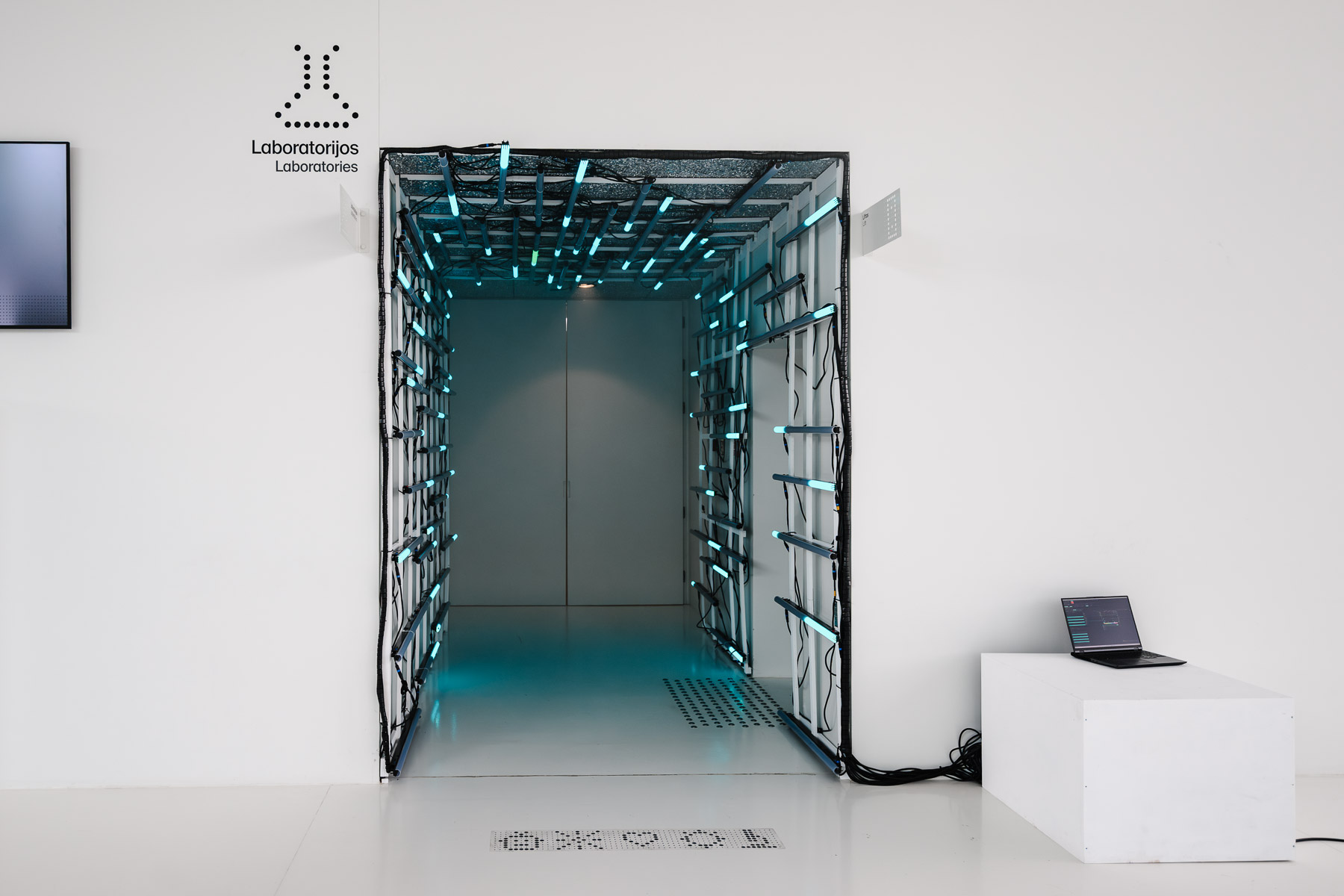
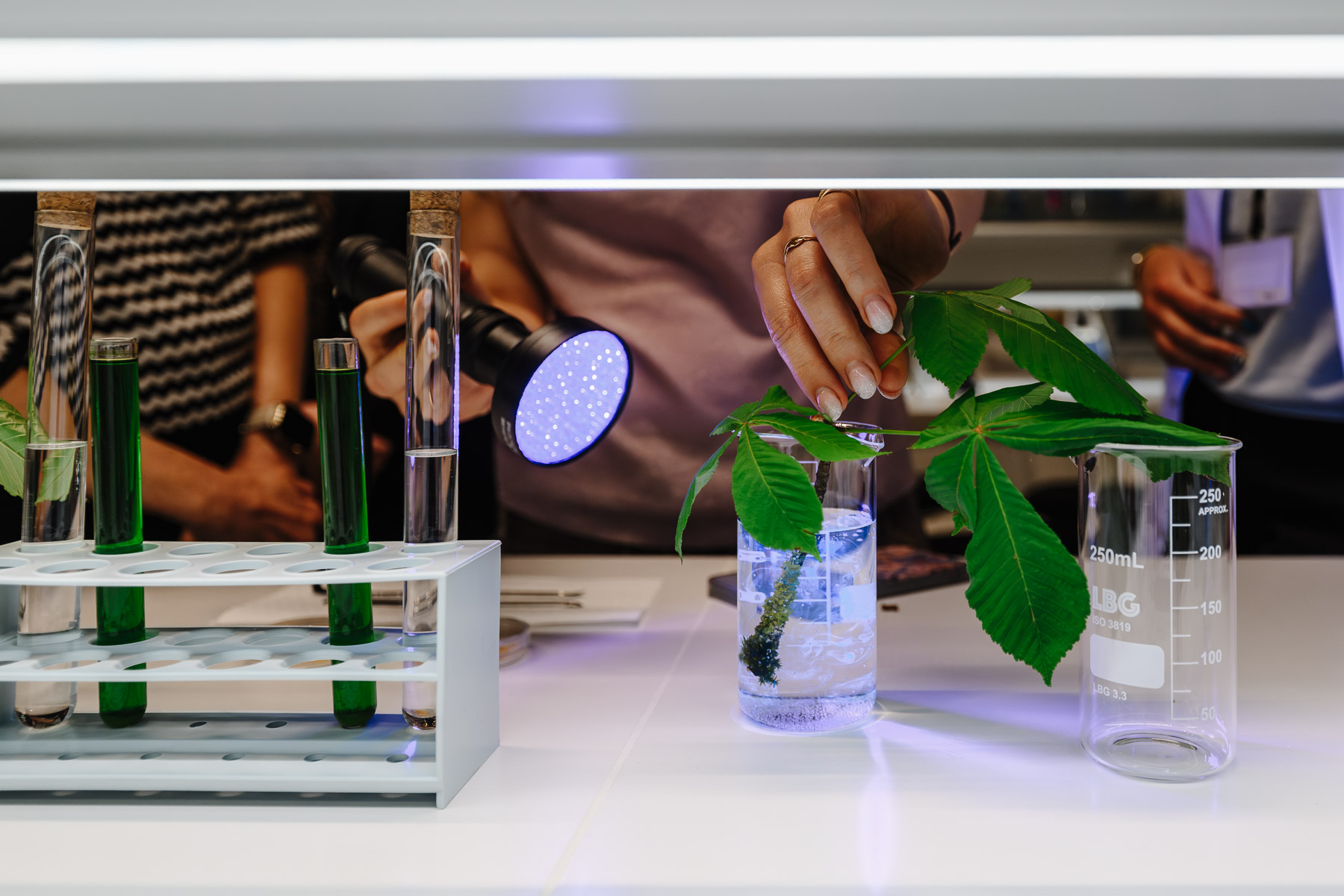
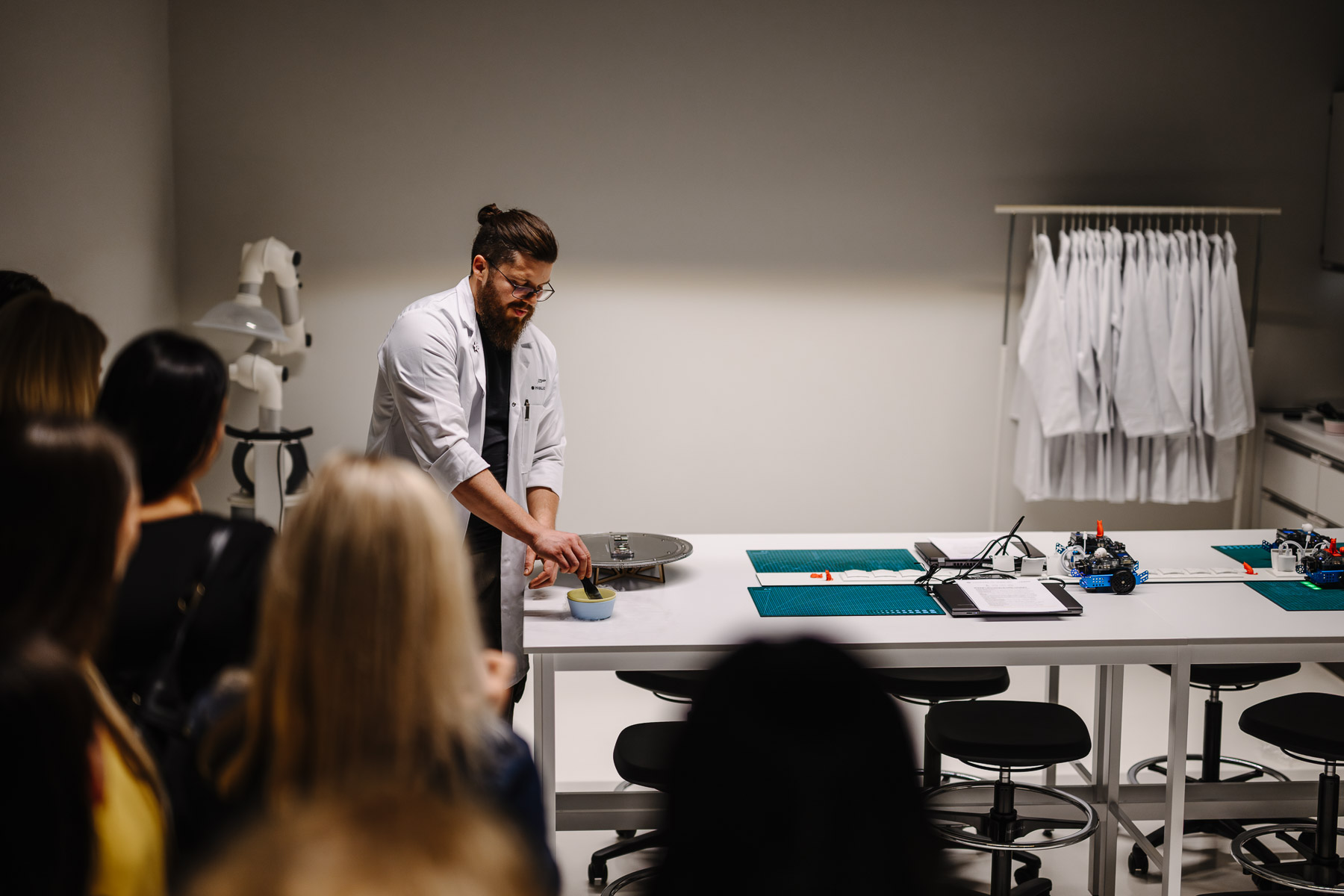
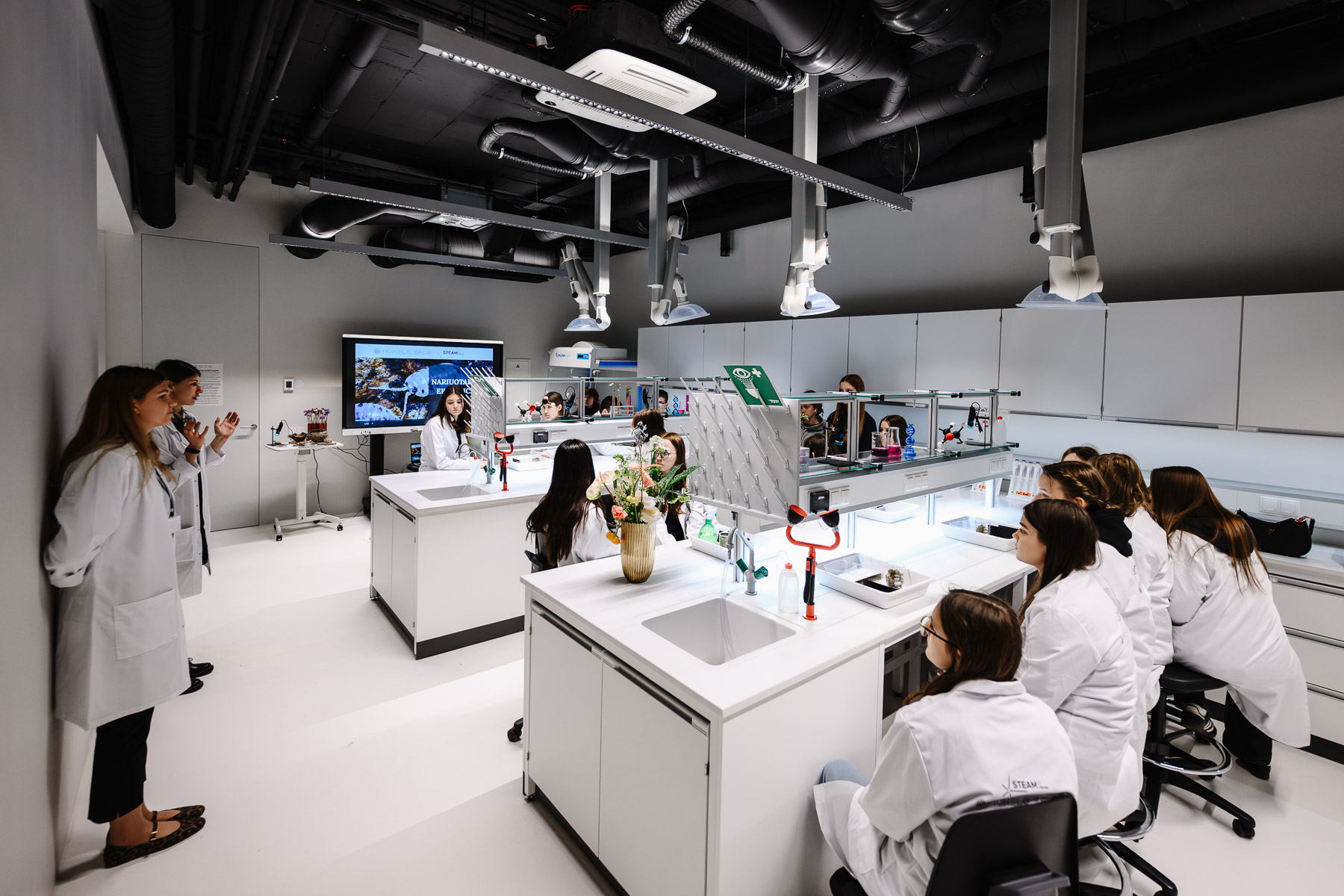
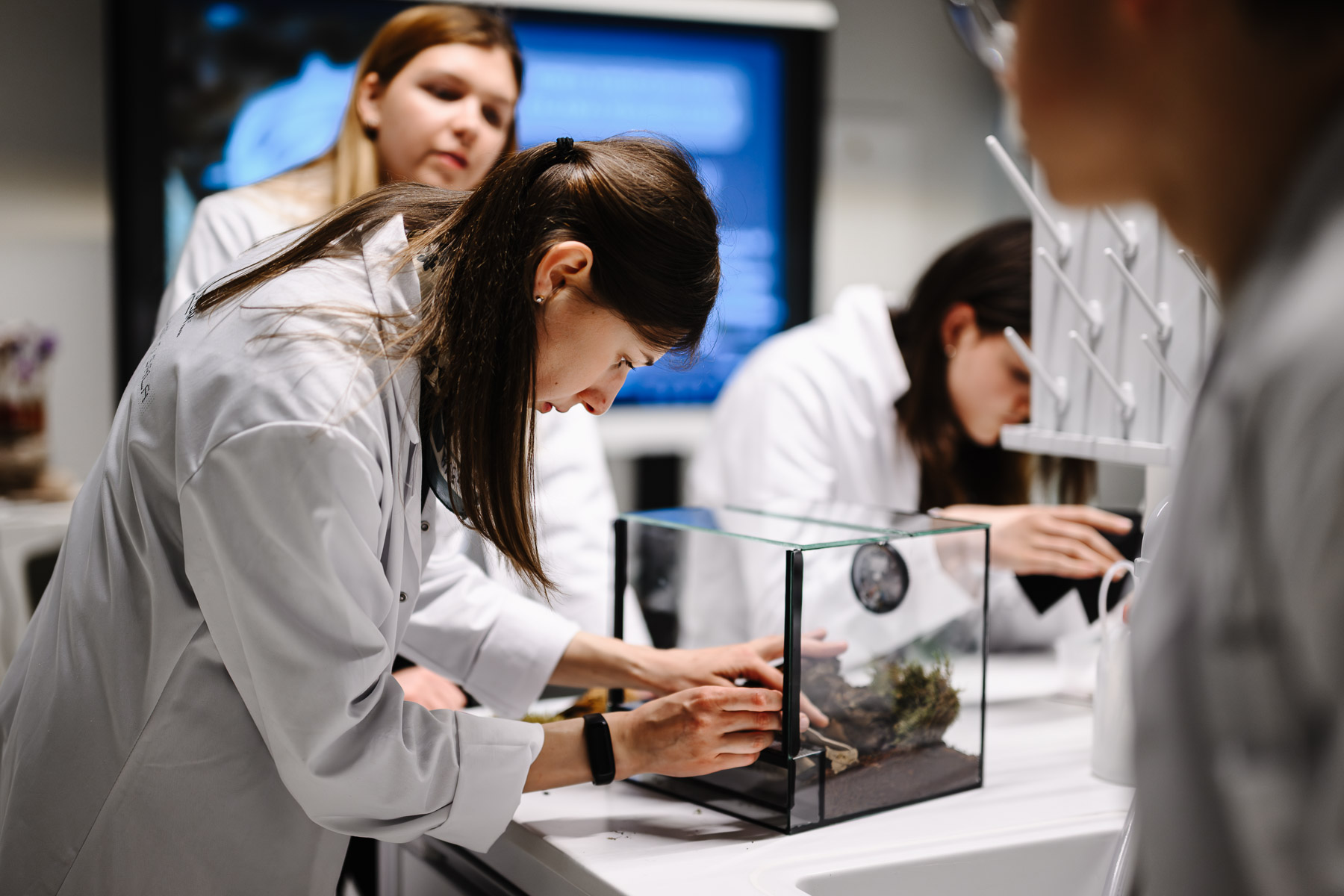
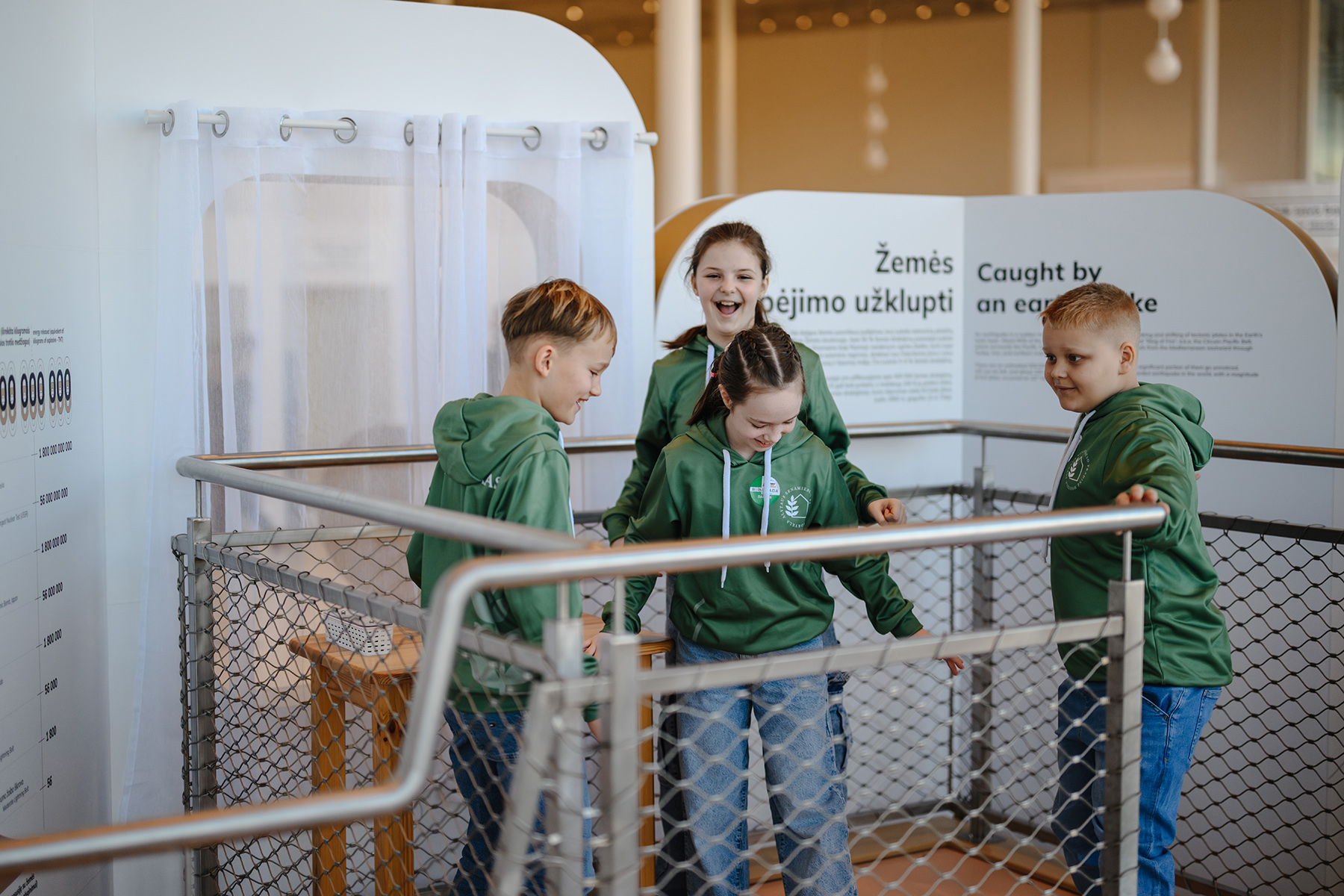
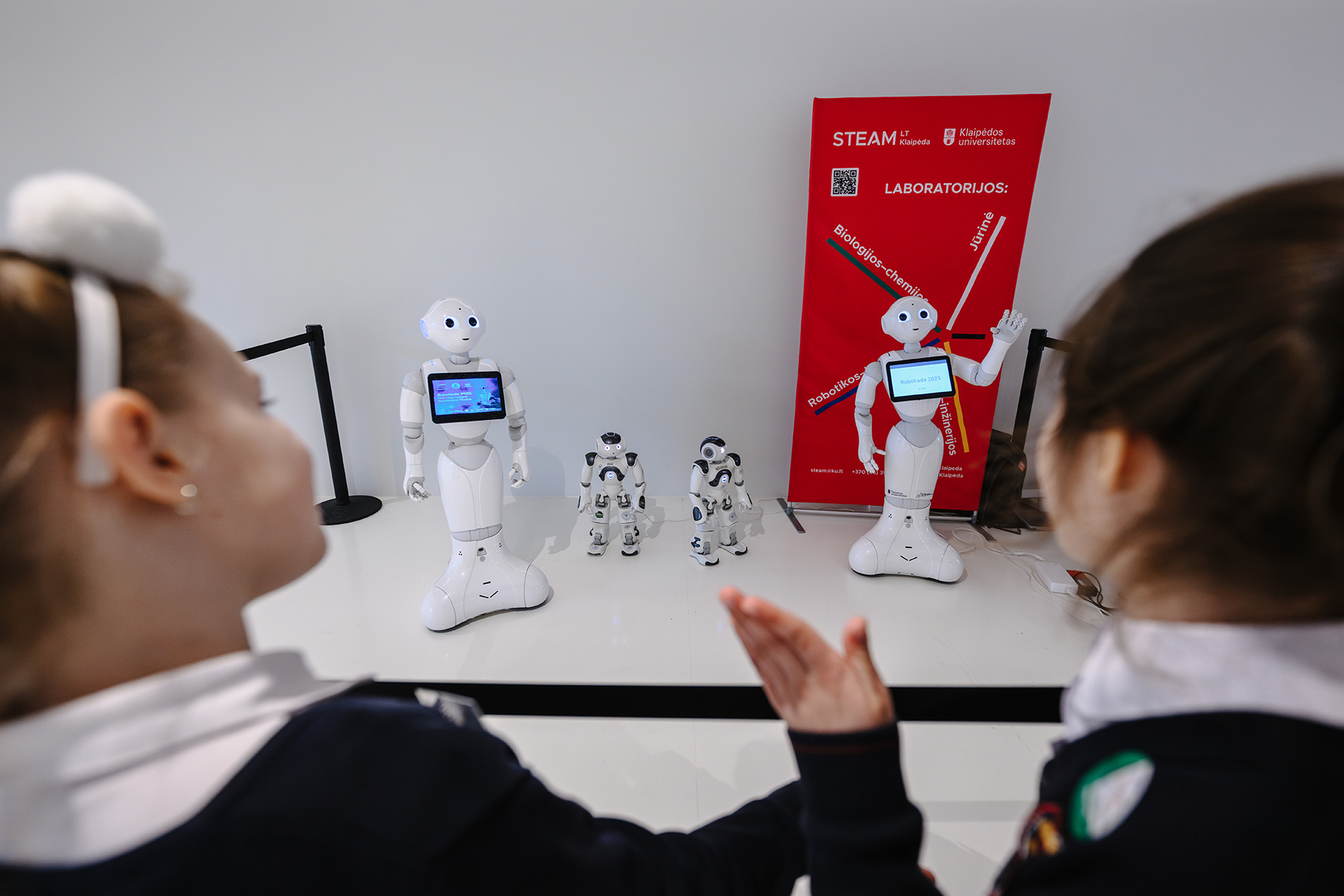
To celebrate Children’s Day, the Science Island team presented a solid gift not only to Kaunas, but also to all Lithuanian children’s – the most modern STEAM laboratory Center in the region. Everyone able to try interactive activities in the Biology-Chemistry, Physics-Engineering, Robotics-IT and Smart City laboratories.
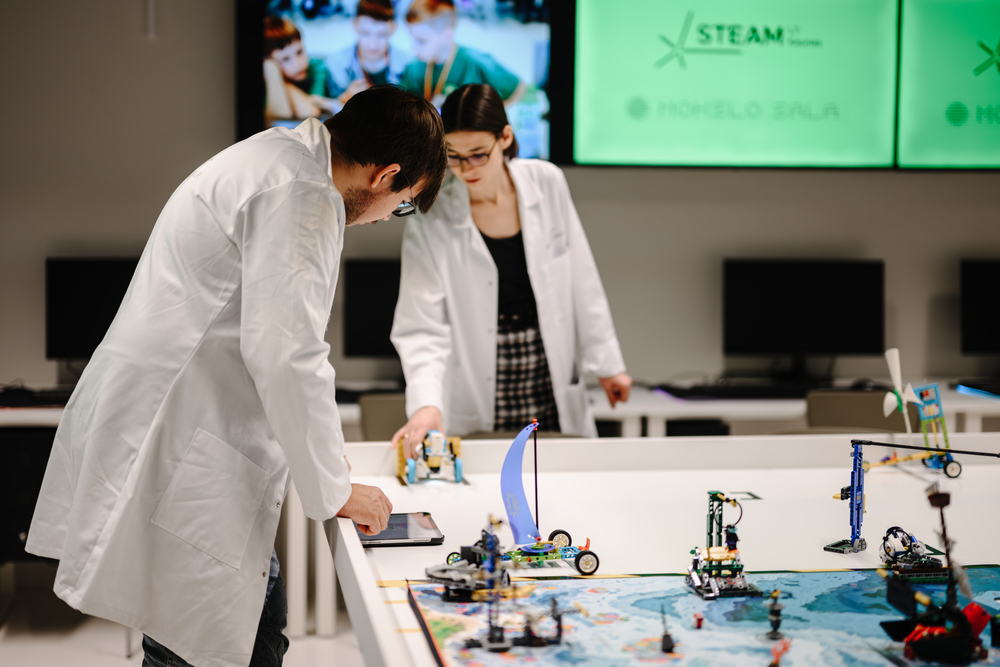
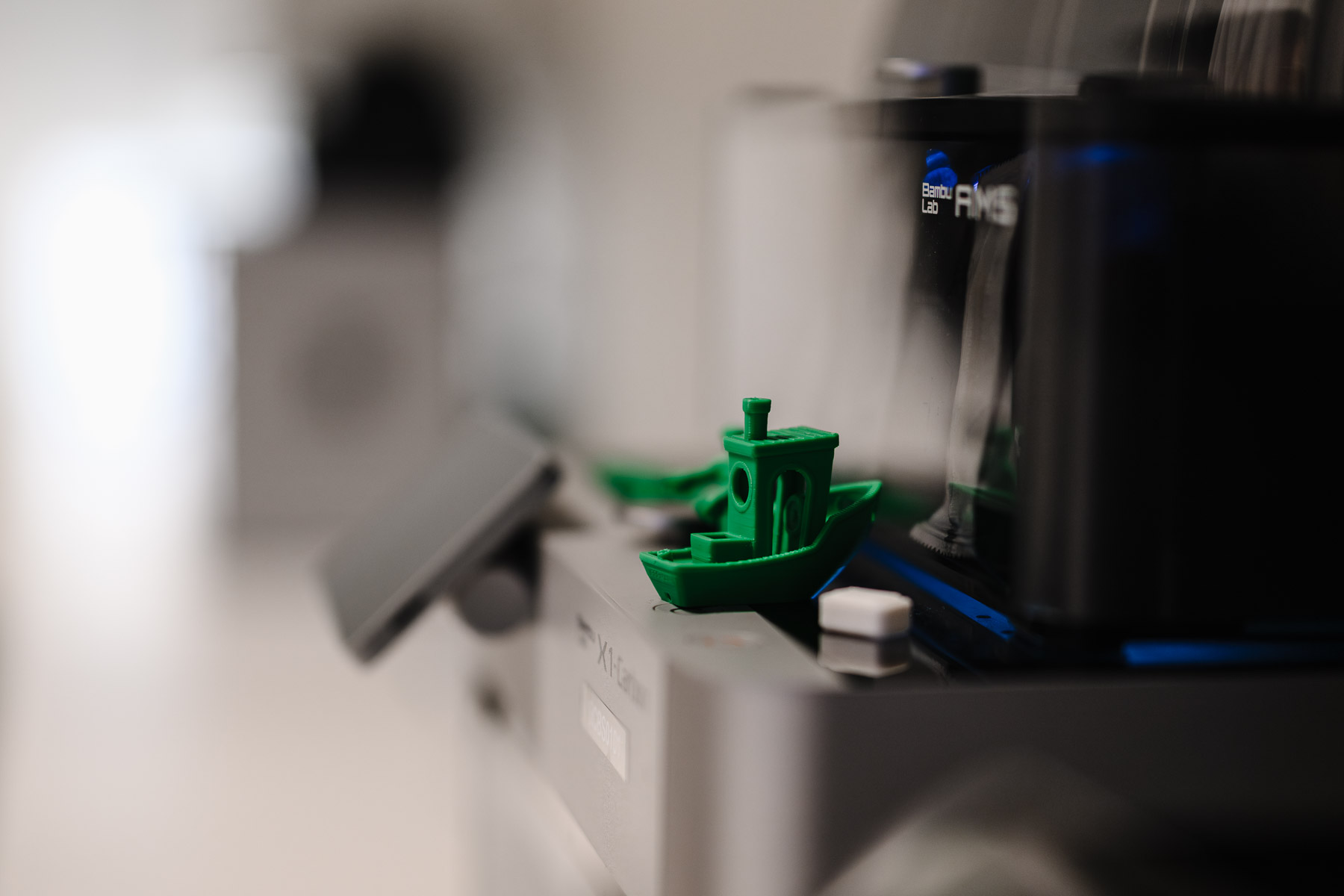
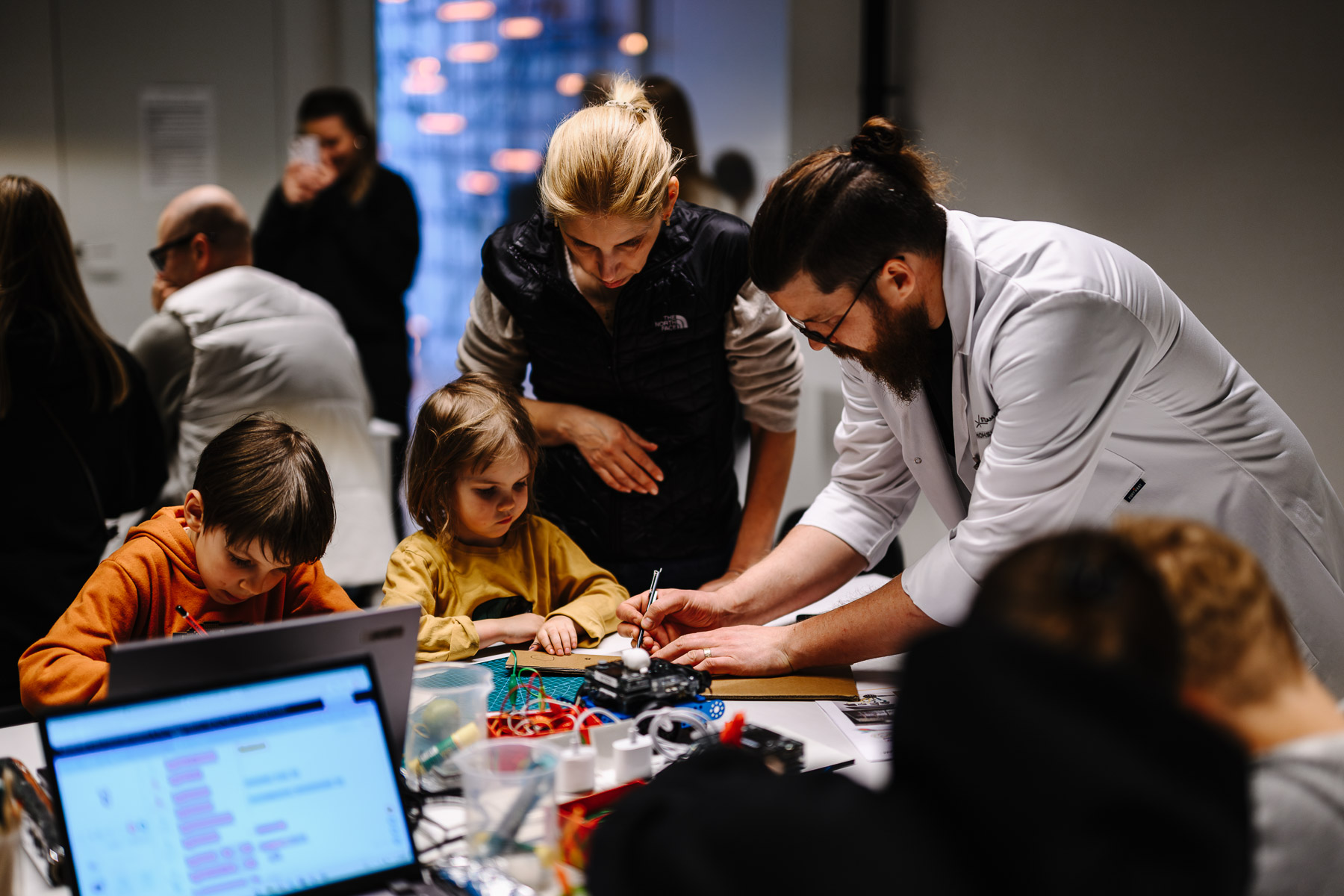
“In the new discovery spaces, we will invite all to perform chemical reactions, isolate DNA samples, study the processes of nerve impulse transmission, construct and program robots, model and print projections yourself using 3D printers or scanners.
Here, everyone have the opportunity to apply theoretical knowledge in practice and, with the help of innovative methods, understand how science work“, – said Aistė Lukaševičiūtė, Head of the Science and Innovation Dissemination Center, at the opening event of the STEAM laboratories.
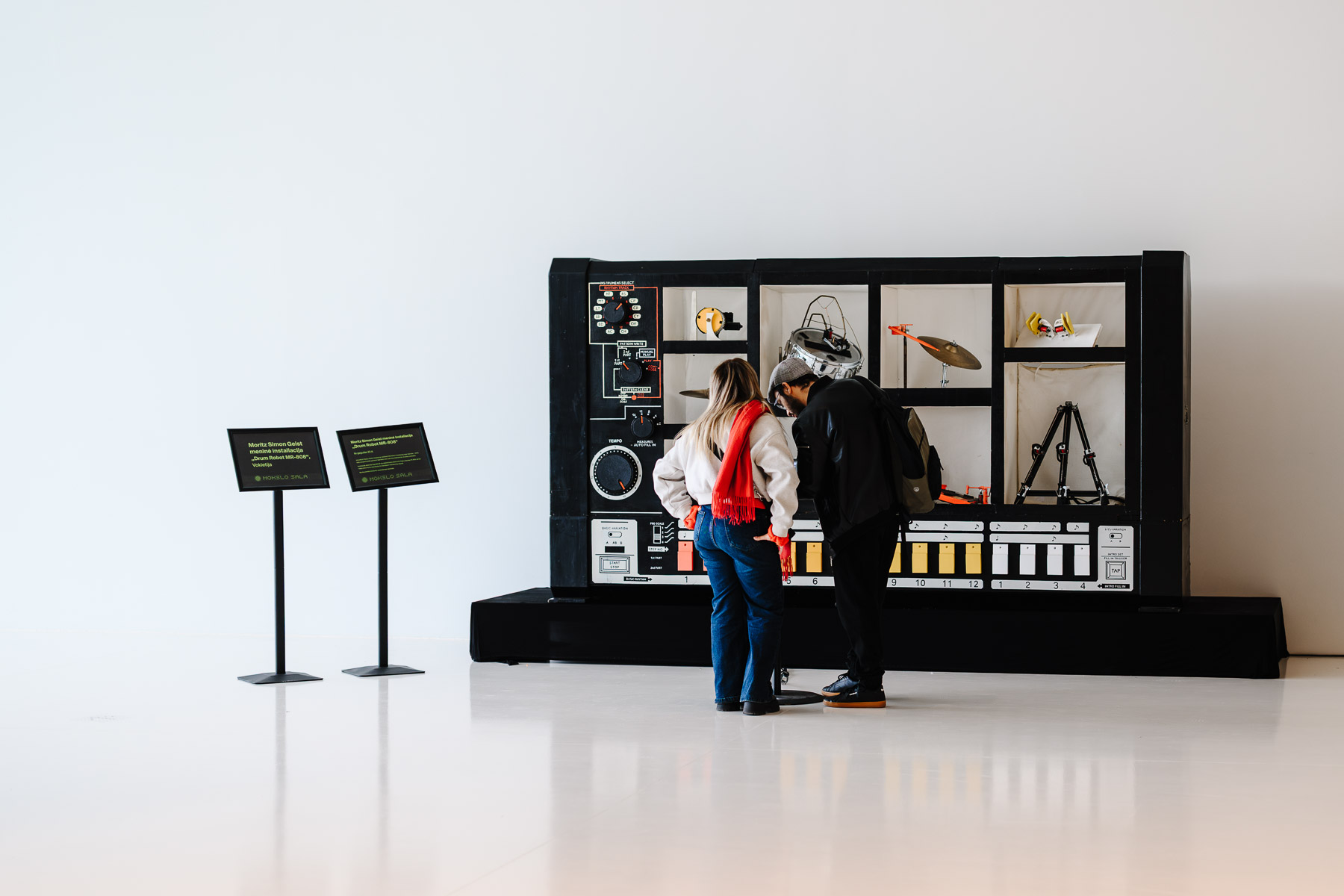
The first interactive activities on laboratories tried students from 7-11 grades, who demonstrate the highest learning results. The children were welcomed at the celebration by German music engineer Moritz Simon Geist and science comunicator Goda Raibytė-Aleksa. In a cozy conversation, the event guests heard the artist‘s inspiring story about choosing a unique profession and practical advice on how purposefully combining knowledge from different disciplines helps him create music with robots.
The importance of community
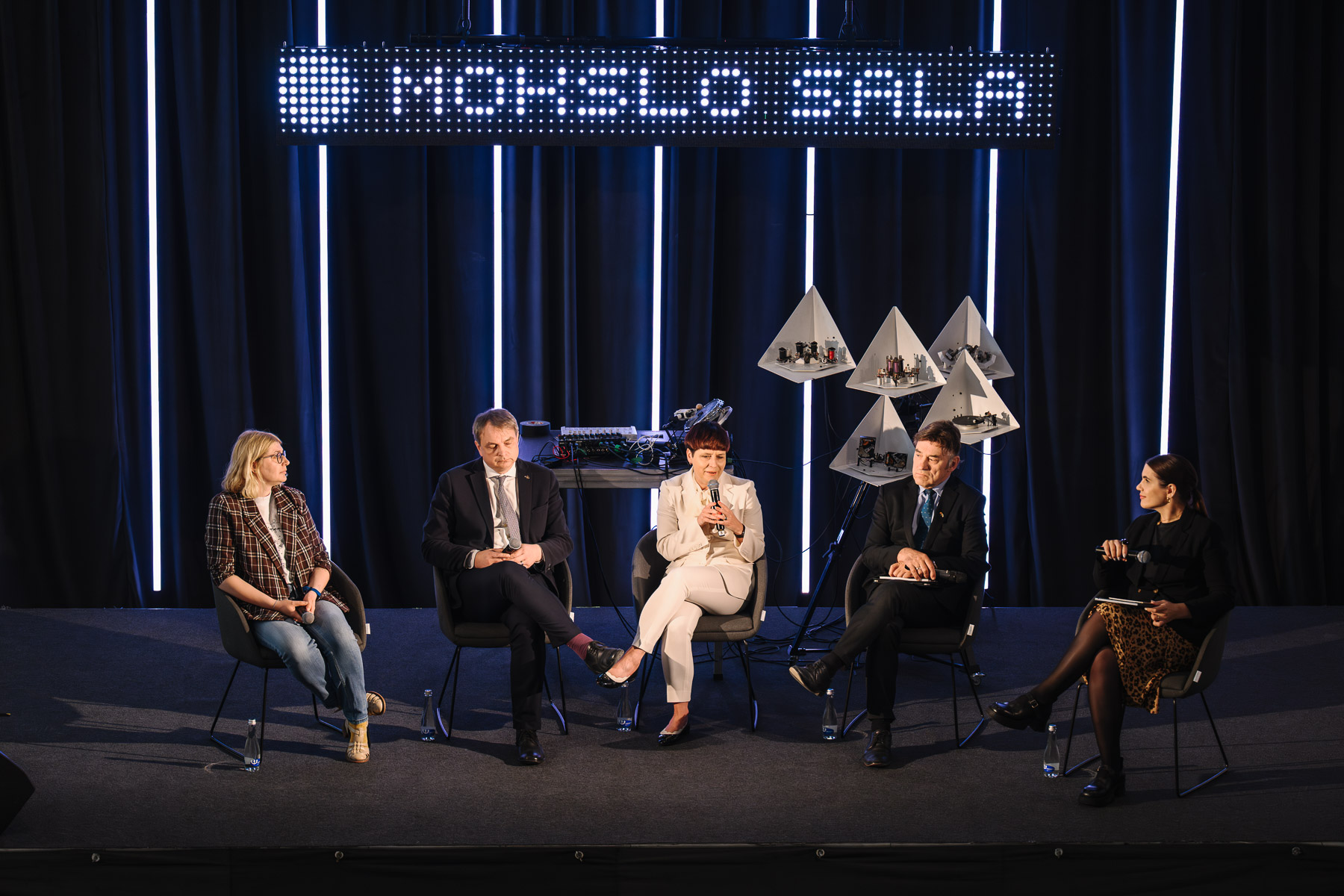
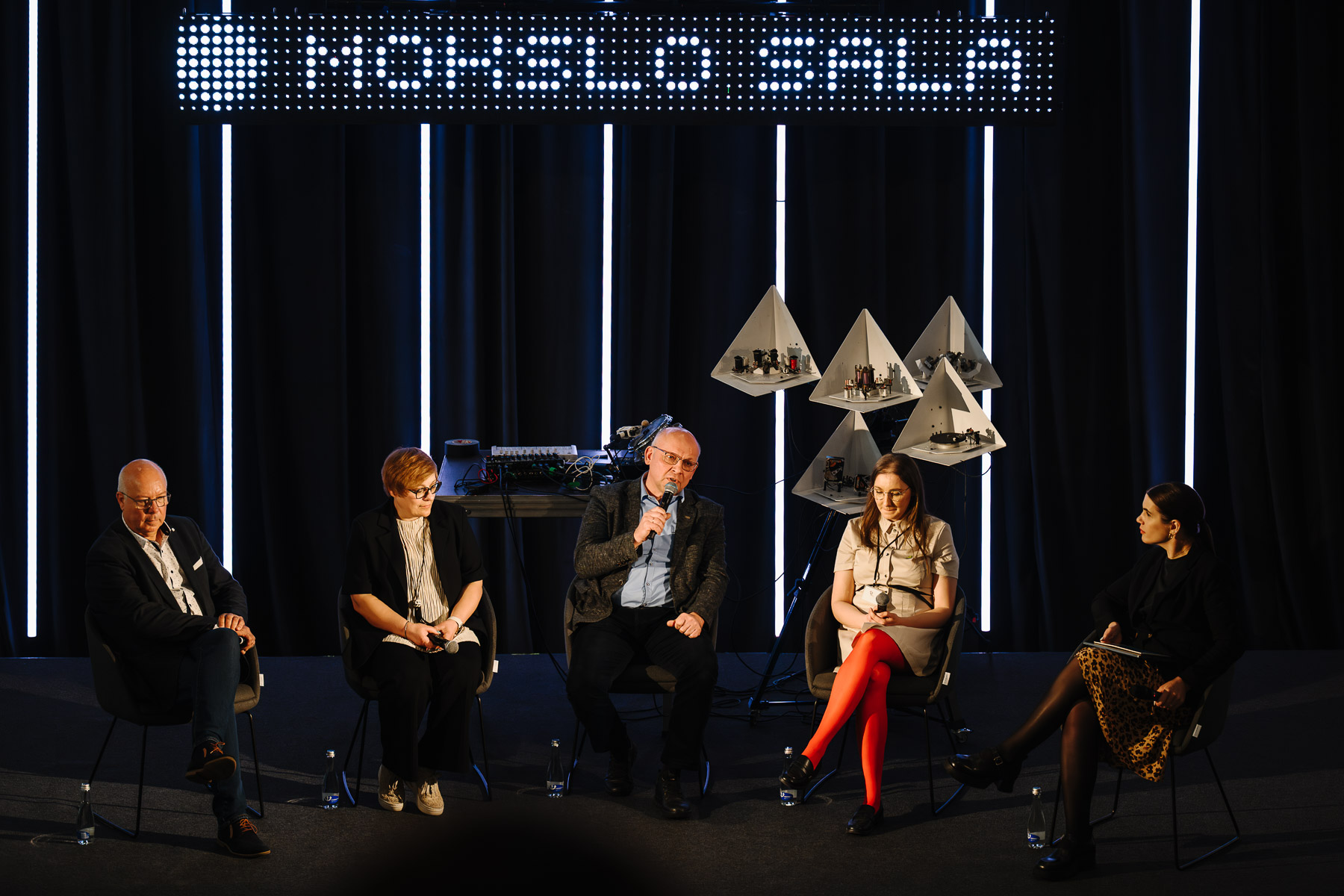
The celebration also featured discussions between key partners of the Science Island, business, education experts and academics. The focus was on STEAM education as a strategic priority for the country‘s future and the contribution of the urban community in changing traditional educational practices in Lithuania.
Valdas Jankauskas, Director of the Lithuanian Non-Formal Education Agency (LINEŠA), emphasized that the Kaunas Methodological STEAM Center located in the Science Island is one of the most modern and largest members of the STEAM ecosystem in the country:
“This is a significant event of the context of the transformation of the entire Lithuanian education system. STEAM must be perceived not only as a priority for the future, but also as a priority for the present. It is not only science, technology or engineering. STEAM is a way of thinking that combines creativity, curiosity and the belief that every child can create solutions needed for tomorrow. I am glad to see that this approach is very close to the Science Island team”.
Scientist from Kaunas higher education institutions – Vytautas Magnus University, Kaunas university of Technology, Lithuanian University of Health Sciences – are involved in the development and continuous improvement of the Science Island STEAM Centre’s operating model.
Thank to such a partnership between representatives of the academic world, the most modern conditions have been created for visitors to understand the knowledge of scientific disciplines and apply it in practice.
Experiments and unique musical experience
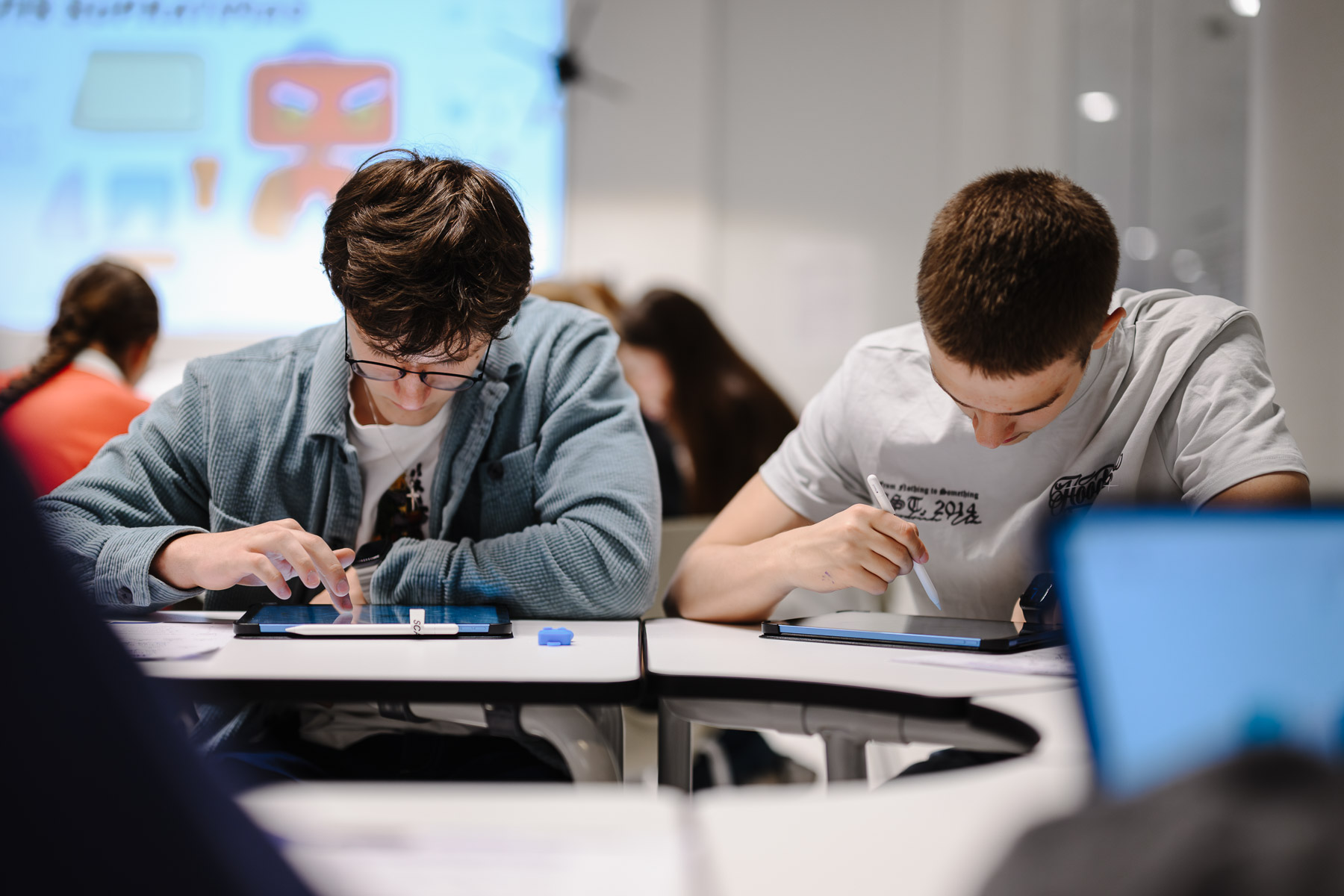
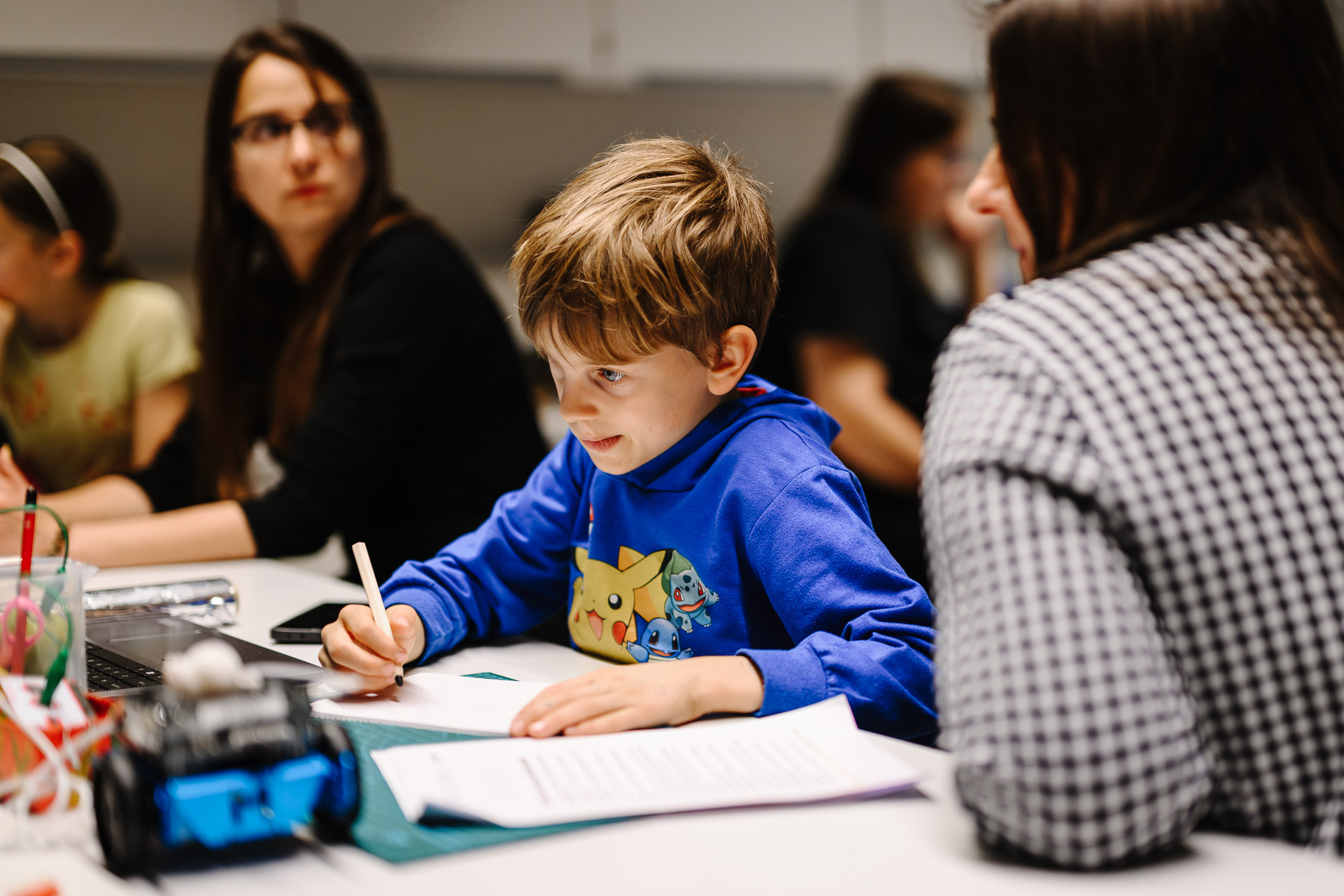
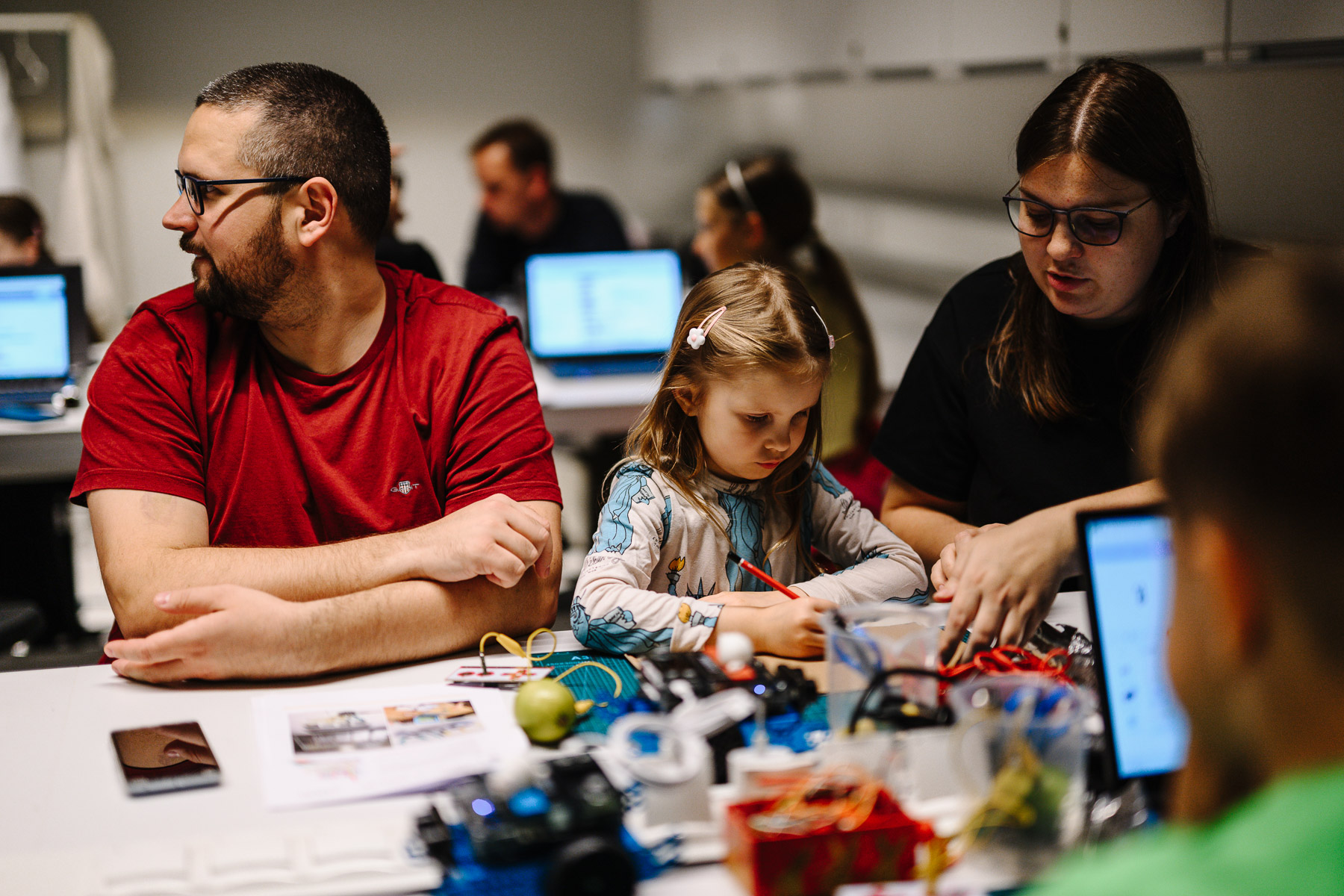
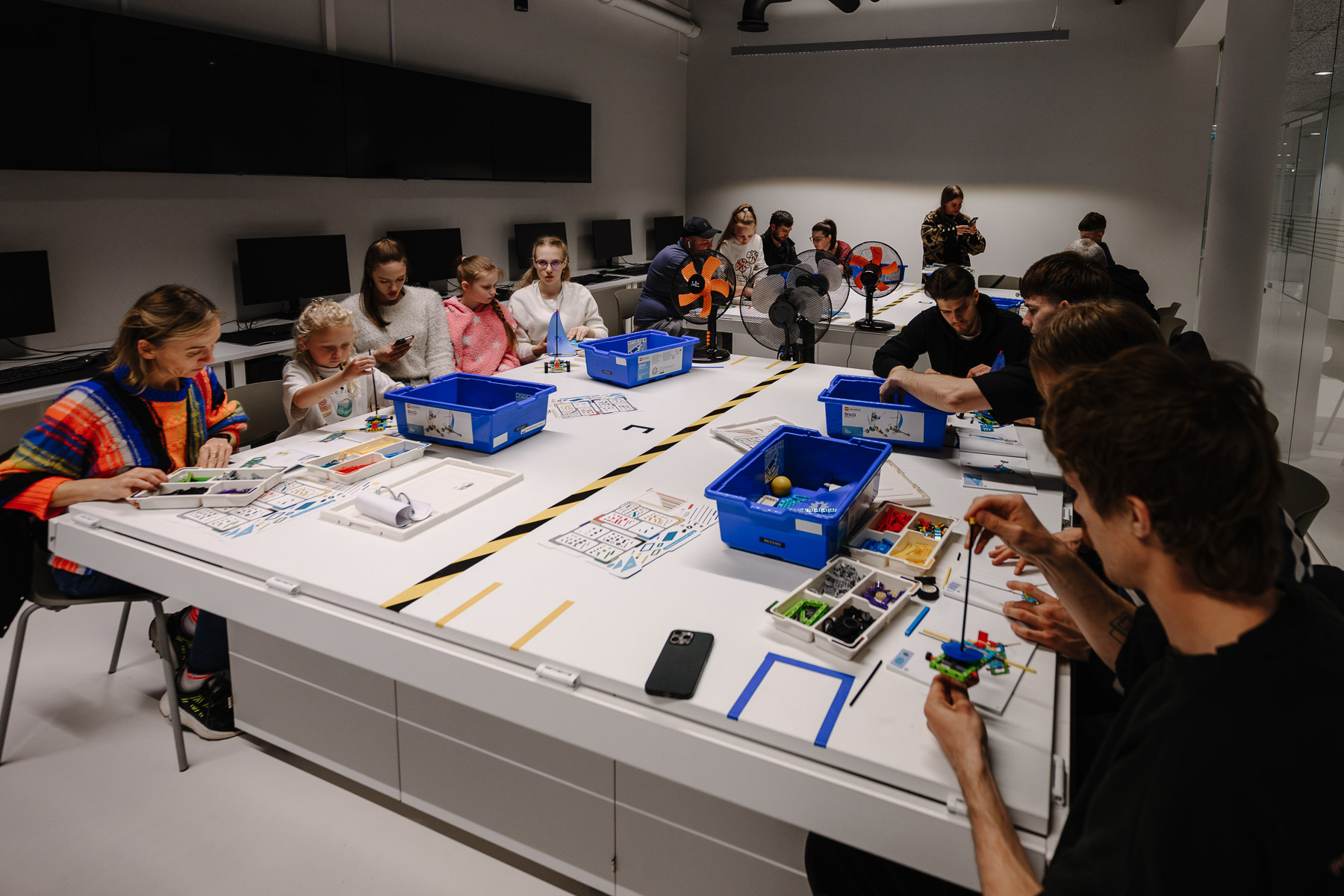
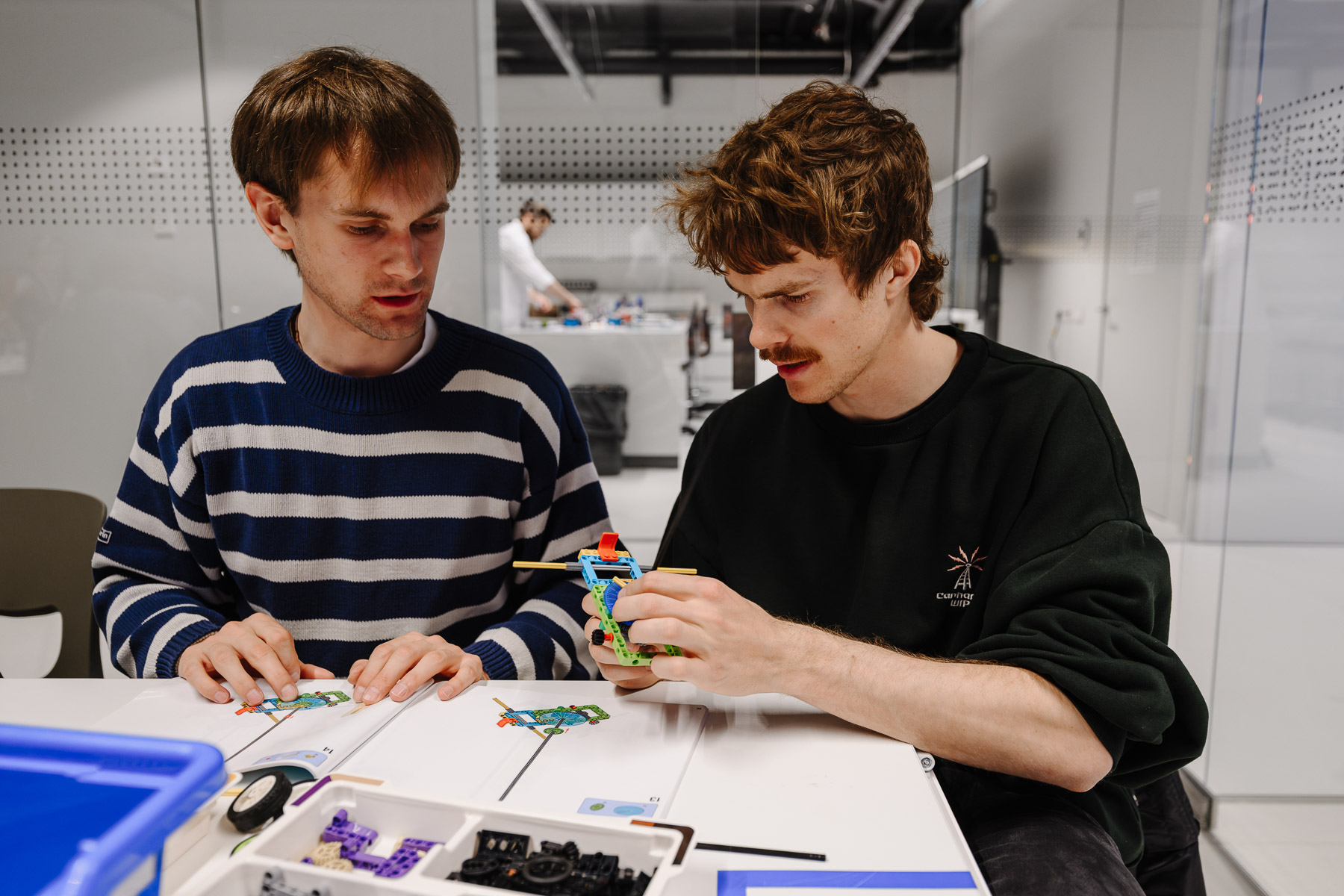
On Saturday, almost 300 pre-registered visitors participated in the free STEAM laboratories activities. Curious people of all ages had a great time trying out 3D modeling and graphic design programs, constructing and programming, creating robots and exploring the unseen world through the lens of a microscope.
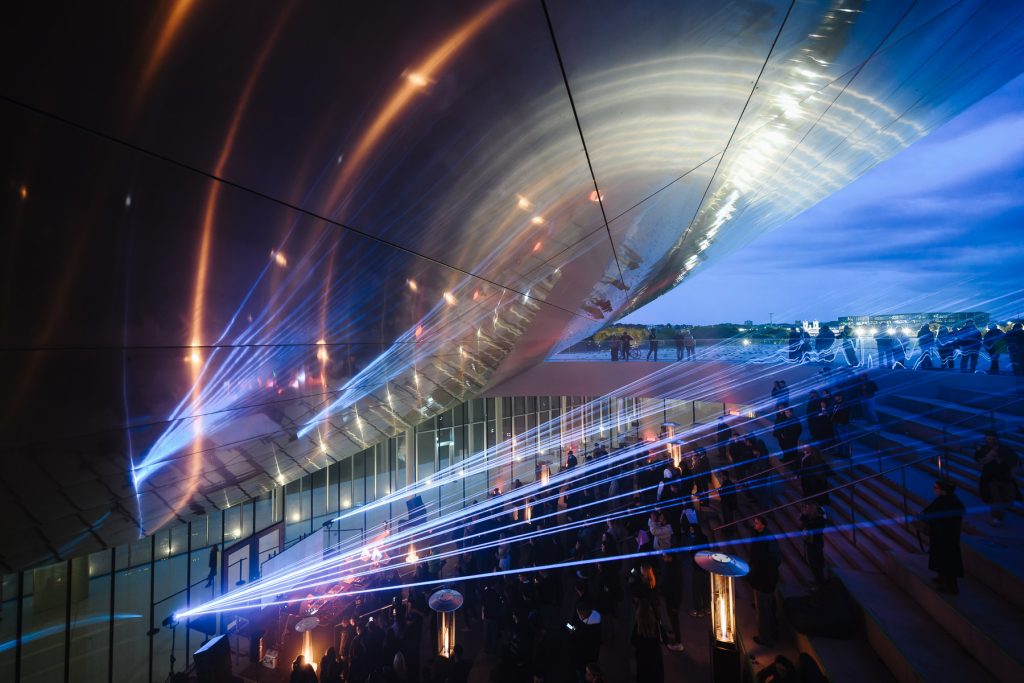
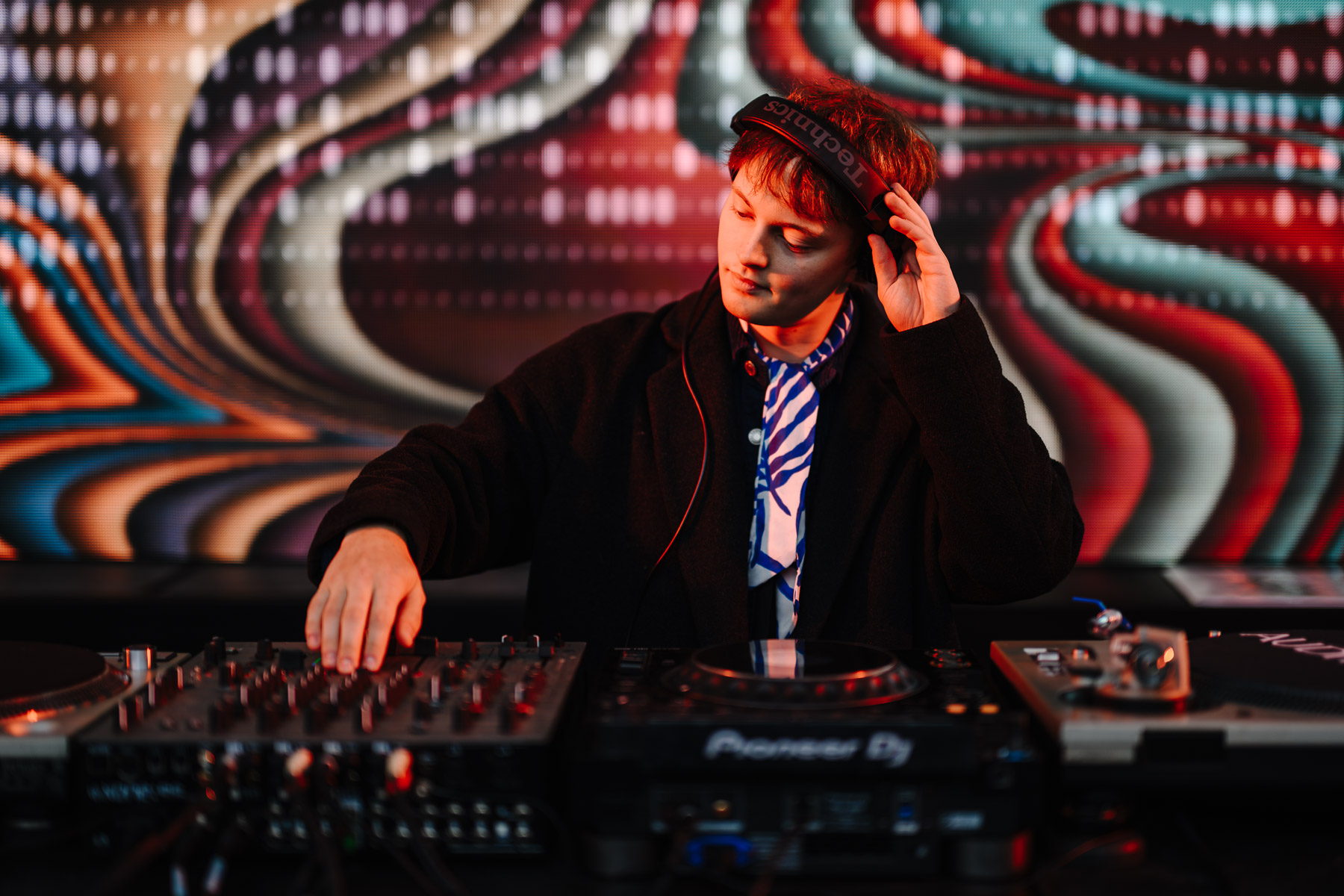
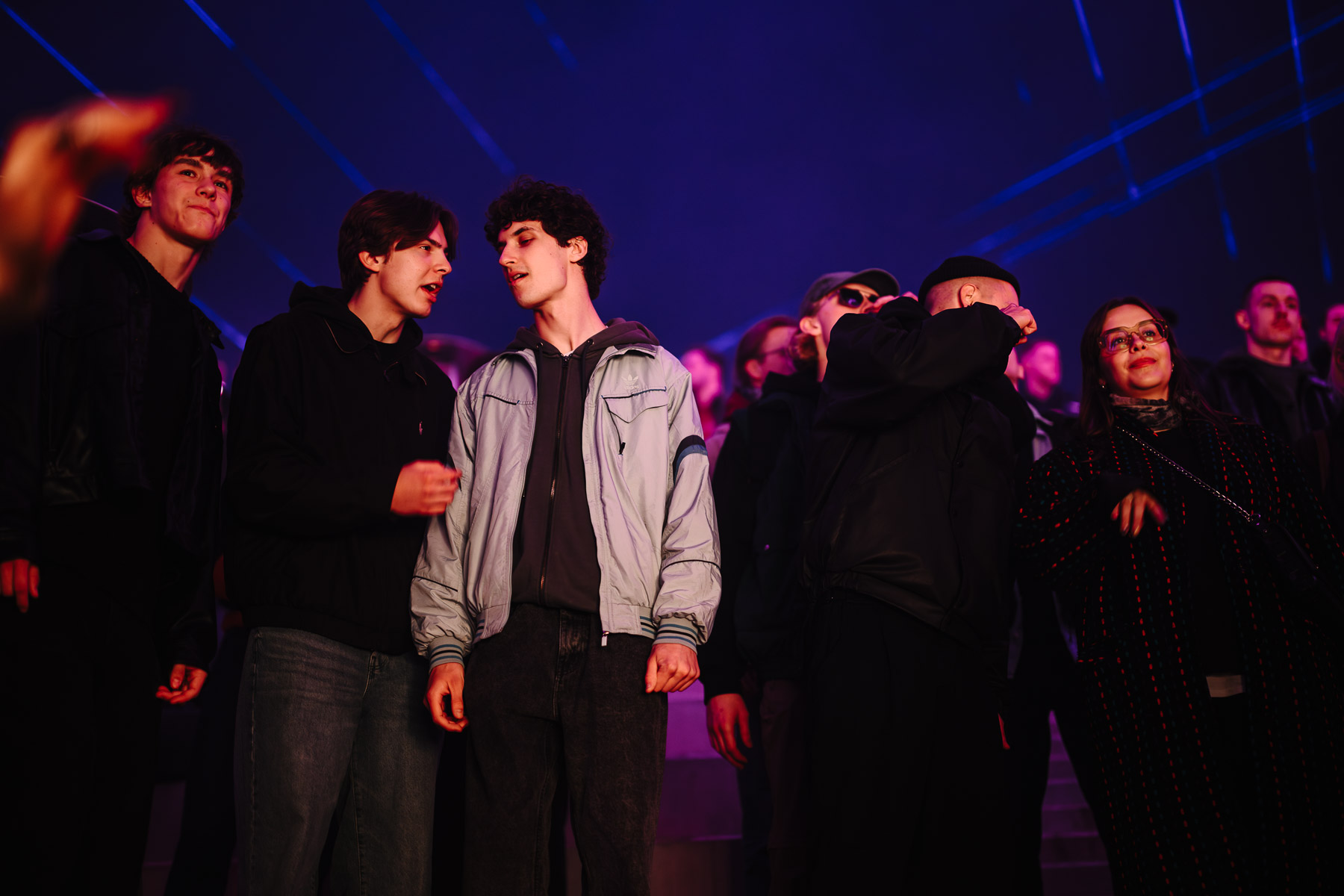
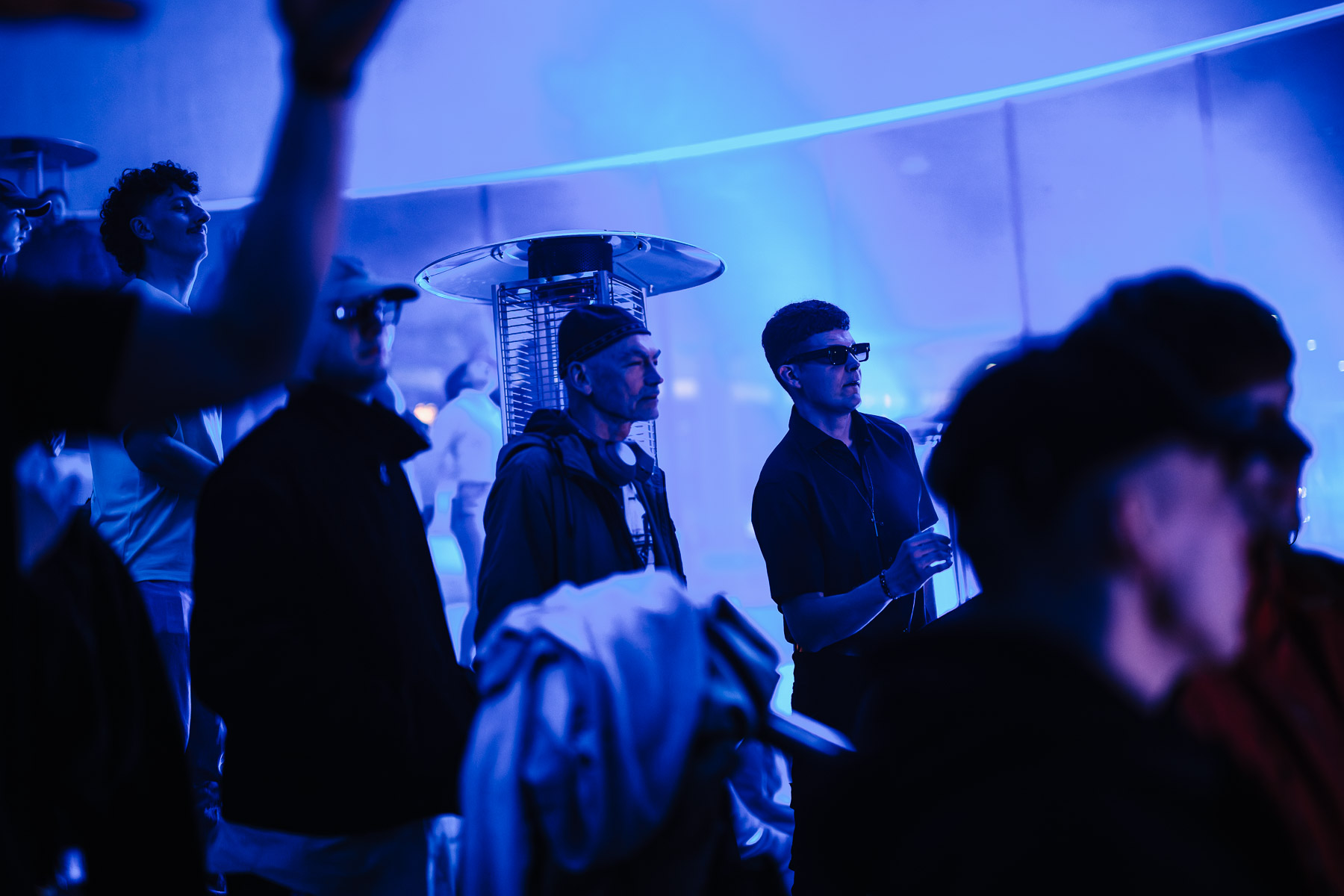
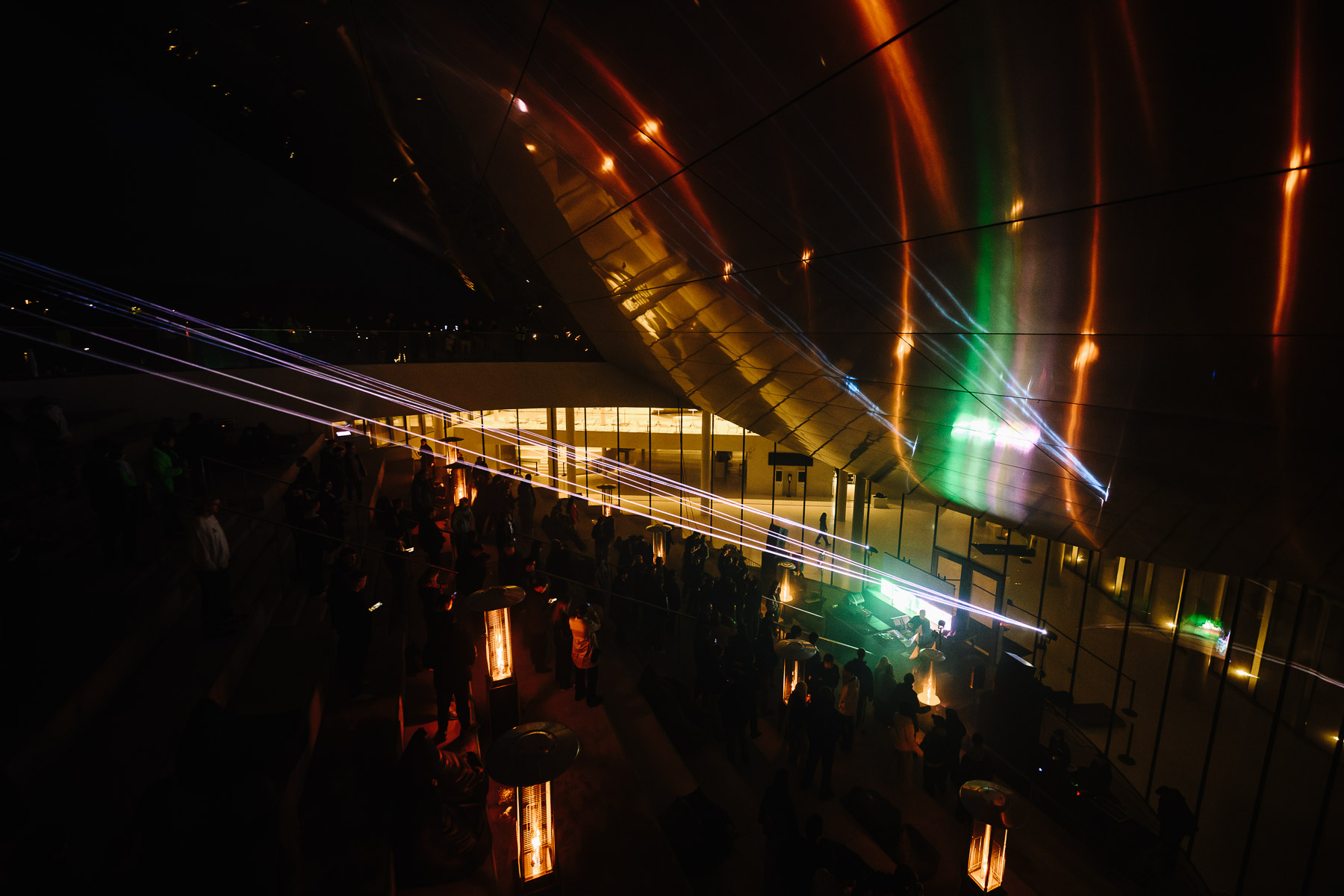
Another surprise awaited those gathered – the Lizdas Sound Institute Music laboratories. They were performed in the large amphitheatre of the Science Island, under the main symbol of the centre. A large group of electronic music fans enjoyed the program, which was presented by: Daniel Ocean, Aureja and Atgaiva, Pakas and Roads performers. The culmination of the celebration was the performance of German music engineer Moritz Simon Geist.
“As the event date approached, the weather forecast was the most worrying factor, but in the end the clouds cleared and did not prevent everyone from enjoying the celebration. We organized the event in a truly unique space, and we were looking forward to it no less than electronic music fans. Day dances are extremely popular in other countries, but in Lithuania they are a rare phenomenon. I believe that we will return to the Science Island amphitheatre more than one”, shared Mantas Pakeltis, one the founders of Lizdas Sound Institute.
Unique lessons
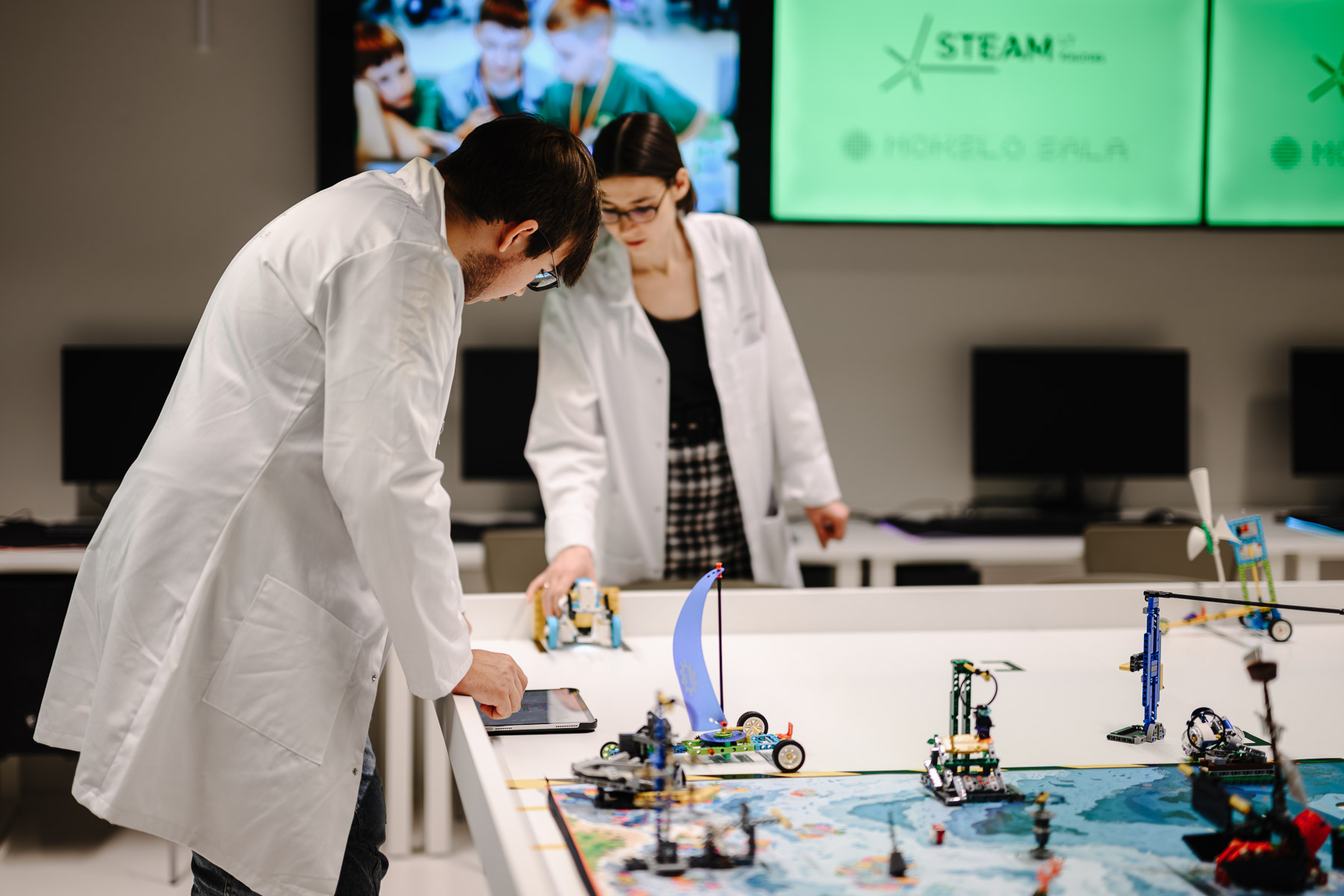
After the opening ceremony, the daily activities of the STEAM laboratories will begin, which will be carried out in two directions: as the Kaunas Methodological STEAM Center, which will become part of the Lithuanian STEAMLT educational network, and as an open activity space for student groups and all visitors to the Science Island.
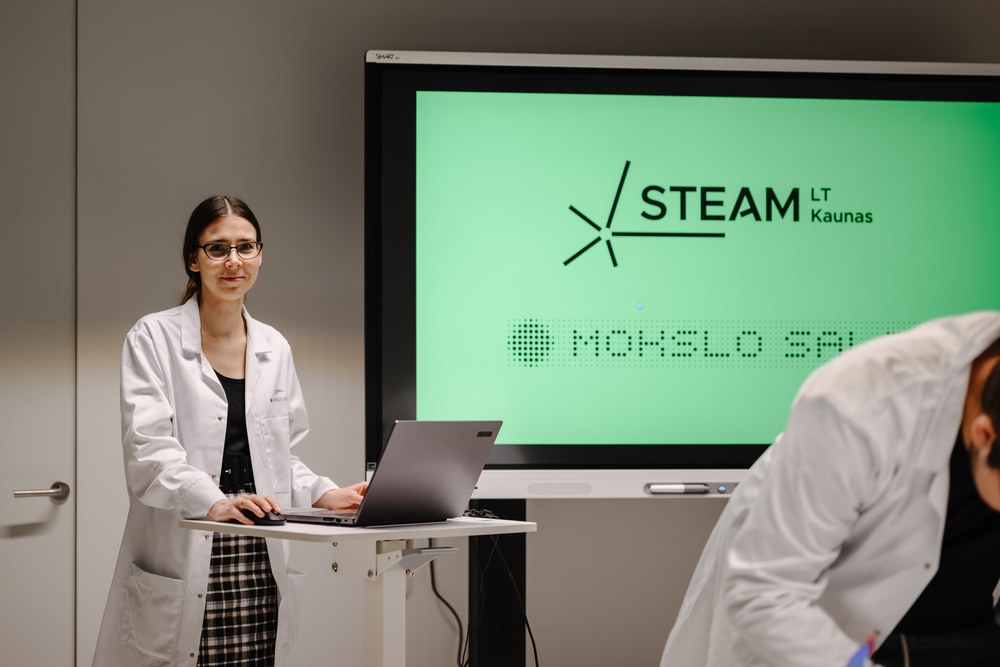
“We invite you to end the school year differently – by visiting the activities of the new STEAM laboratories, intended for students in grades 1-6. Here, young scientist will be able to perform engineering and creative tasks, formulate hypotheses, experiment and program computer games themselves using various research methods“, said Agnietė Kielė, Head of the Kaunas Methodolofical STEAM Center departament at the Science Island.
You can register for a class visit of purchase tickets for weekend laboratory activities now – mokslosala.lt.




National Final of the Worl Robotics Olimpiad (WRO) in Kaunas: the winners will represent Lithuania in Singapure
2025-05-02
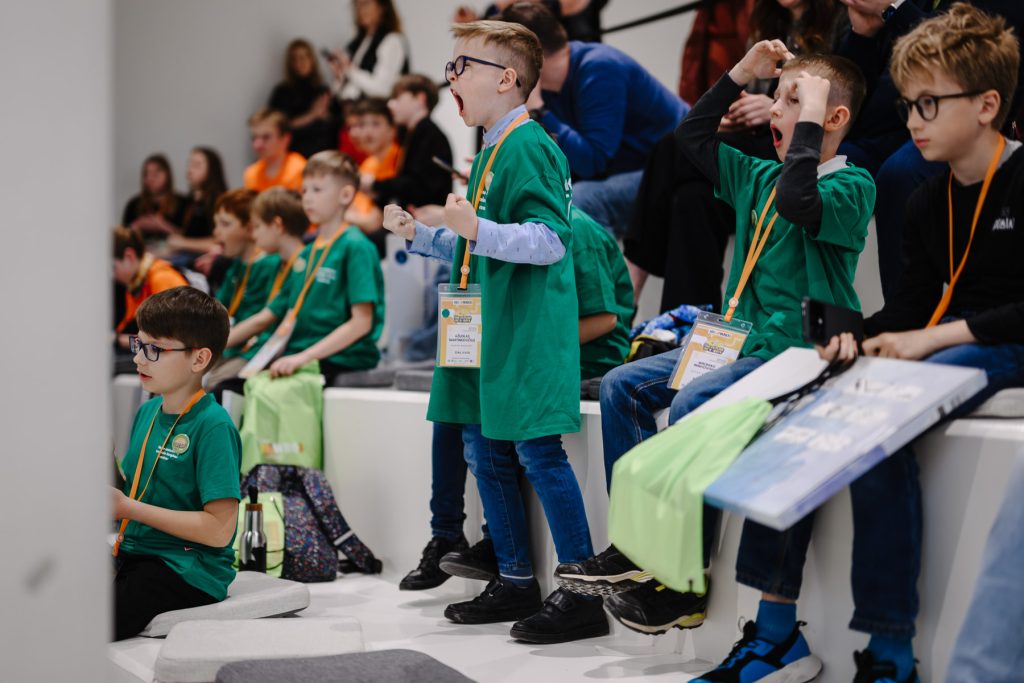
On May 2, a large group of science and robotics innovators and fans gathered at the “Science Island”. The national final of the World Robotics Olympiad (WRO) was held at the center. Participants of different age categories built robots and solved challenges on the theme of “The Future of Robots”. After an interesting battle, the teams from Kaunas and Klaipėda emerged victorious. They were awarded tickets to the World Final, which will be held in Singapore in November this year.
Space rockets and self-driving cars
Young innovators from all over Lithuania met at the national finals of the World Robotics Olympiad (WRO) and formed 32 teams. In the WRO “RoboMission” category, participants competed in three different age groups: Elementary (8-12 years old), Junior (11-15 years old) and Senior (14-19 years old). The children had to conduct research on Mars, launch rockets or solve obstacless hindering this process: take samples and present labaratory tests.
This year, the organizers introduced an innovation for the event – a new competition category called “Future Engineers”, aimed at older pupils and students (aged 14–22). These participants built robots with autonomous driving mechanisms and carried out missions related to everyday human problems and presented innovative solutions to them.
The best in the Elementary group was the team from Kaunas, “LegRob Stars”, which will represent Lithuania in the World Championships. Their coach Vilma Plutienė says that the team’s victory was determined by hard and consistent work:
“I am proud of our team’s enthusiasm and discipline. During the preparation phase, we spent countless hours and practiced intensively. I am glad that the children listened to the advice and applied it perfectly during the competition.”
The victory in the junior group and the ticket to Singapore were won by Klaipėda’s “KU STEAM engineers”. Their coach Gediminas Gricius is happy with the team’s success and does not hide that an eventful summer awaits:
“We are planning to travel to a robotics camp in Hungary. Thanks to the team’s persistence, we will be going to the World Competition for the second year in a row. There is no secret to success, we just sincerely love robotics and love to algorithmize.”
On the day of the event, the teams had to compete independently, without the help of teachers-coaches. This develops the responsibility and independence of the participants. According to such rules, WRO association tournaments are organized all over the world.
More than a competition
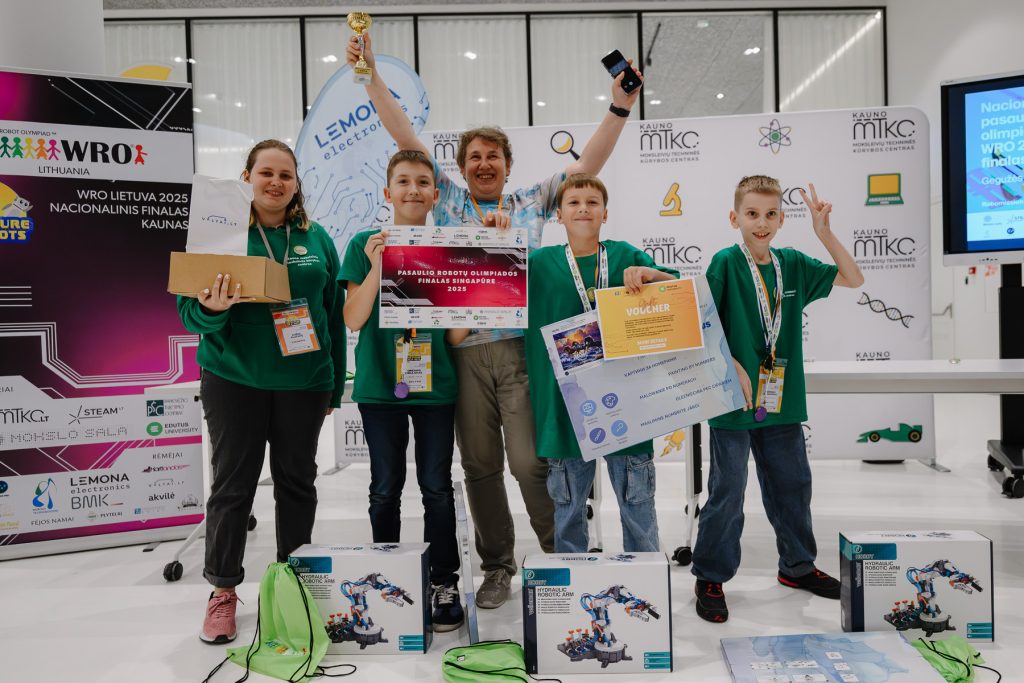
Intensive preparation for competitions of this level usually takes several months, but the children participating in them live in the world of robots continuously.
Klaudija Pelanytė, head of methodological work at the robotics center “RoboLabas” of the Panevėžys Education Center and one of the main organizers of this year’s WRO national final, says that this competition is much more than improving technological competencies:
“Children look forward to tournaments more than you can imagine. They want to find like-minded people, get to know different cultures, share experiences and help each other. This is where true friendships are formed and although the technical part is very important, sometimes it pales in comparison to the teamwork and connection between the participants.”
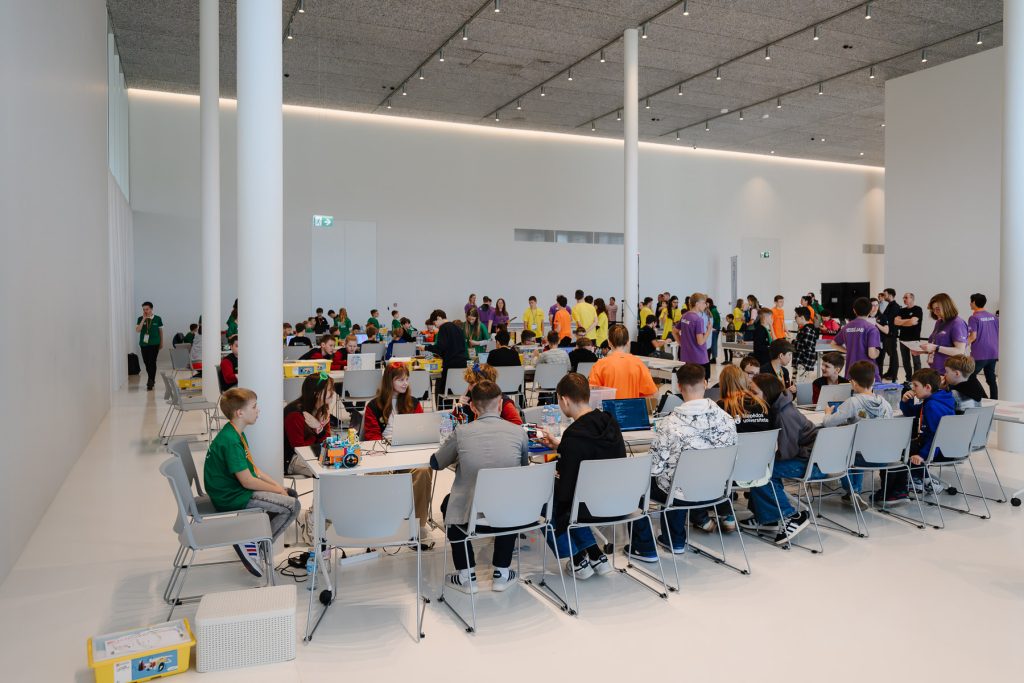
The national final of the Olympiad is being held in Lithuania for the third time. Every year, the organizers set a challenge – to increase the number of participants by at least 10 percent, and this year it was exceeded almost twice.
“Children participating in national competitions are characterized by ambition and perseverance. I have noticed more than once that they are most motivated by challenges. At the last minute before the implementation of the mission, the robot does not work? For others, this would be a problem, for us – a driving force. Competitions also perfectly test the limits of emotional intelligence. Often, unconventional solutions bring victories, which motivates them to solve problems creatively and adapt to different conditions,” notes K. Pelanytė.
A strong foundation for innovation
The World Robotics Olympiad has been organized for 20 years, in more than 120 countries. One of the main organizers of the final competition, Director of the Kaunas School Technical Creativity Center Giedrius Vaidelis, is pleased with the uniqueness of the Lithuanians:
“I have participated in several World Robot Wars. They bring together over several thousand participants from all over the world. Children from each country are distinguished by their own culture and abilities. Ours are often praised for their high-level programming skills. It is gratifying that in such a small country we have a fairly solid community that is not indifferent to technology. The trend is clear – the future belongs to the digital world and we can be proud that our children already know it very well.”
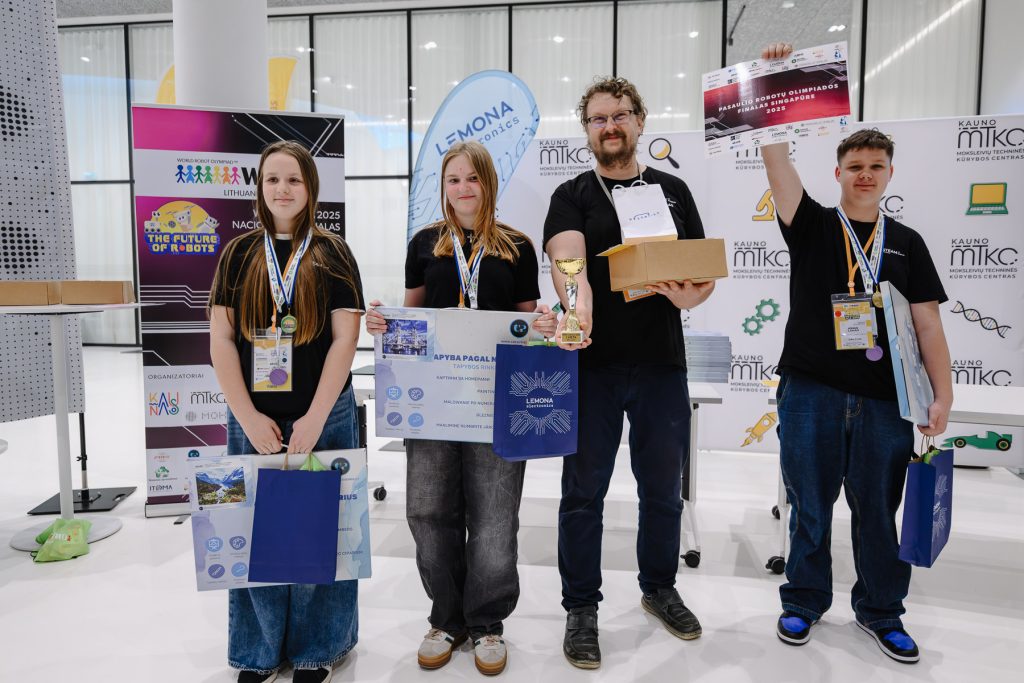
Although the Temporary Capital is famous for its robotics champions, the WRO national competition is being organized here for the first time. Probably because there has never been such a spacious and science-friendly place as the “Science Island”. The Kaunas STEAM team, which is actively preparing for the opening of the laboratories, contributed greatly to the implementation of this event. I know that robotics will also be given special attention here.
Robotics activities help children acquire technological, engineering, creative, and organizational skills, which undoubtedly become a strong foundation not only for the emergence of innovations, but also for their smart management.
Preparing for the opening of laboratories
The team of the STEAM laboratories of the “Science Island” promises even more unforgettable impressions for visitors who are not indifferent to science. On May 16-17, the center is organizing the opening of the Kaunas STEAM laboratories.
The spaces will operate in two directions – as a Kaunas Methodological STEAM Center, which will become part of the Lithuanian STEAMLT educational network, and as an activity space open to all visitors of the “Science Island”. Interactive education and creative workshops will be adapted for children of all ages and their family members. In the laboratories, visitors will be able to creatively strengthen their knowledge in different scientific disciplines.
“Our goal is to invite you to never stop discovering, learning, and trying more. Science is an immeasurably broad topic, always offering something unexpected and unprecedented. The launch of STEAM laboratories will engage and inspire the growing creators of the future,” said Aistė Lukaševičiūtė, head of “Science Island”.
During the first months of operation, the Science and Innovation Dissemination Center received over 80 thousand visitors. It is predicted that STEAM classes will attract no less interest.
Robot Battles on Science Island: The National Final of the Robotiada 2025 Festival Took Place
2025-03-17
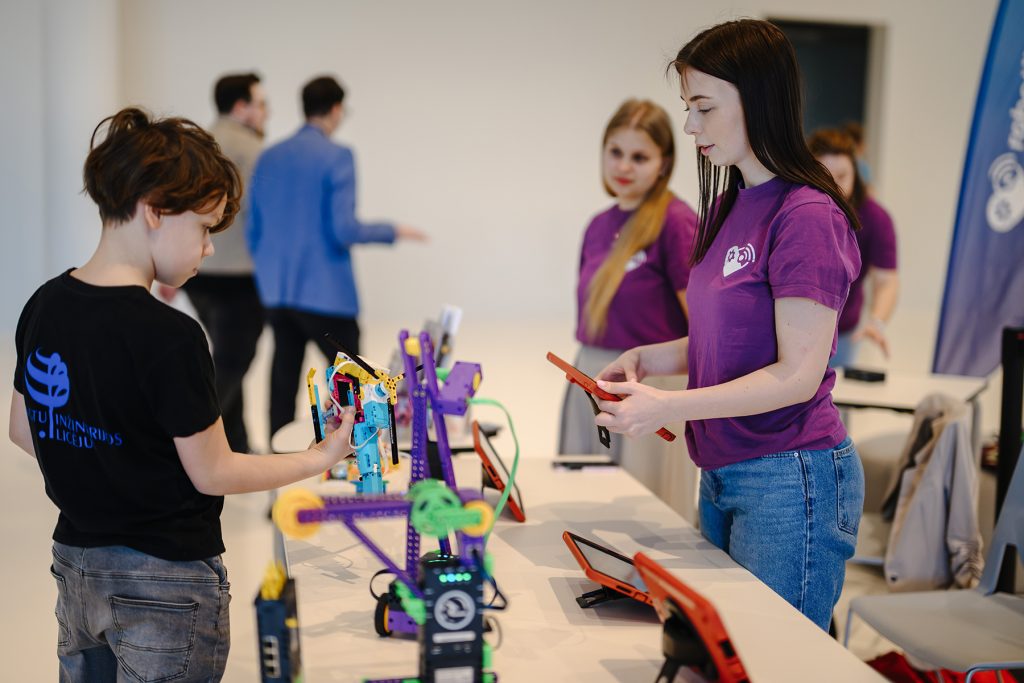
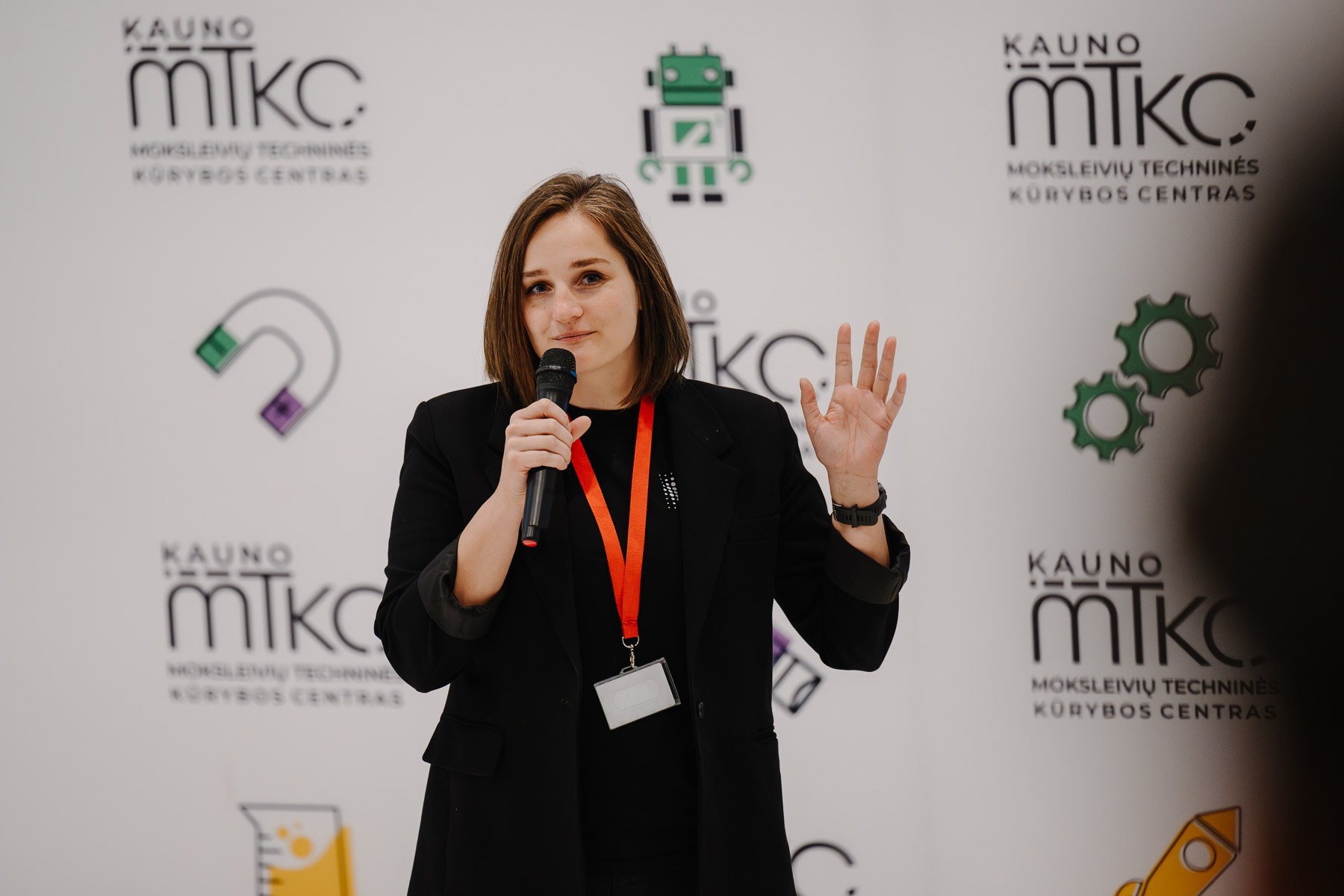
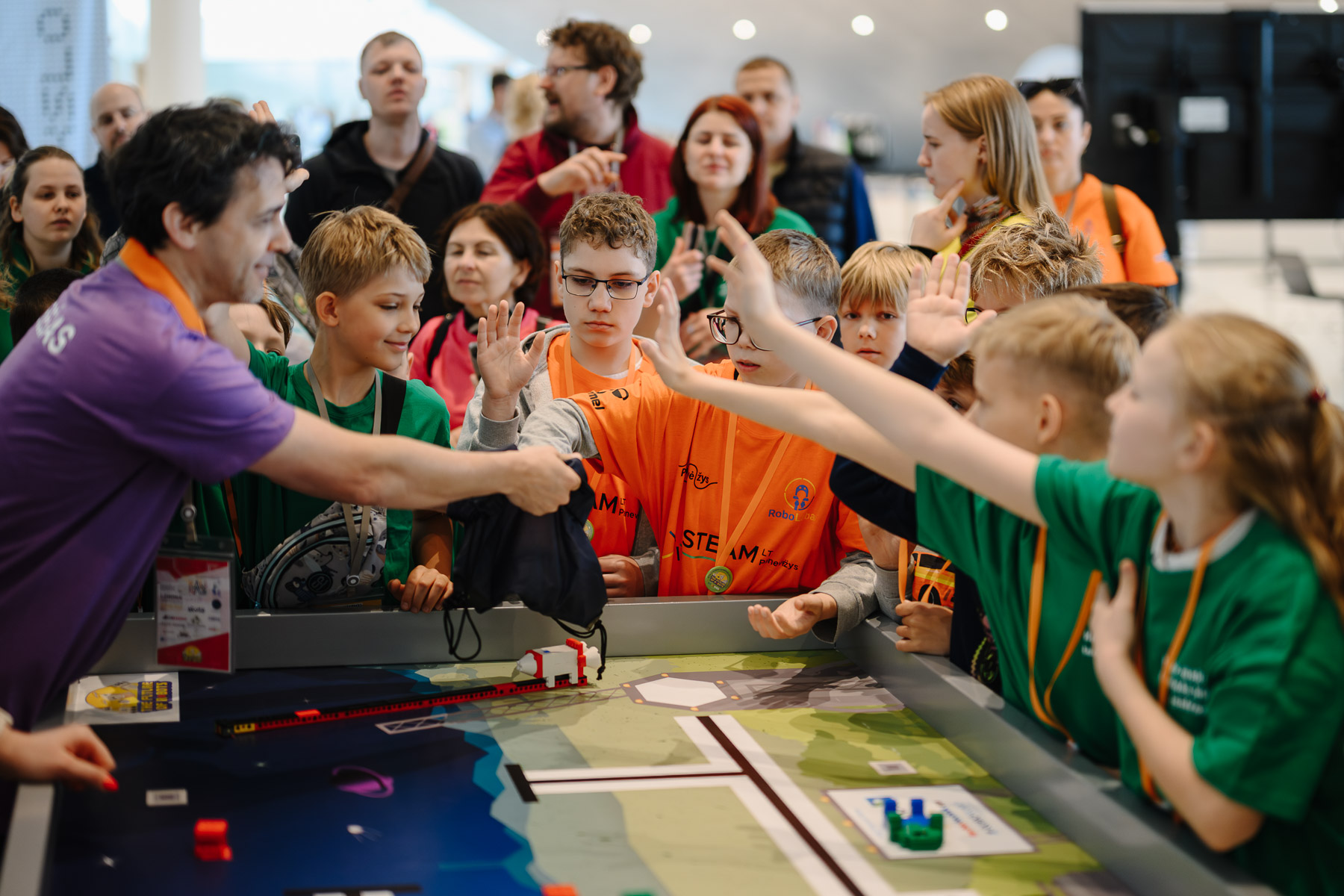
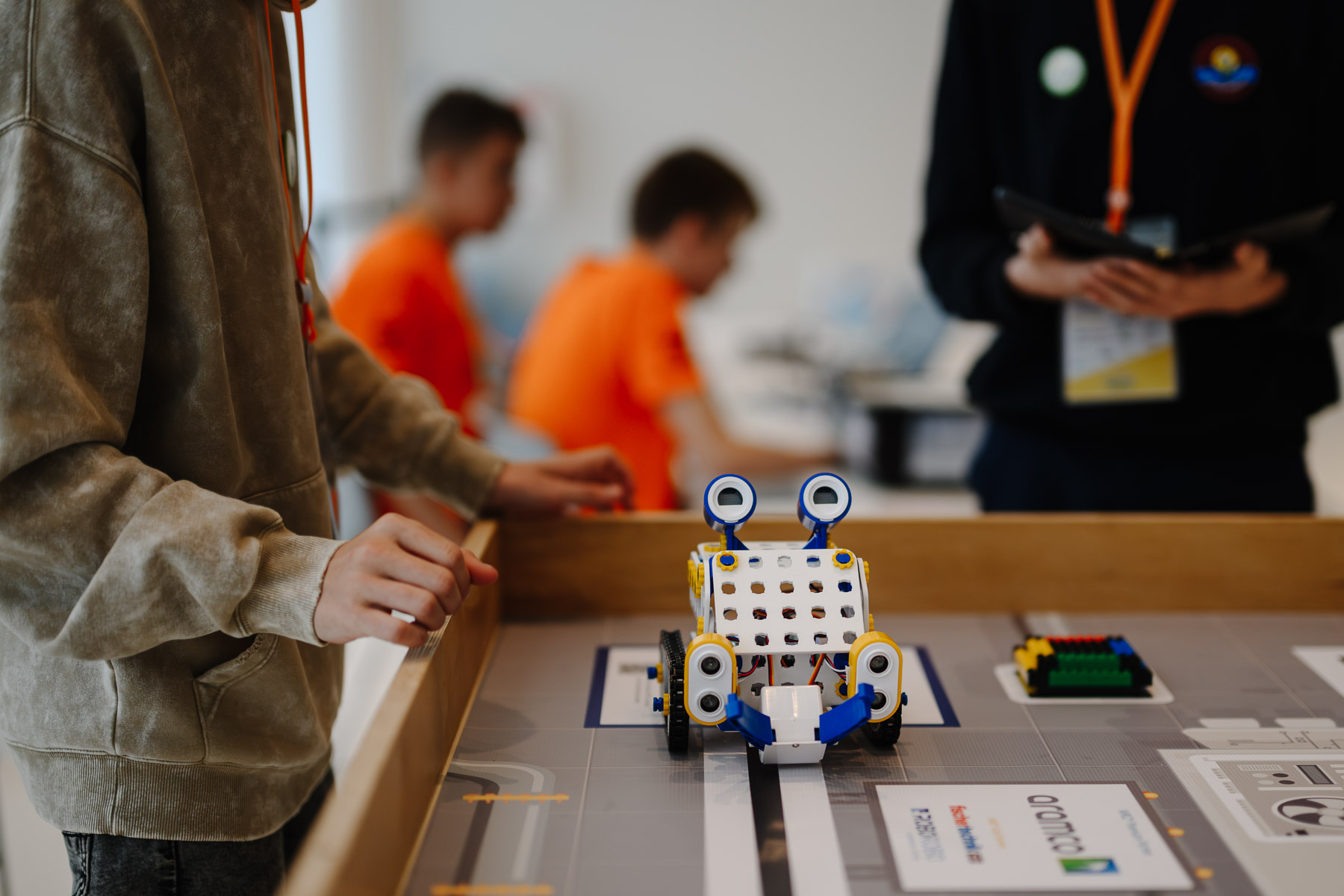
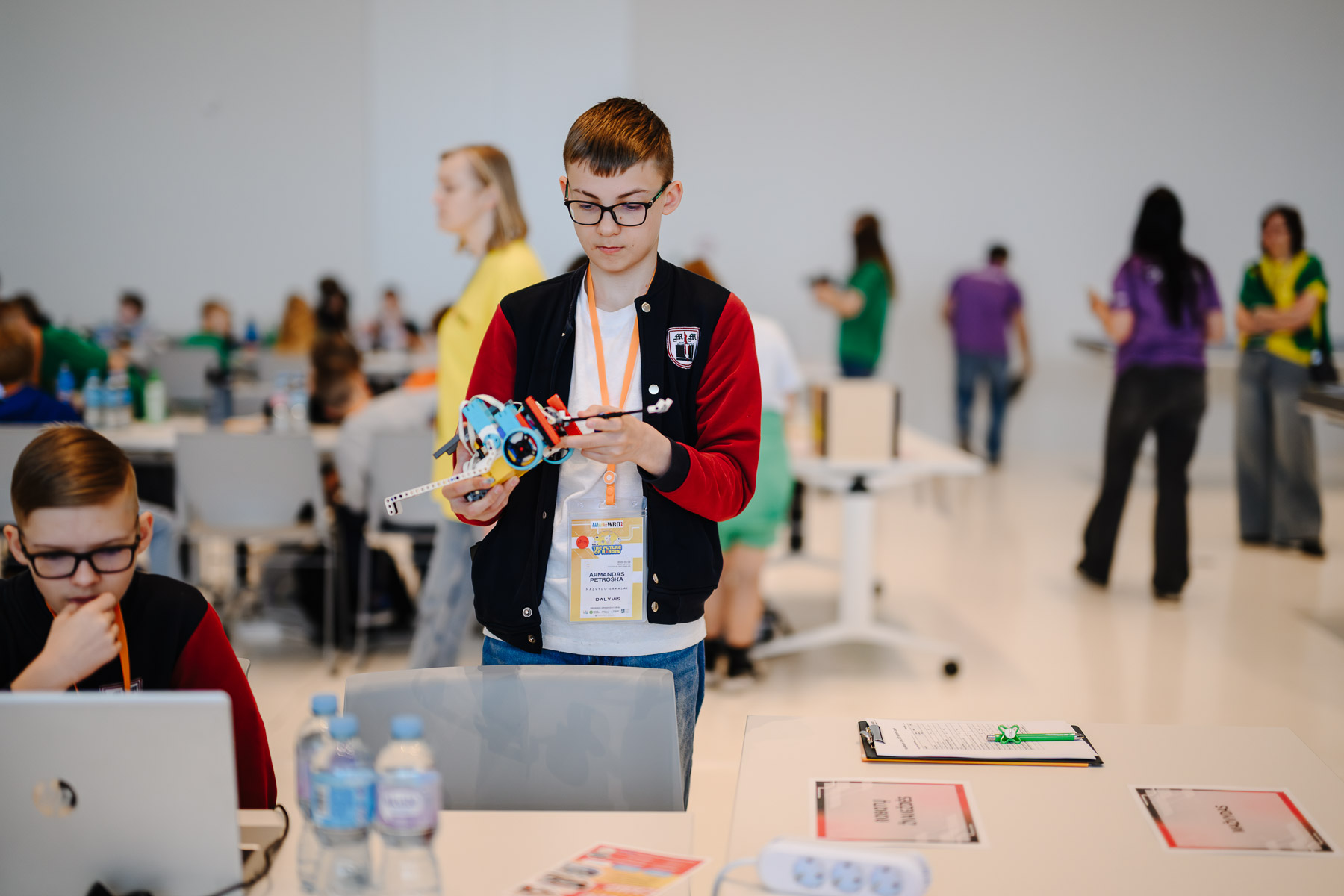
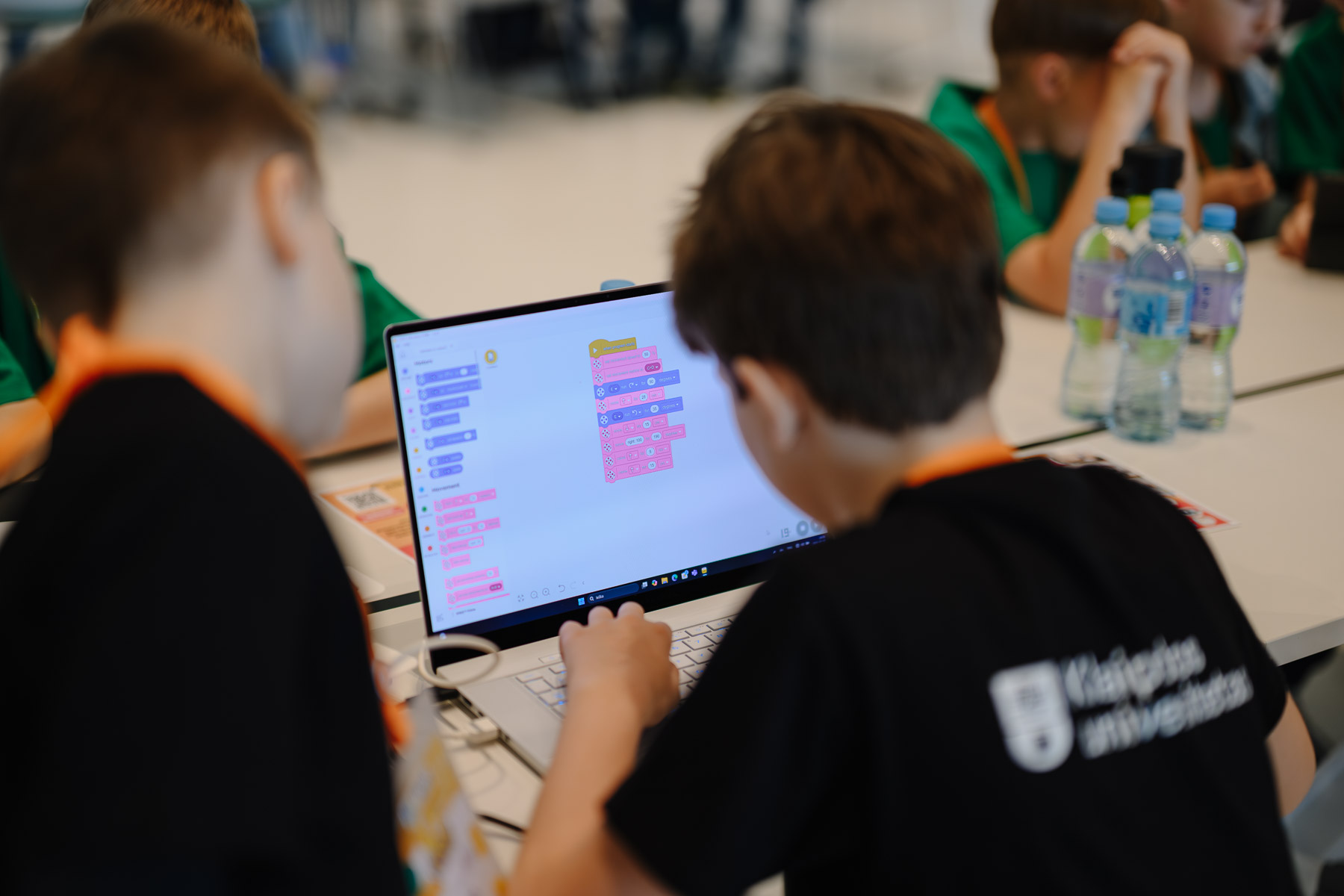
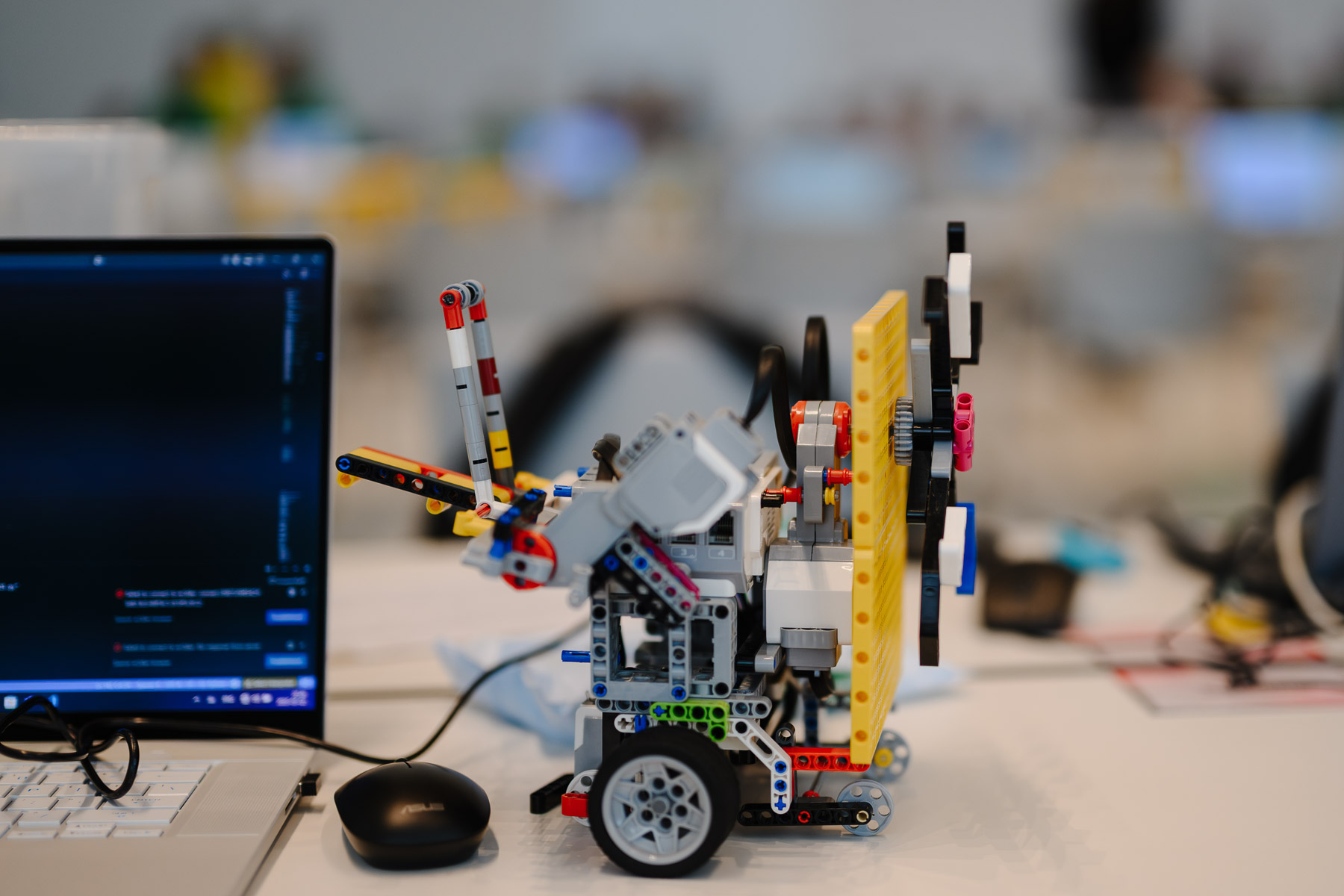
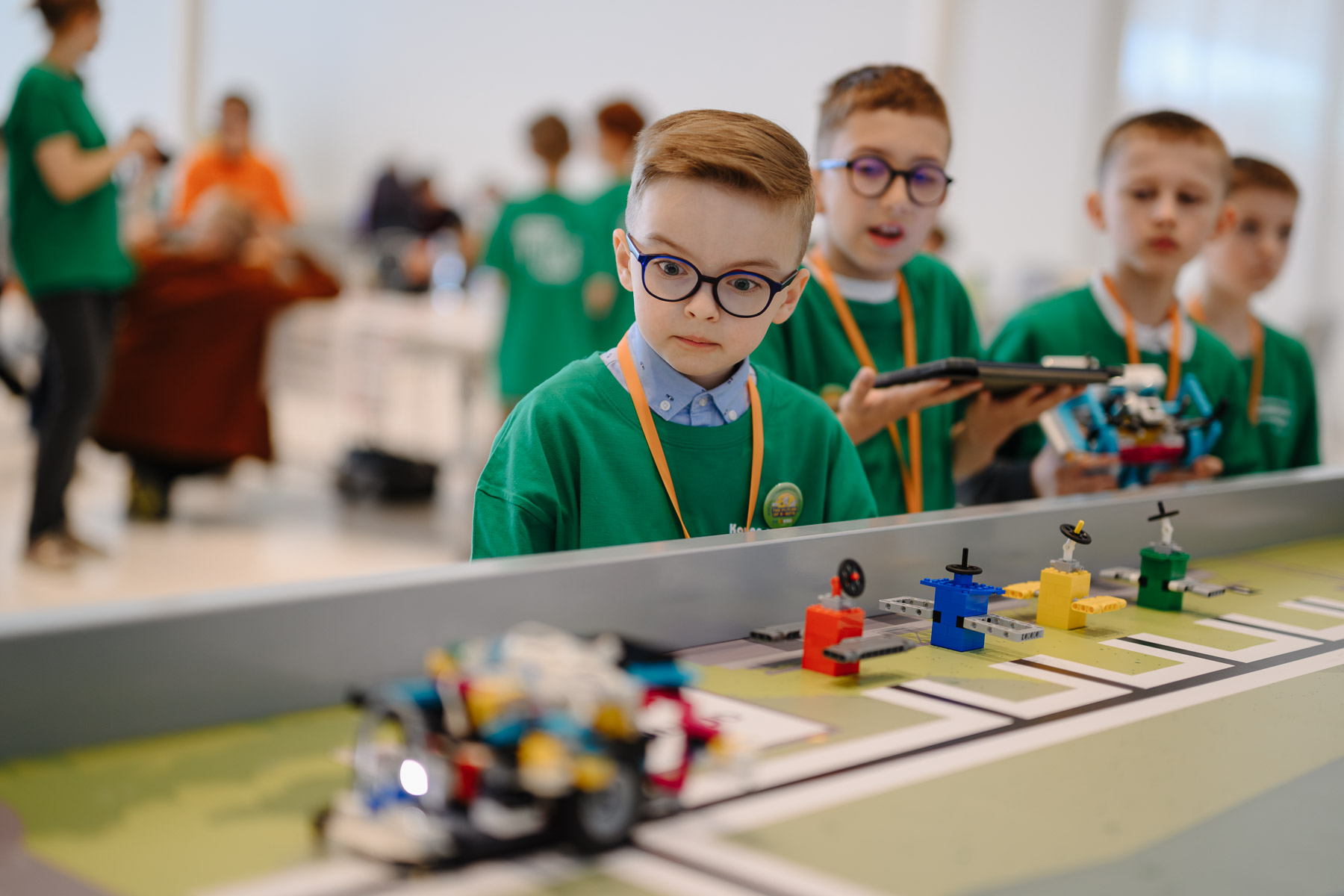
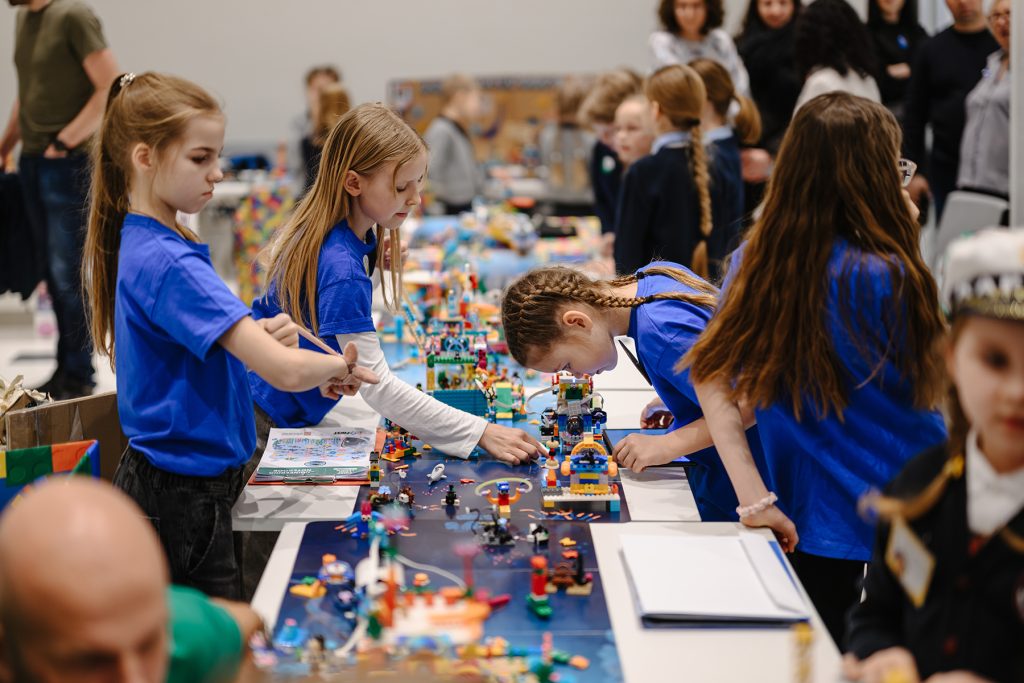
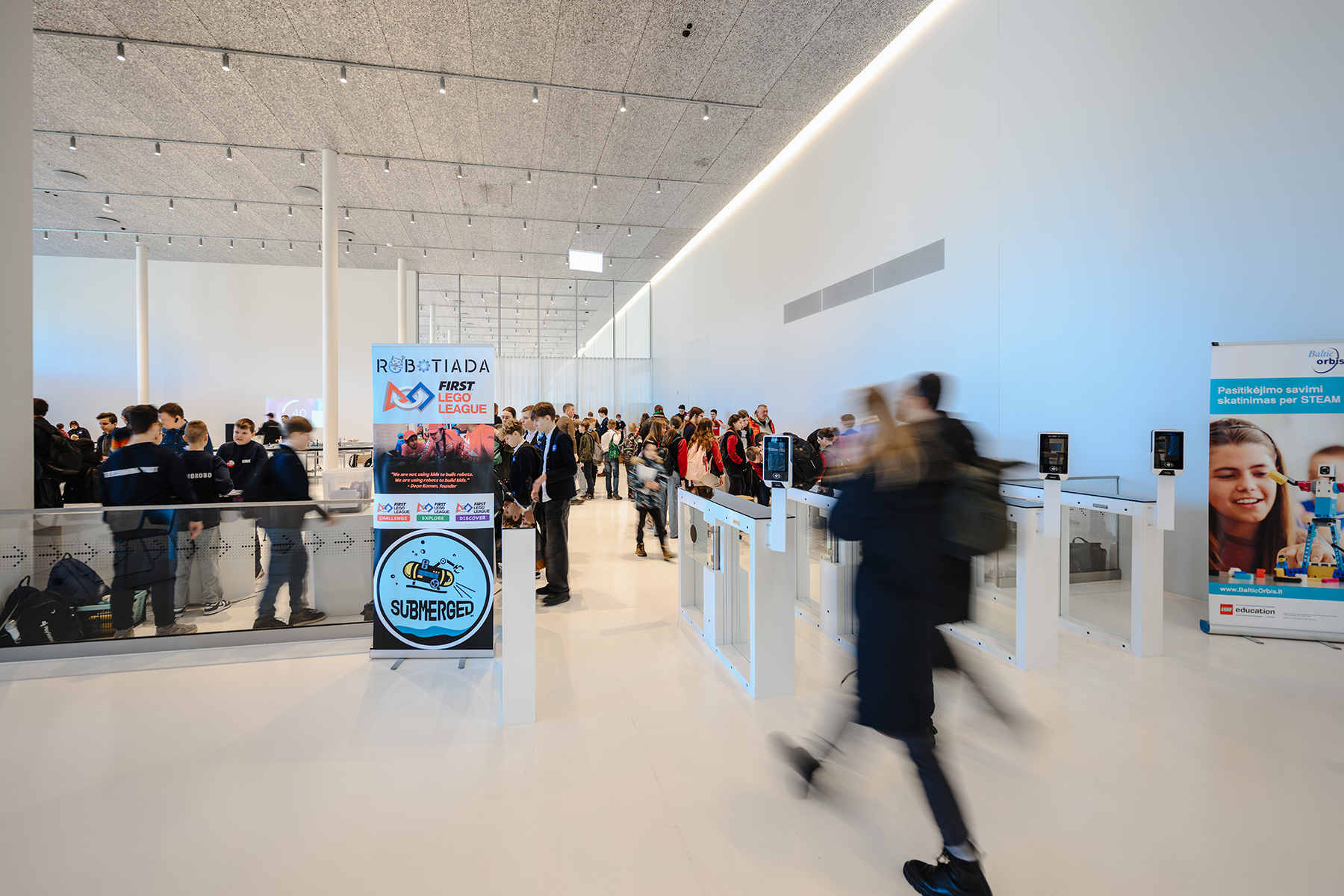
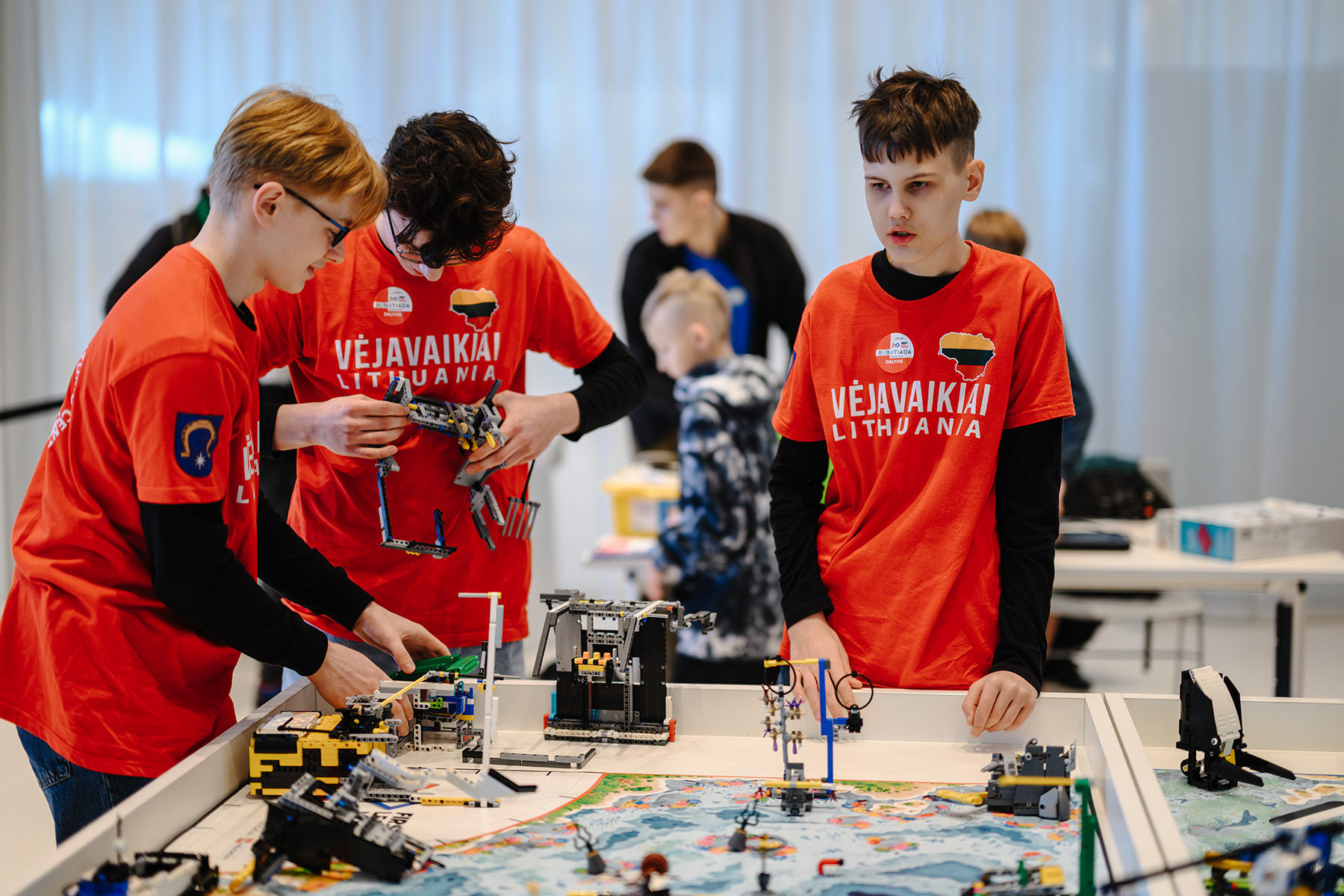
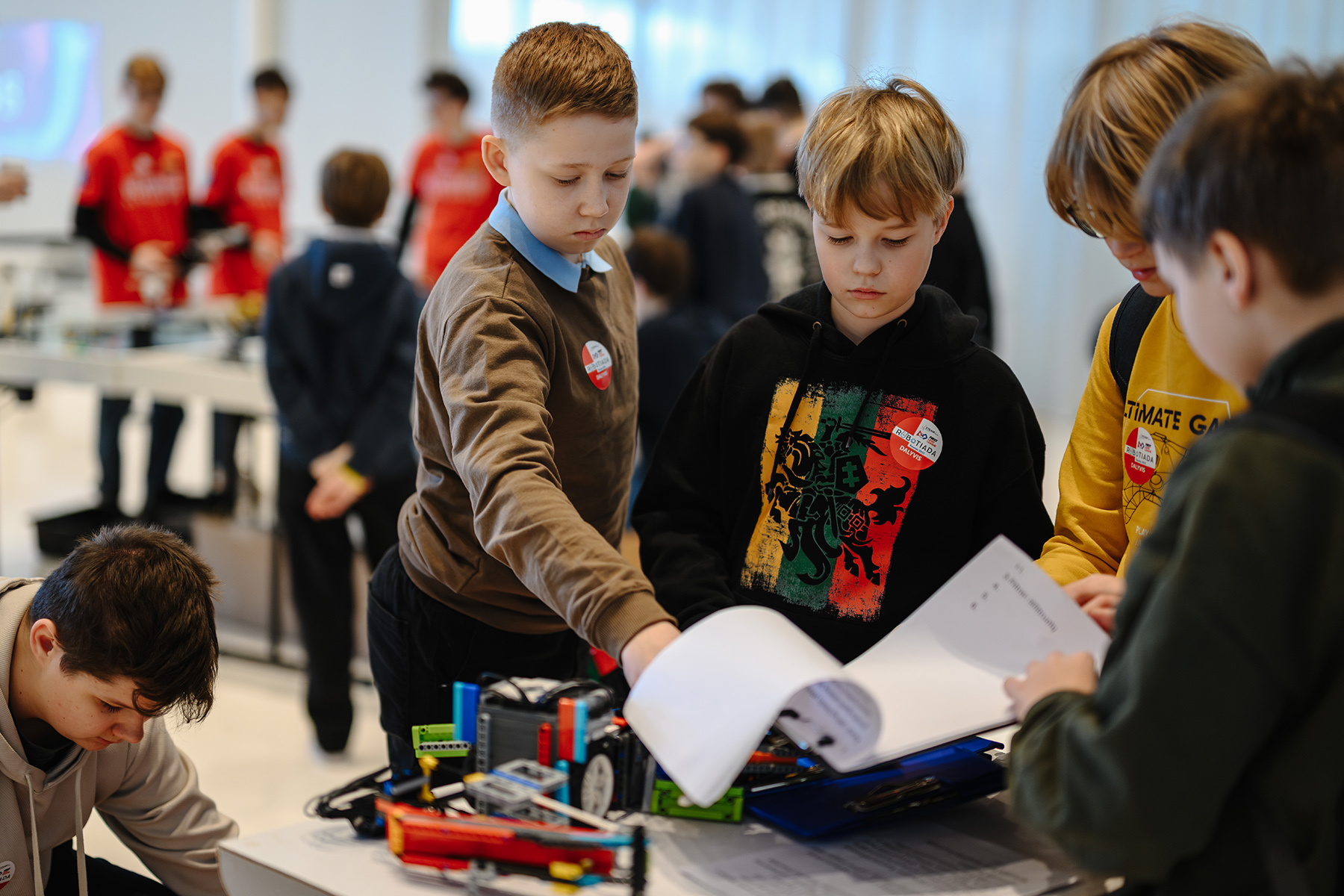
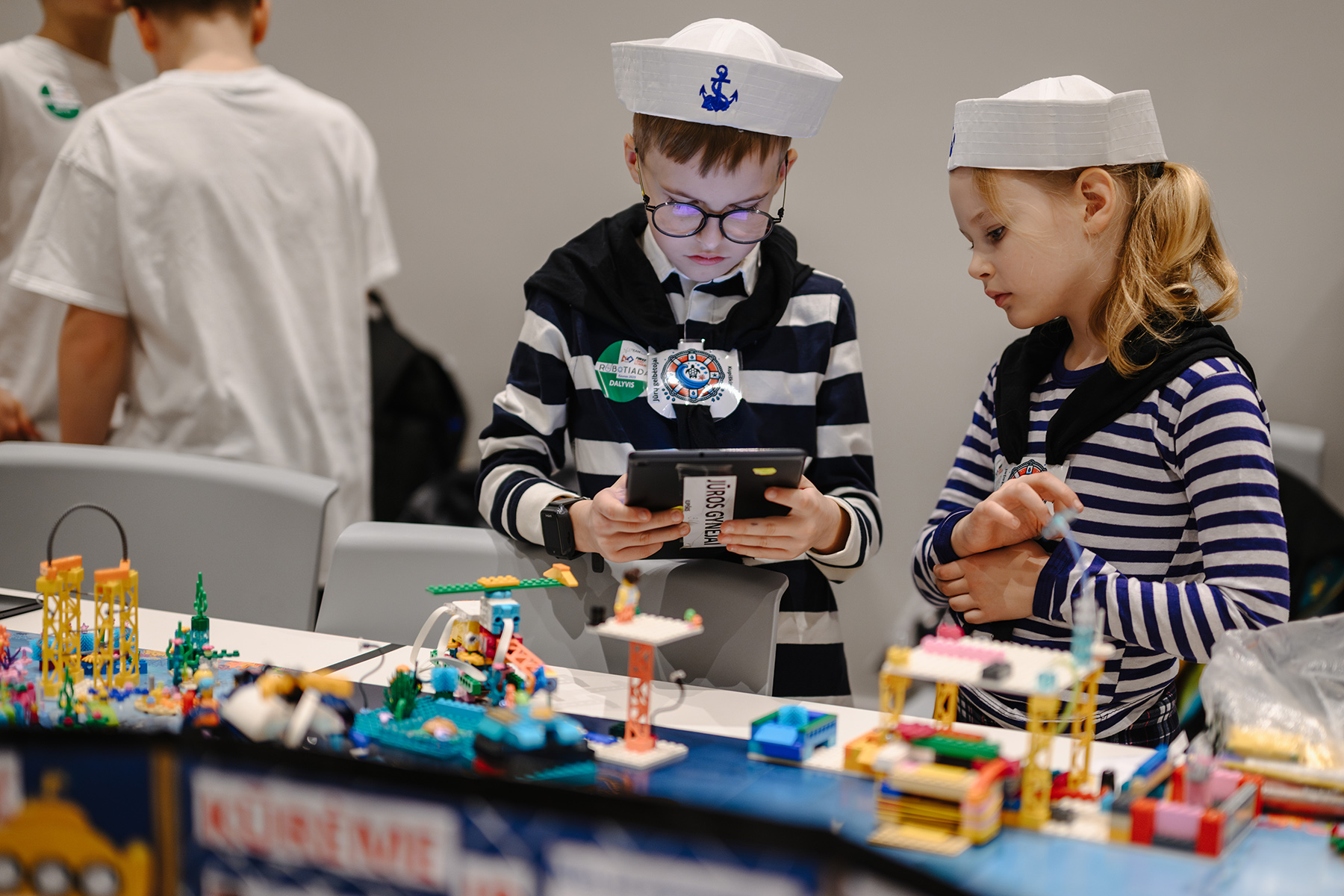
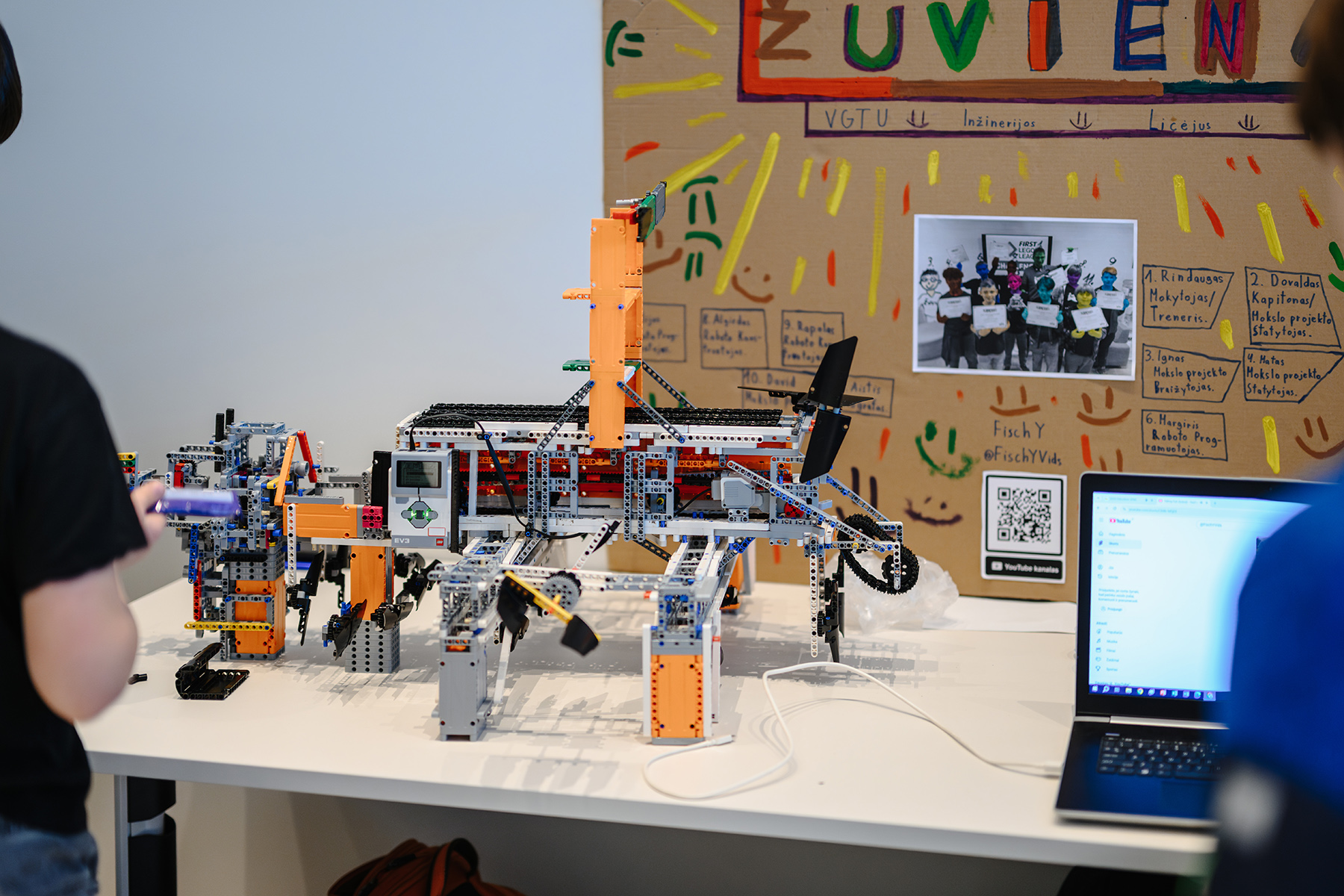
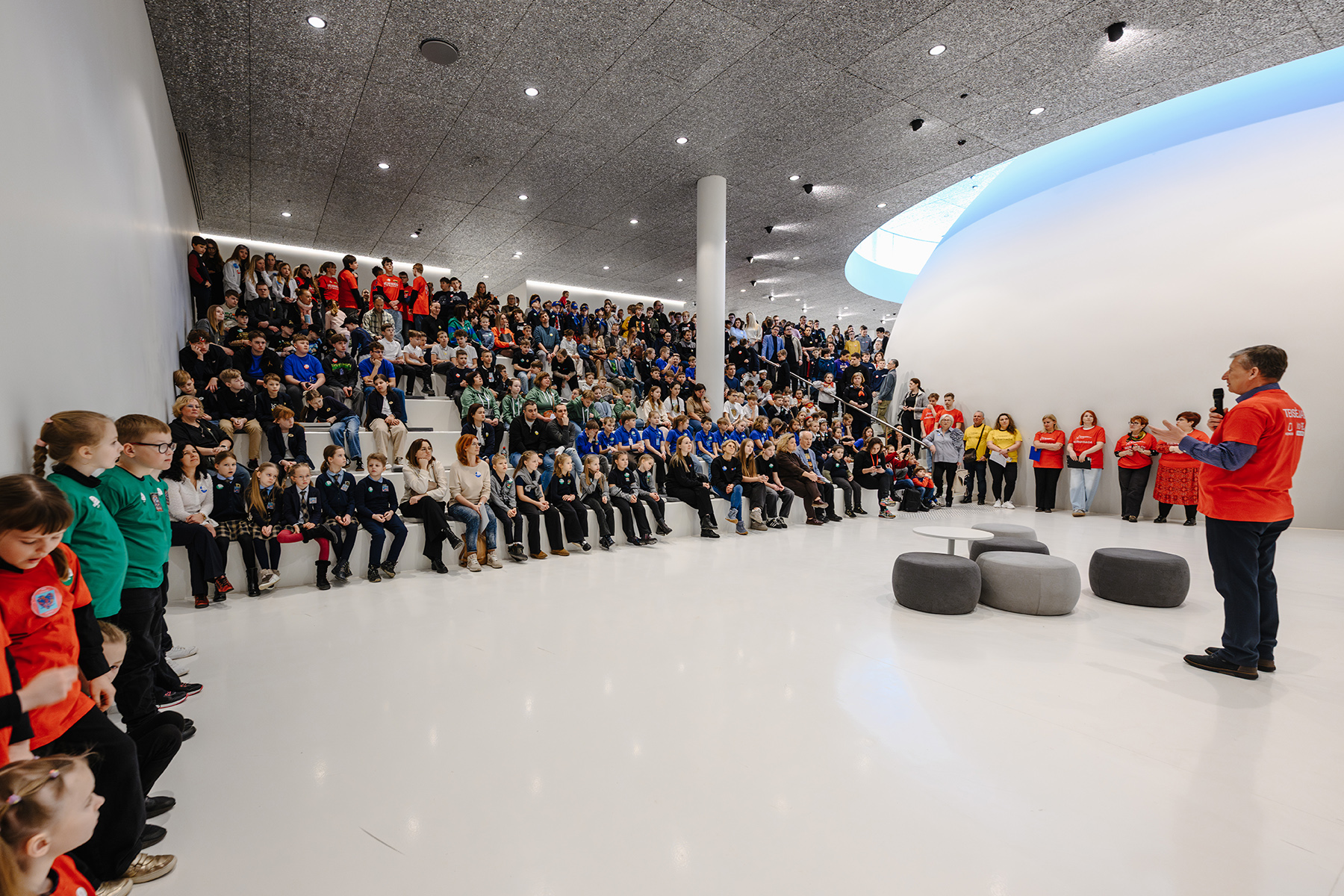
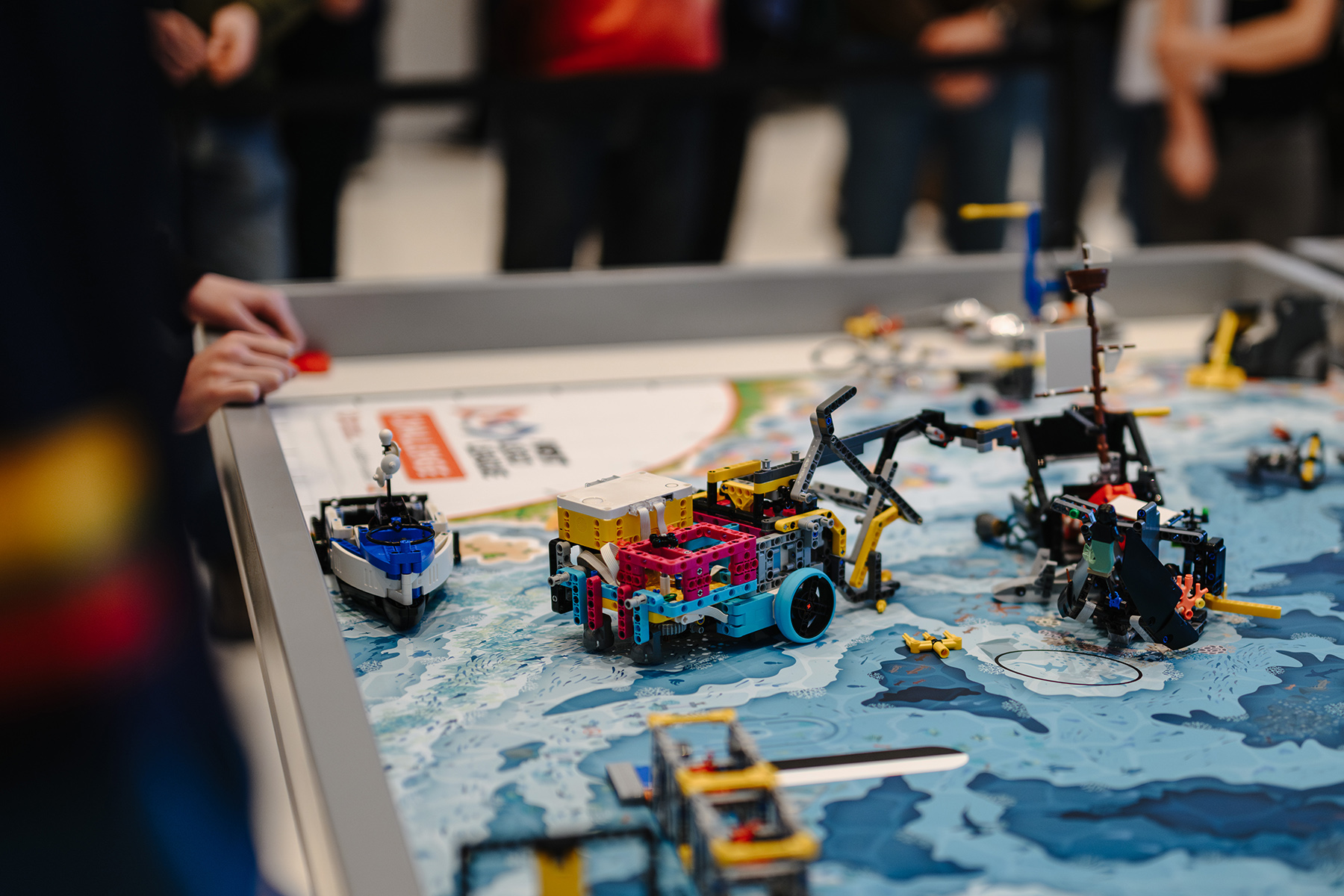
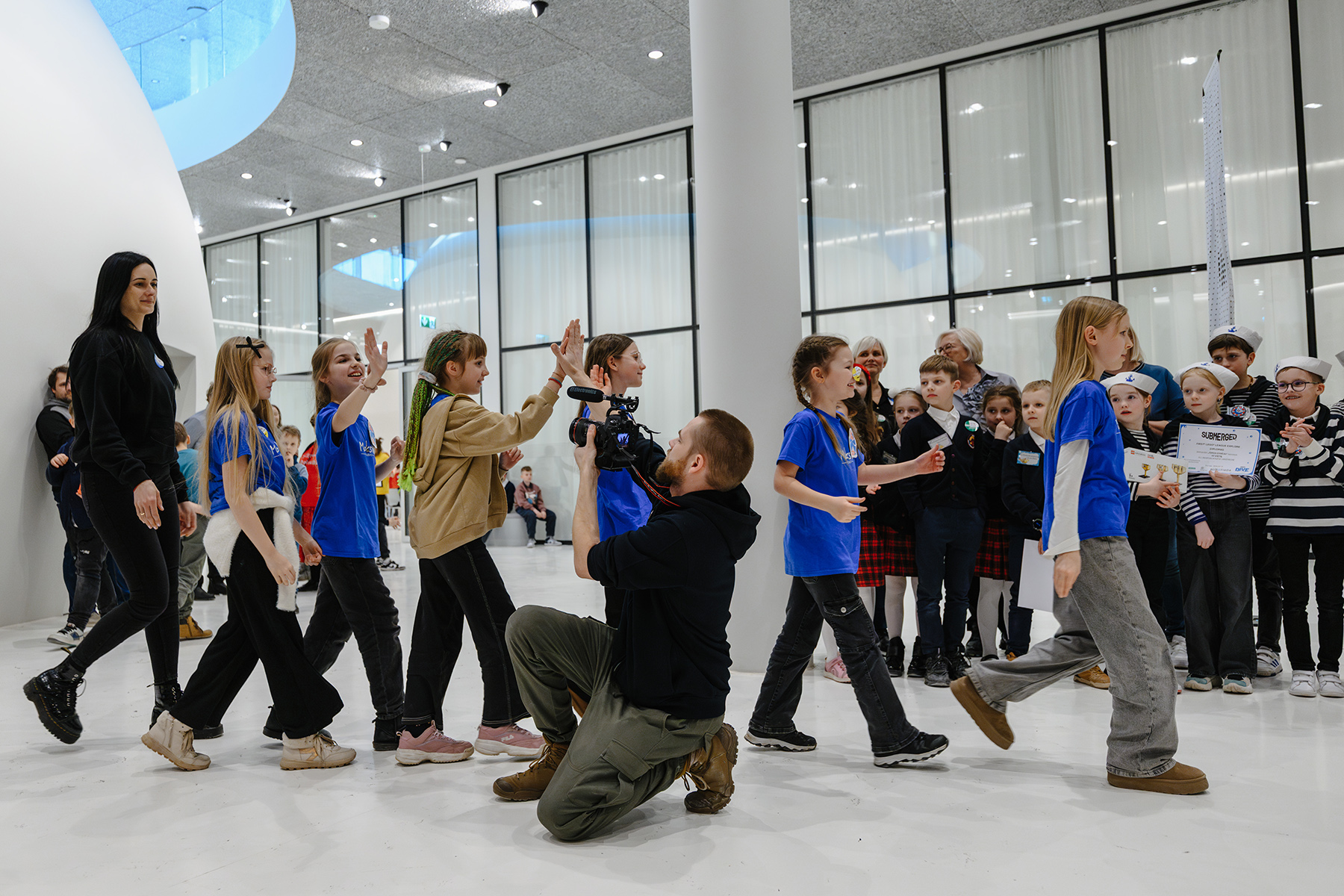
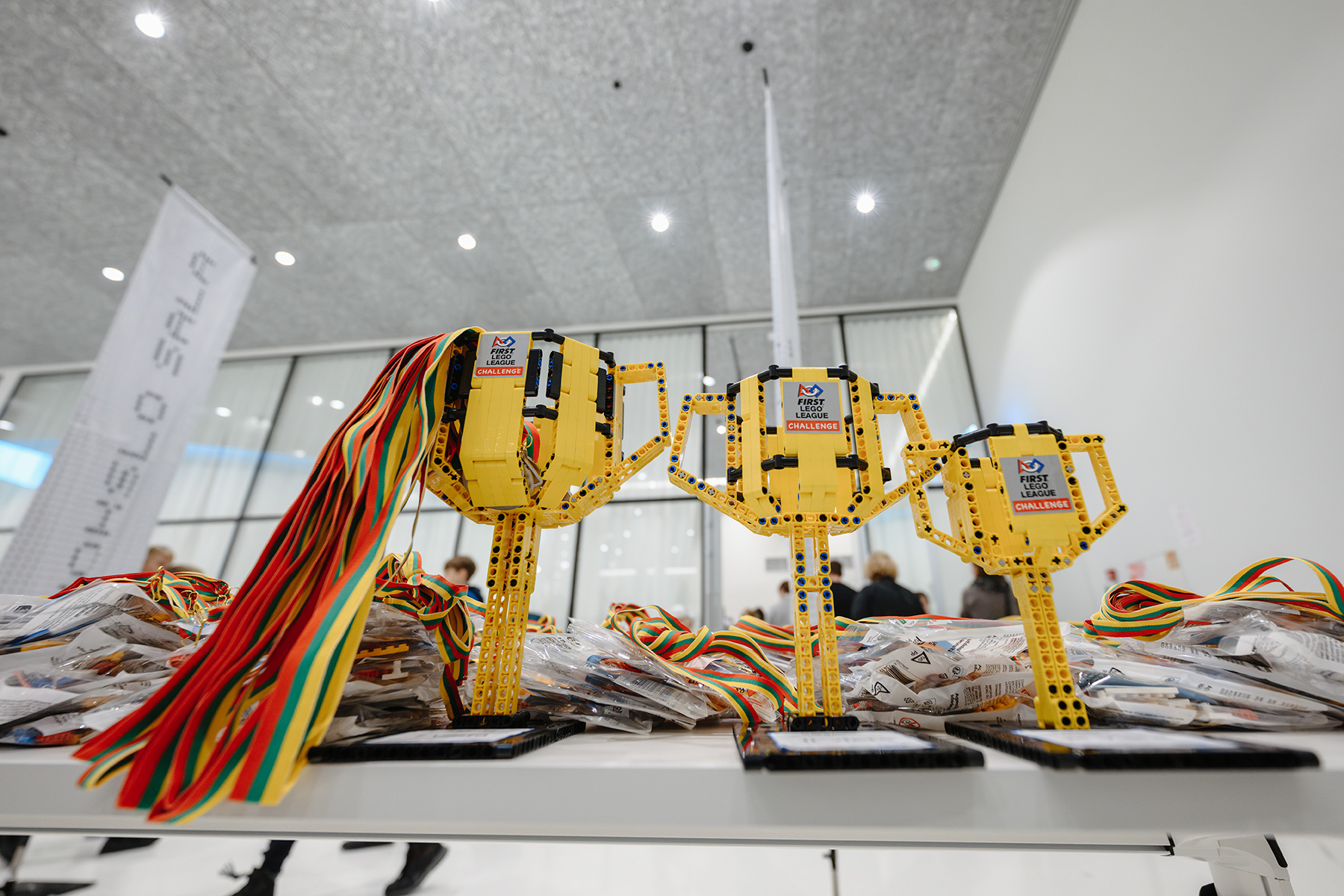
On Saturday, more than a thousand participants and spectators from all over Lithuania gathered on Nemunas Island. The final event of the country’s largest robotics and innovation festival, “Robotiada 2025: First Lego League,” took place at “Science Island.” This year’s competition theme was “The Secrets of the Underwater World.” Teams explored technological possibilities and tackled challenges related to water ecosystems, transportation, and resources. Their custom-built robots competed against each other and presented relevant research projects.
The Inspiring Triumph of Teams
A total of 320 young innovators from across Lithuania dedicated themselves to preparing robotics projects, enhancing their knowledge and skills over a long period. After competing in preliminary rounds, they gathered at “Science Island” on Saturday to showcase their final results.
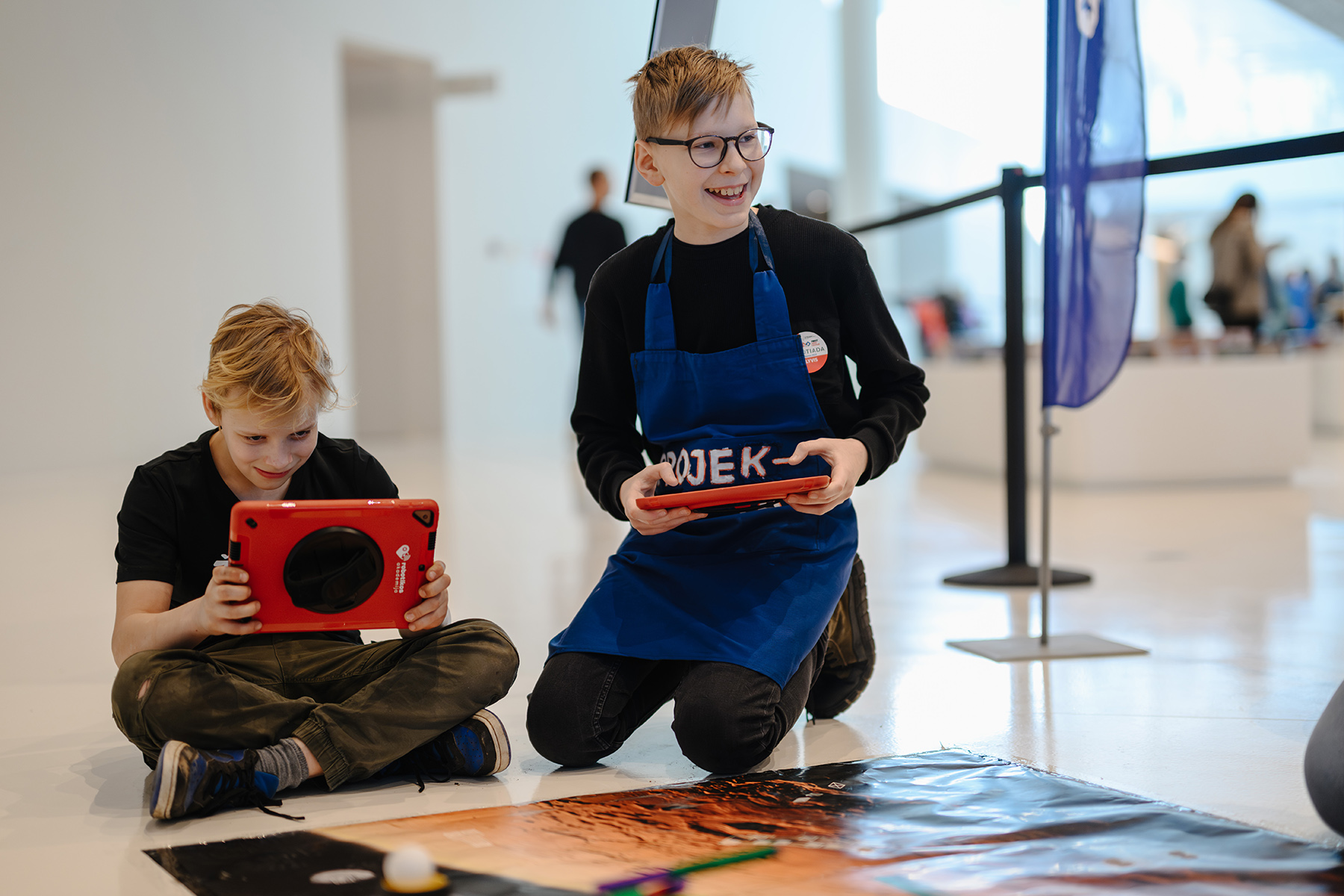
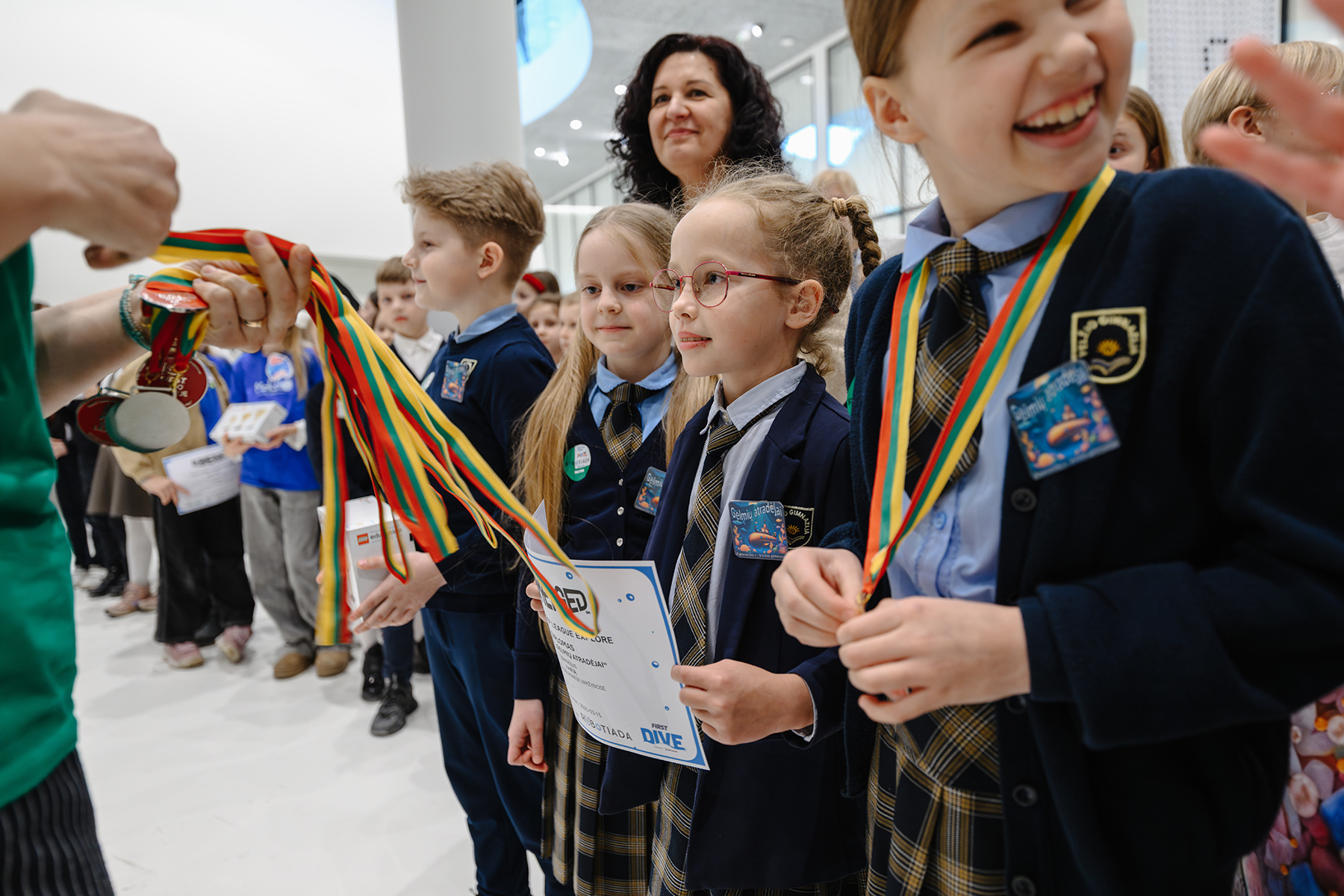
The national “Robotiada 2025” final featured 53 teams composed of participants aged 6 to 16. The competition was divided into two categories: in the Explorer League, children aged 6–9 developed projects using Lego Education Spike Essential kits, while in the Challenge League, students aged 10–16 programmed robots to complete as many tasks as possible and presented innovative solutions related to the underwater world.
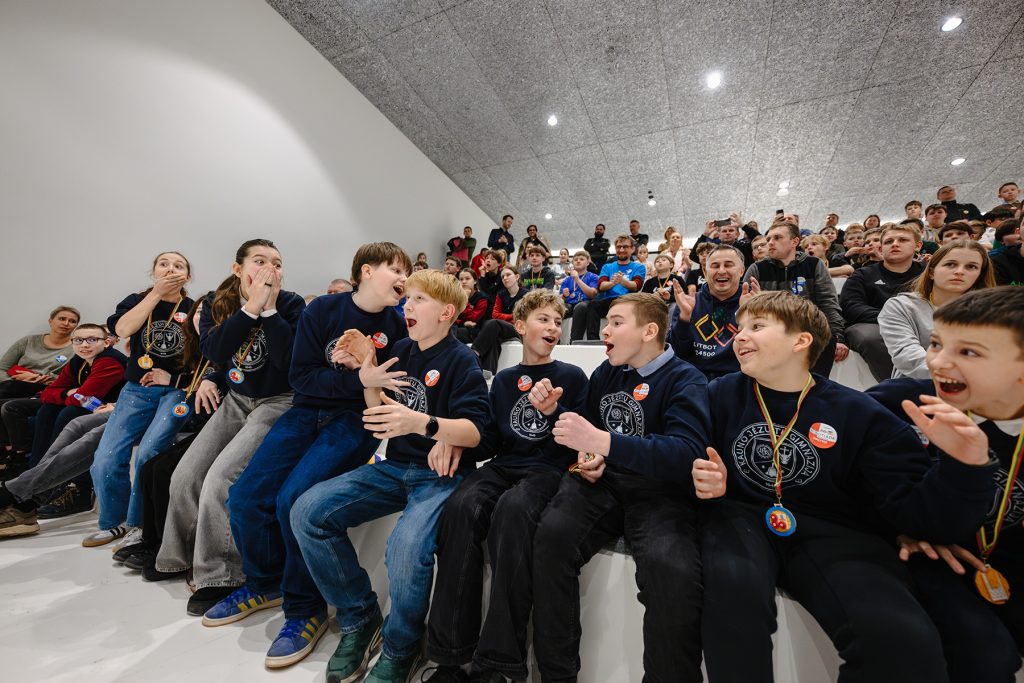
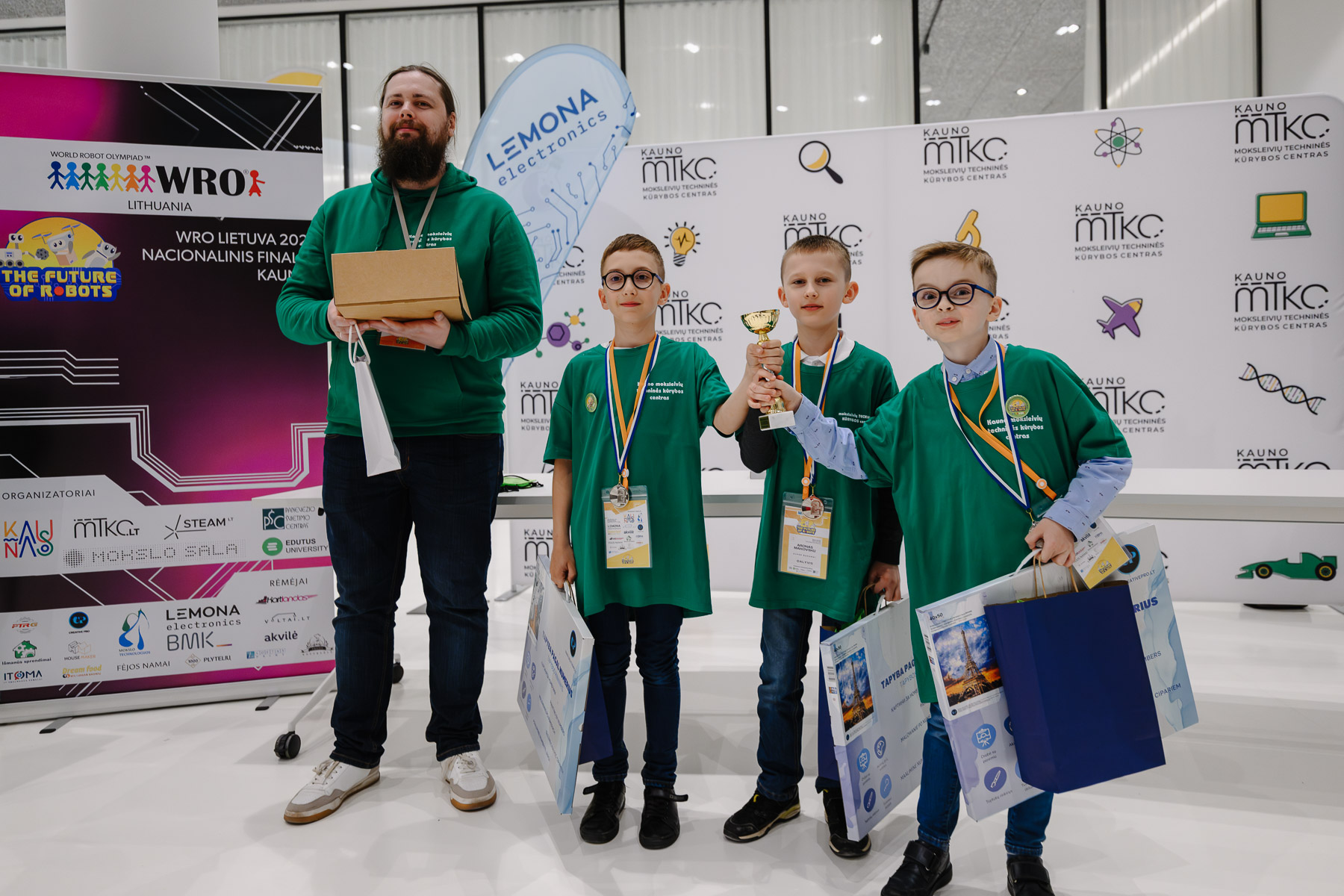
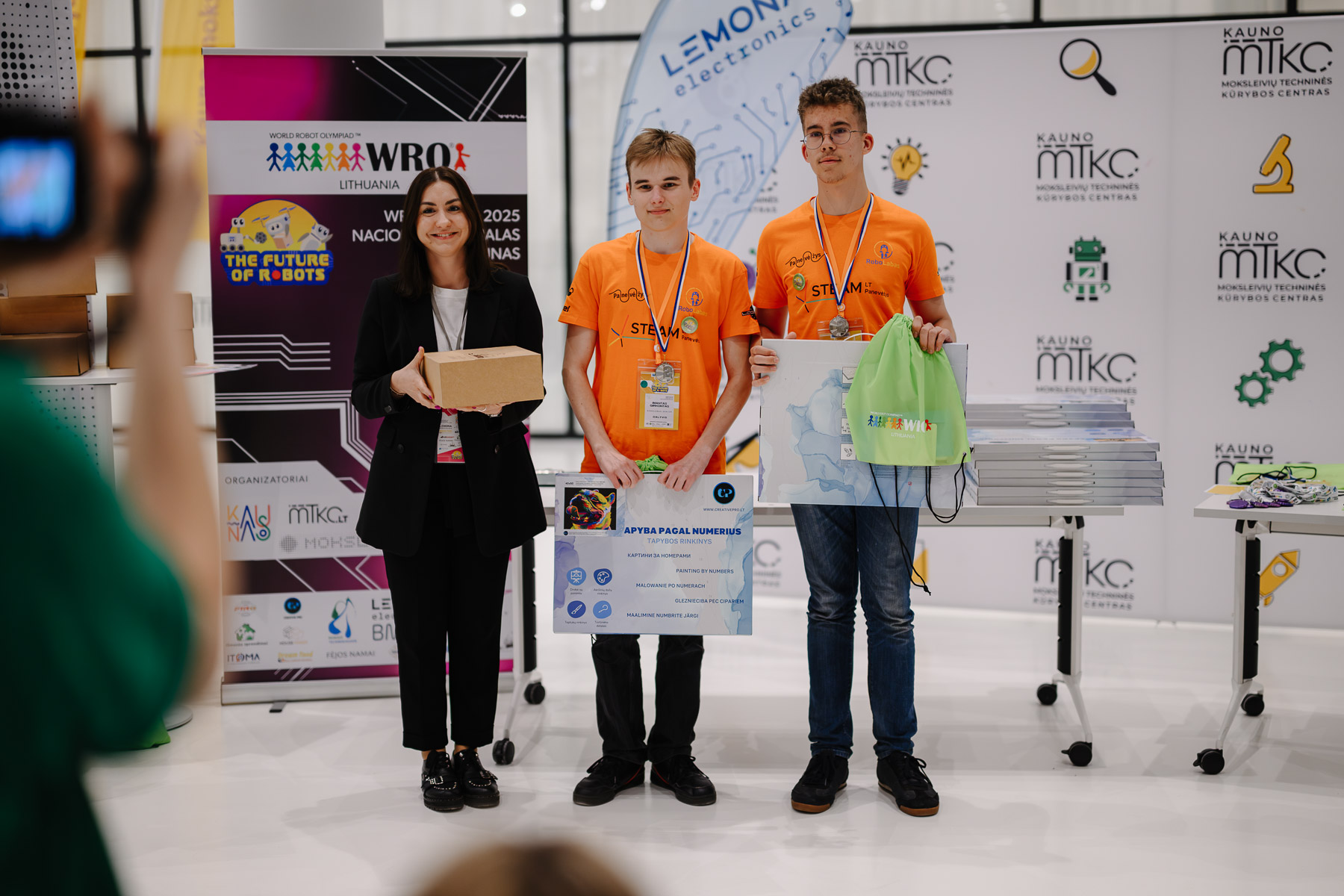
The winners of the Explorer League were the “Gelmių atradėjai” team from Velžys Gymnasium in Panevėžys. They triumphed over their competitors by presenting a creative solution aimed at reducing ocean pollution. Their innovative approach undoubtedly inspired the audience to reimagine the possibilities of Lego.
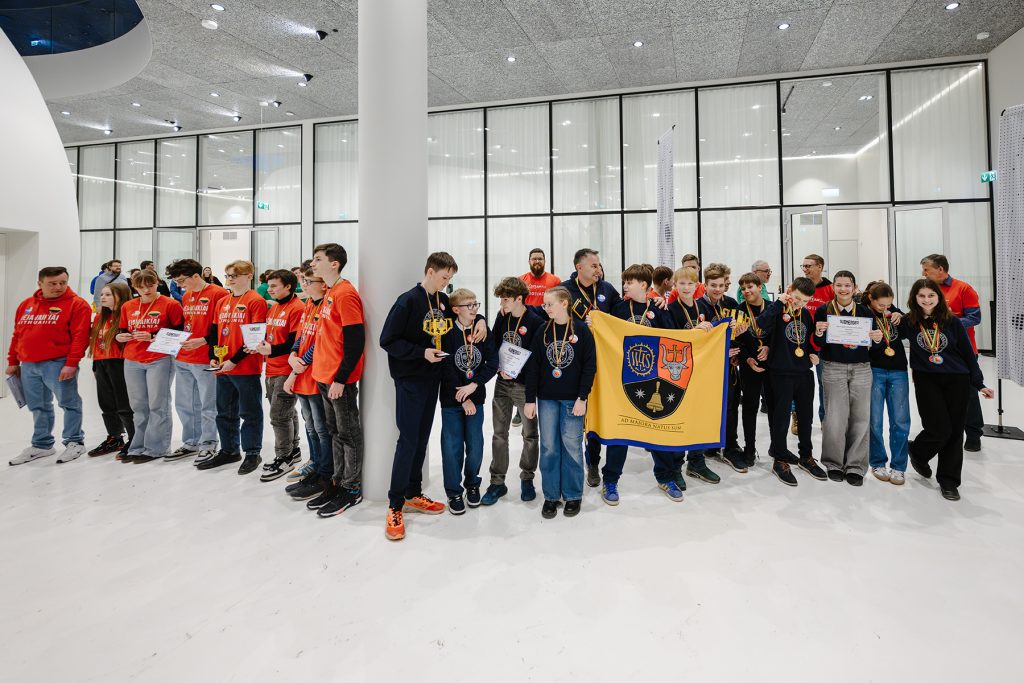
In the Challenge League, the “Forest Force” team from Kaunas Jėzuitų Gymnasium claimed first place. They introduced innovative solutions to clean algae from various water bodies, proposing a new ecosystem that could generate energy and nutritional resources.
“I am incredibly proud of my students, their daily dedication, and disciplined work. I am happy to have built a strong team passionate about robotics. I always tell the kids: if you want to be consumers—go ahead. But if you want to be creators—don’t wait until you grow up. Start now, without fear of failure, and enjoy the process every day,” said Albertas Juškauskas, technology, arts, and robotics teacher at Kaunas Jėzuitų Gymnasium, during the award ceremony.
Juškauskas emphasized that one of the most important goals of a teacher is to establish the right communication with students. He highlighted the importance of fostering their motivation to work, develop their skills, and collaborate effectively as a team.
First Time in Kaunas
This year marked the 13th edition of “Robotiada”. Although teams from Kaunas have been crowned champions multiple times over the years, the event was held in the city for the first time.
“At last, the festival has come to Kaunas—a city that has raised world champions in robotics, surpassing even the largest nations. I am grateful for the contribution of the ‘Science Island’ STEAM laboratory team and their collaboration in organizing the national finals.
This is a truly special event for children, where they not only develop technical skills but also foster teamwork, cooperation, and the search for meaningful solutions that matter to us all,” said Saulius Vasiliauskas, a pioneer of robotics in Lithuania and the main organizer of “Robotiada 2025”.
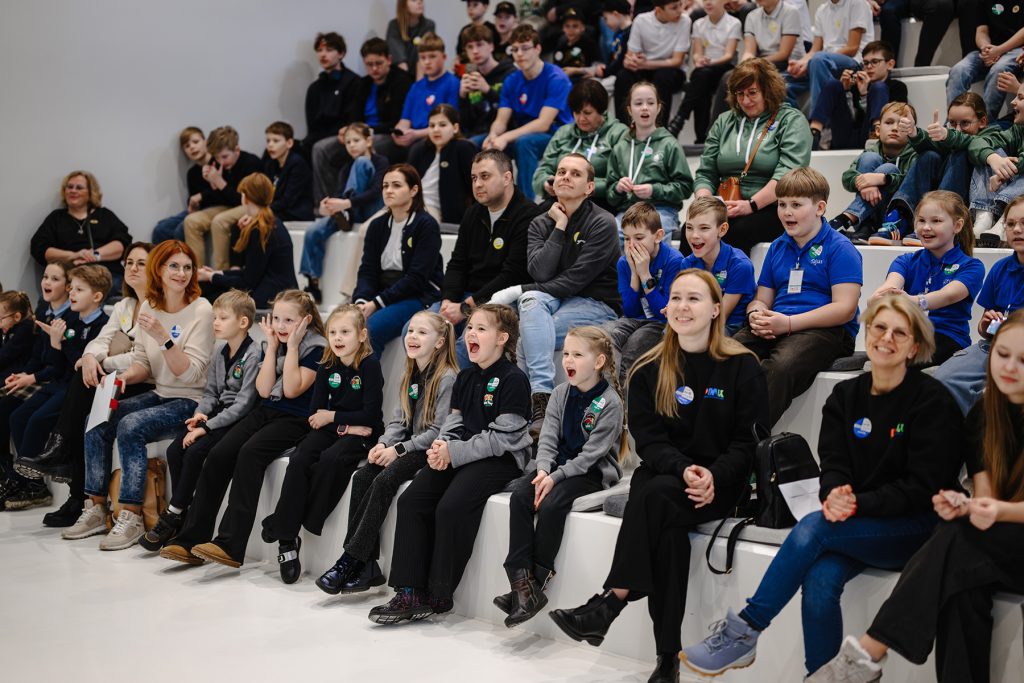
The speaker emphasized that the competition is not only about technical abilities but also about teamwork, mutual support, and collaboration. This approach maintains a healthy sense of competition, fosters lasting friendships, and strengthens the bonds between individual talents.
Robotics – An Essential Discipline
In preparation for the final event, children spend several months designing, refining, and testing their robots with discipline and dedication. This process helps instill the mindset that technology is an integral part of today’s world, capable of addressing both everyday and global challenges.
“To build a robot, you need to revisit math concepts. Children are motivated by the opportunity to immediately apply theoretical knowledge in practice, and ‘Robotiada’ provides the perfect environment for this. These competitions encourage respectful rivalry, sharpen focus, and expand the circle of positivity. The kids who grow up in this culture later enter the workforce, innovate, and contribute to the defense and development of our country.
In my opinion, robotics should go beyond extracurricular education and become a mandatory subject for all students. Perhaps we should even introduce a robotics exam or establish engineering and technology startup schools,” shared Dr. Dainius Žvirdauskas, Director of KTU Engineering Lyceum.
Preparing for the Launch of STEAM Laboratories
The main partners of “Robotiada 2025”, who contributed to the national final, are the “Science Island” STEAM team, which is actively preparing to introduce even more exciting innovations for science enthusiasts.
“Although we have unprecedented access to information today, it is important to remember how much is still undiscovered. The mission of ‘Science Island’ is to keep reminding us of that. We are thrilled that the ‘Robotiada 2025’ final is being held in Kaunas—this event serves as a great rehearsal for our team before the upcoming launch of our laboratories at the end of spring,“ said Aistė Lukaševičiūtė, head of the “Science Island”.
The STEAM laboratories will operate in two directions:
- As the Kaunas Methodical STEAM Center, becoming part of Lithuania’s STEAMLT education network.
- As an interactive space open to all “Science Island” visitors, offering hands-on experiences.
The interactive educational programs and creative workshops will be designed for children of all ages and their families, providing a unique opportunity to explore and strengthen their knowledge in various scientific disciplines.
The grand opening of the “Science Island” STEAM laboratories is scheduled for May 16–17.
In the first few months of operation, Science Island has already welcomed over 50,000 visitors, and there is no doubt that the upcoming STEAM activities will attract significant interest as well.
Science Island has created an indissoluble bond with place
2025-03-03
Author: Deimantė Daugintytė. “Statyba ir architektūra”
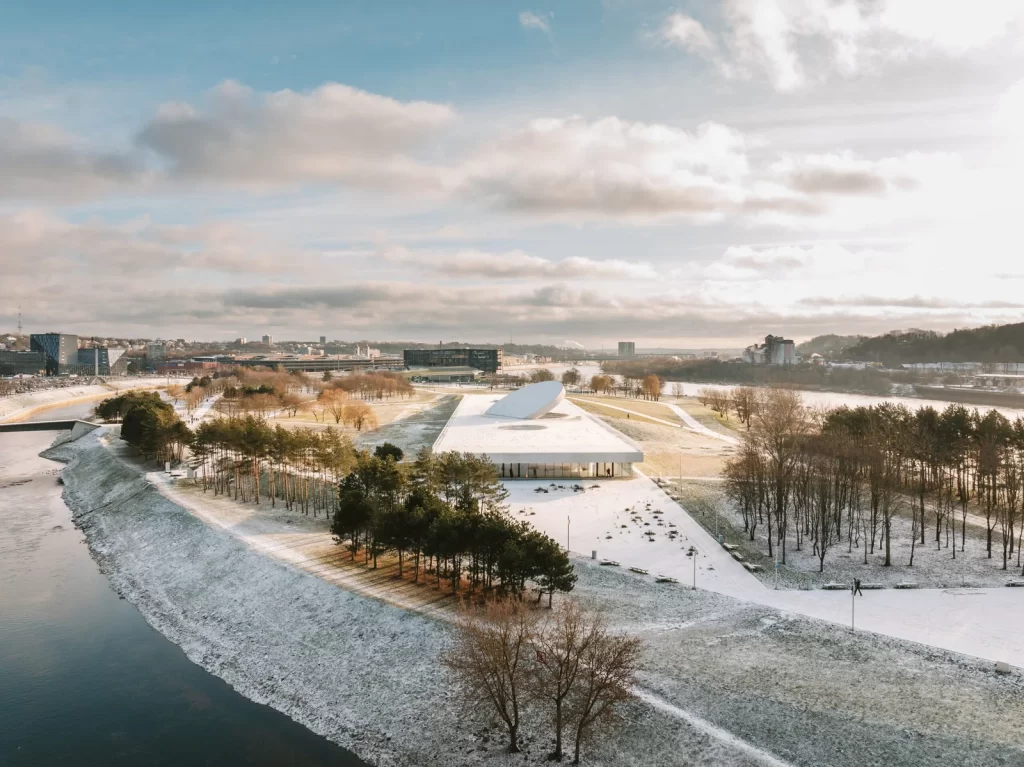
Photo: Andrius Aleksandravičius
The first science museum in the country, “Science Island”, presented to the public in 2017 and finally welcoming its first visitors at the end of 2024, has already managed to become an object of regional significance. The “Science Island” competition in 2016 was the first architectural competition of its kind in Lithuania, attracting a lot of attention from architects from all over the world. The winners were the Spanish and Australian architectural studio “SMAR Architecture studio” (Fernando Jerez, Belen Perez de Juan), the technical part was implemented by the team of architect Gintautas Natkevičius (architectural office “G. Natkevičius and partners” (Gintautas Natkevičius, Dominykas Kalmatavičius)).
“This is a different object than we are used to: it has a modern planetarium, science-revealing spaces, a restaurant, and conference spaces. The very name “Science Island” is symbolic. It is a place of science, knowledge, and entertainment at the same time. This is an object on Nemunas Island that talks about science and conveys the message of how science works in life,” architect G. Natkevičius describes the museum opened on Nemunas Island.
Invited by the winners of the architectural competition, G. Natkevičius and his team worked on the technical part of the project for 1.5 years. G. Natkevičius, whose studio also participated in the competition, describes his colleagues from “SMAR Architecture studio” as highly educated people, capable of generating deeper architectural and social ideas. Their experience and ingenuity allowed them to win the “Science Island” architectural competition and stand out among 150 other participants.
The architect shared with the editorial staff of “Statyba ir architektūra” that the ideas presented back in 2016 remained relevant almost a decade later. “After so many years, it turned out that the idea of the “SMAR Architecture studio” studio is still fresh, alive, architecturally and aesthetically very mature. Although the metal, glass, reinforced concrete building itself is of conventional construction, its complexity lies in the fact that it was designed on the Nemunas island, where the river water is very high – this poses certain challenges,” emphasizes the author of the Kaunas airport, business centers and residential projects.
A building of the highest architectural quality
The architect who established his studio in Kaunas has implemented many of his works precisely in this city. Therefore, the 11.5 thousand sq. m. project of the “Science Island” is not accidental, but well-planned and thought-out, taking into account the urban structure. The Science Museum organically contributes to the image of the Nemunas Island: an arena, a swimming pool, and a green park have been operating here for a long time. Soon, after the construction of the bridge, the urban structure will be completed and will become unique in the city of Kaunas.
“The Science Island completes the island of objects visited by the public, a patch of land. This place will not change, it is completely formed, and after the construction of the pedestrian bridge, the composition will be completed. This place is unique because of its structure: a river in the city, the structure of the “Science Island” intended for the public, a park with mature trees. In the city center we have an organism with a lot of action: a playground, attractions and architecture of the highest level,” – G. Natkevičius is convinced and adds that there are only a few such architecturally strong projects in Lithuania.
“Currently, I know of two such high-quality architectural works in Lithuania – the Stasys Museum in Panevėžys (architects IMPLMNT architects: Aurimas Syrusas, Greta Brimė, Ričardas Bertašius, Aurelija Kniukštaitė, Eglė Gečaitė, Ieva Sirijatavičiūtė, Kotryna Bajorinaitė, Jonė Virbickaitė) and the Science Island. The Lost Shtetl museum being built in Šeduva (architects Lahdelma & Mahlamäki Architects) will also be special,” adds the architect.
“Science Island” in the context of science museums in Europe
According to the specialist, “Science Island” occupies an important place on the European museum map due to its exceptional architecture, location and context. It is not always possible to fulfill all the criteria for relevance.
“For example, in Finland, near Helsinki, there is the science museum “Heureka” (architects – “Heikkinen – Komonen Architects”). It is built next to the railway, so the place is “nothing”, it is simply convenient to get to it. In Latvia, in Ventspils, Audrius Ambrasas and his team (Audrius Ambrasas, Vilma Adomonytė, Jonas Motiejūnas, Viktorija Rimkutė, Justas Jankauskas) designed the Science and Innovation Center near a huge transport ring. The Copernicus Science Center in Warsaw (architects – “RAr-2 Laboratorium Architektury Gilner & Kubec”) is also in a built-up, cramped place. Perhaps the only interesting science museum in Europe is in Amsterdam – the NEMO Science Museum (designed by Renzo Piano), located in the bay. Its shape resembles a ship, so it has an image.
At the same time, the uniqueness of the “Science Island” is that it has a connection with the place, the symbiosis is very cool. There is an island, on the island – a valley, the building is long and low, on one side it is all underground, on the embankment – as if it is there, as if it is not there. The only disk glows, it is raised, but it is also subtly turned towards the Nemunas. This is international architecture of the highest level, organically incorporated into nature: water, Nemunas, island, valley – such things give a hotel many stars, ” – compares the architect.
Over 30 thousand visitors in the first two months
“Science Island” is the first science and innovation promotion center in Lithuania. Here, visitors can expect a long-term exhibition with as many as 140 objects, a modern planetarium, emerging STEAM laboratories, and various cultural and educational activities. “Our goal is to arouse curiosity and inspire everyone to experiment – by combining real science with entertainment, to refute the myth that fun does not equal value. The center is intended for the whole family, where both young and old are invited to search, make mistakes, and rediscover their love for science by trying innovative methods,” says Aistė Lukaševičiūtė, head of the Science and Innovation Dissemination Center “Science Island”.
During the first two months of operation, the “Science Island” was visited by over 30 thousand visitors of all ages. About half of them were children who come here with school groups, parents, guardians or other family members and enjoy the joy of discovery. “This number is pleasing and once again confirms the need for such a project as the “Science Island” in our society,” says the museum director and says that the planetarium sessions are the most popular program among visitors.
Here you can not only see films, but also attend lectures by an astronomer. The content shown in the planetarium is presented on an 11-meter diameter dome-shaped screen with a 5.1 audio system, reaching even 8K resolution, and the latest software from the company “Evans & Sutherland” allows visitors to show not only images and animations of the Sun, Moon, planets, stars, nebulae and galaxies, but also to familiarize themselves with real-time images from space observatories and Earth-observing satellites.
“When creating the “Science Island”, our main goal was for people who visited here to discover the joy of knowledge. The smiles of visitors show that we are doing quite well. We have many great plans for the future, so that this trend only strengthens and everyone would want to return here more than once,” says A. Lukaševičiūtė, the head of the “Science Island”, commenting on the plans.